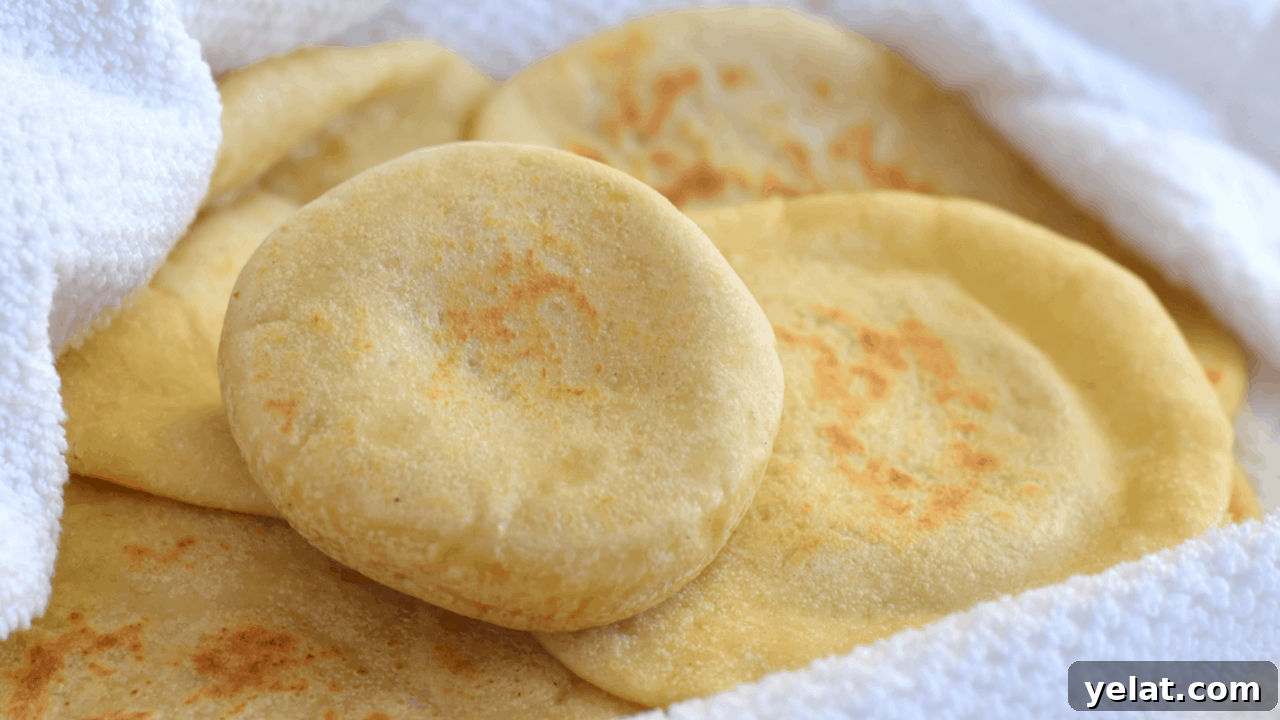
HOW TO MAKE HOMEMADE PITA BREAD
This pita bread recipe is simple and reliable. You can make soft, chewy pitas at home with basic ingredients, and the flavor and texture beat store-bought loaves.
Although pita is widely available in my city, the homemade version is much softer and fluffier than most commercial options. The dough is made from flour, water, yeast, salt, sugar and a little oil, rolled thin and baked at high heat. As it bakes it puffs and forms a pocket that’s perfect for filling.
Serve warm with hummus or stuff the pockets with your favorite fillings for easy sandwiches.
Pita bread Ingredients
- 1 cup warm water (lukewarm)
- 1/2 teaspoon active dry yeast (or instant yeast)
- 2 cups all-purpose flour
- 3/4 cup whole wheat flour (or use all-purpose instead)
- 1 teaspoon salt
- 1 tablespoon sugar
- 1–2 teaspoons olive oil (optional)
Which flour is best for making pita bread?
You can use all-purpose flour, whole wheat flour, or a blend. All-purpose gives a lighter, stronger dough that traps gas well. Whole wheat adds nutrition, flavor and a nuttier texture but can reduce volume if used in large amounts. A mix of the two gives good structure and better flavor; in this recipe I use a blend.
Why I use both flours
Different flours offer different benefits. Whole wheat flour contains more nutrients that help yeast ferment faster and contributes a pleasant nutty flavor and better texture. White flour provides strength and elasticity from its higher endosperm content, which helps the dough trap gas and rise.
Using a small portion of whole wheat keeps the pitas nutritious without sacrificing rise and soft texture.
Benefits of whole wheat in pita dough
- Faster fermentation because whole wheat offers more food for yeast.
- Improved flavor and a slightly nuttier texture, which makes rolling easier.
- More nutrients and fiber compared to using only white flour.
Step-by-step Instructions
Step 1. Form the dough
Activate the yeast if using active dry yeast. If using instant yeast, add it directly to the flour. Mix the warm water, sugar and yeast and let sit about five minutes until foamy. Add the flours (about 2 3/4 cups total), salt and olive oil, stirring until a shaggy dough forms.
Step 2. Knead the dough
- Turn the dough onto a lightly floured surface and knead 6–8 minutes until smooth and elastic. Add flour sparingly to prevent sticking.
- Rest if you get tired, then finish kneading. You can also use a stand mixer with a dough hook for about 8 minutes.
Kneading aligns proteins to form gluten strands, giving the dough the strength to trap gas and rise. A well-kneaded dough will be soft, smooth and slightly springy; when pressed it should offer some resistance.
Step 3. Let the dough rise
- Oil a clean bowl, place the dough inside and turn to coat in oil. Cover and let rise until doubled, about 1–2 hours.
- You can refrigerate the dough after the first rise for up to a week, baking as needed.
Step 4. Divide the dough
Gently deflate the dough, turn onto a floured surface and divide into equal pieces. Flatten each piece into a thick disk, dust with a little flour and cover with a towel so they don’t dry out.
Step 5. Shape the pitas
- Roll each piece into a circle about 6 inches wide and 1/4 inch thick. Lift and turn frequently to avoid sticking. If the dough springs back, let it rest a few minutes and then continue.
- Cover shaped disks with a damp towel and let rest 20–30 minutes until they puff slightly and hold their shape.
Step 6. Bake the pita bread
You can bake pitas in a hot oven or cook them on the stovetop.
Oven method
- Preheat oven to 450°F (230°C). If you have a baking stone place it on the lowest rack to heat; otherwise, use a heavy baking sheet.
- Work quickly: place rolled pitas on the hot stone or sheet (or slide them on with a spatula). The side that was facing up while resting should face up when placed on the hot surface so the drier side is down; this helps puffing.
- Bake 3–4 minutes. When they puff fully, move the tray to a higher rack for 1–2 minutes to develop color. If pitas fail to puff, your oven may not be hot enough—try increasing the temperature for the next batch.
- Remove and wrap the baked pitas in a kitchen towel to keep them soft. Repeat with remaining dough.
Stovetop method
- Heat a cast-iron skillet over medium-high until water droplets sizzle. Lightly oil and wipe excess.
- Cook each rolled pita 30 seconds until bubbles form, flip and cook 1–2 minutes until toasted spots appear, flip again and cook another 1–2 minutes. The pita should puff; if it doesn’t, press gently to encourage puffing. Keep cooked pitas covered with a towel while you finish the rest.
When baked on a hot surface, moisture in the dough turns to steam and inflates the thin disk, producing the characteristic pocket. Proper heat and a slightly moist interior are the keys to puffing.
How to store pita bread
- Pitas are best eaten fresh, but leftovers keep in an airtight bag in the refrigerator for several days and can be warmed in a toaster oven.
- Freeze baked pitas with wax paper between layers for up to three months.
Additional notes
- After the first rise you can refrigerate the dough and bake pitas gradually; dough will keep for about a week refrigerated.
- If pitas don’t puff, usually the cooking surface isn’t hot enough. They’re still usable for wraps or dipping even without a pocket.
Simple tips for the best pita
- Knead until the dough is very soft and smooth—this helps yield softer pitas.
- Avoid adding too much extra flour while kneading.
- Preheat oven or skillet thoroughly so the pitas puff reliably.
Enjoy making soft, fluffy homemade pita bread!
Pita Bread Recipe
Pin Recipe
Ingredients
- 1 Cup warm water (not hot)
- 1/2 Tsp active dry yeast (or instant)
- 2 Cups all-purpose flour
- 3/4 Cup whole wheat flour
- 1 Tsp salt
- 1 Tbsp sugar
- 1–2 Tsp olive oil (optional)
Instructions
-
Form the dough: Mix warm water, sugar and yeast and let sit about five minutes. Add flours, salt and olive oil. Stir until a shaggy dough forms.
-
Knead: Turn dough onto a floured surface and knead 6–8 minutes until smooth and elastic. Add flour sparingly to prevent sticking. Rest if needed.
-
First rise: Oil a clean bowl, place the dough inside, cover and let rise until doubled, 1–2 hours. Dough can be refrigerated after this rise for up to a week.
-
Divide: Gently deflate, divide into equal pieces and flatten into thick disks. Dust with flour and cover until ready to shape.
-
Shape and rest: Roll each piece into a 6-inch circle about 1/4 inch thick. Cover and rest 20–30 minutes until slightly puffed.
-
Bake: Oven method — preheat to 450°F, heat a baking stone or sheet, place rolled pitas on the hot surface and bake 3–4 minutes until they puff. Move to a higher rack 1–2 minutes to brown. Stovetop method — cook on a hot skillet: 30 seconds first side, flip 1–2 minutes, flip again 1–2 minutes until toasted and puffed. Keep baked pitas covered with a towel to stay soft.
-
Serve warm and enjoy.
Video
Nutrition
Let us know how it was!