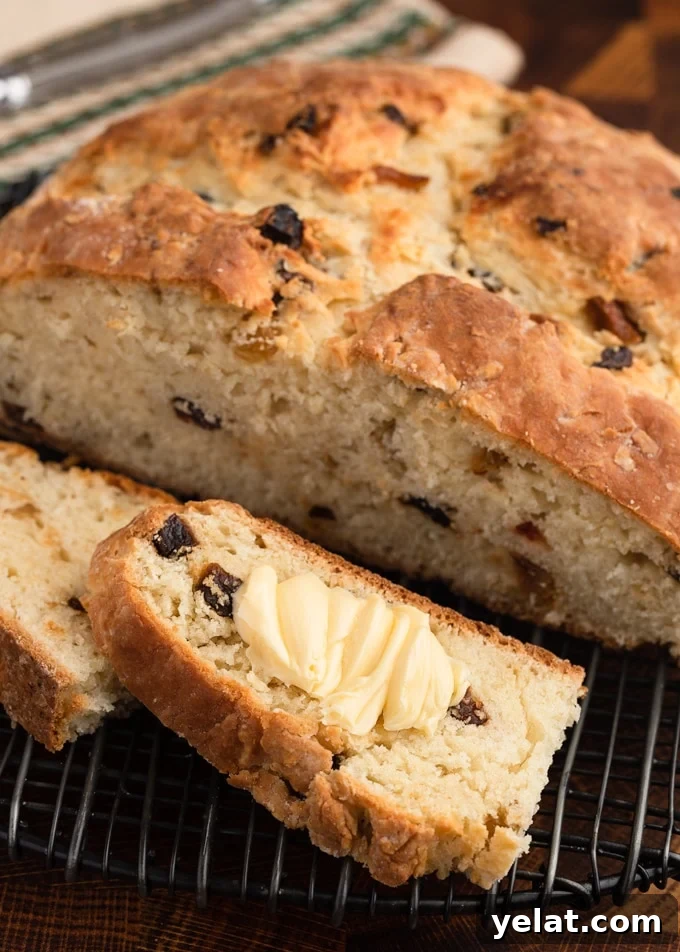
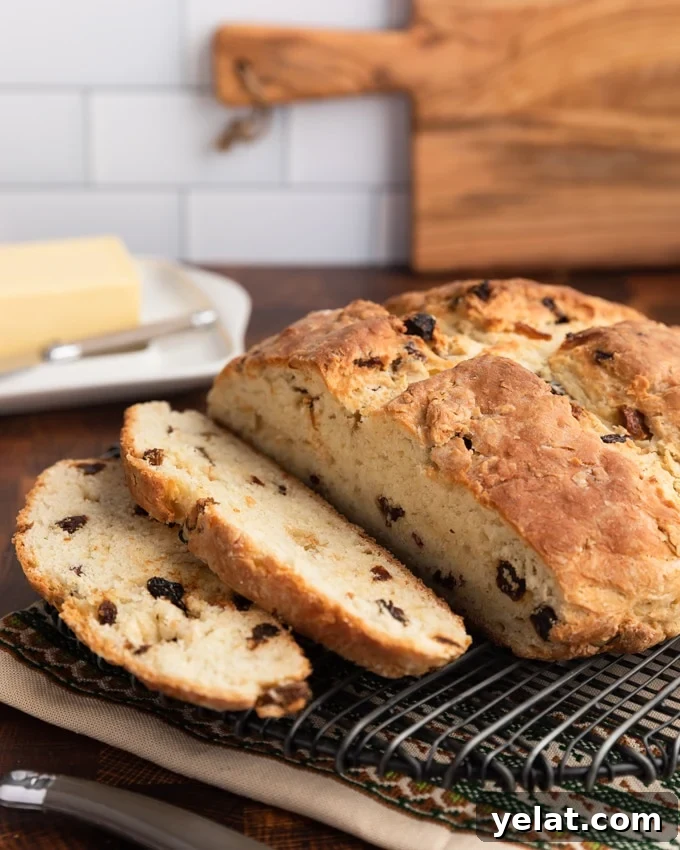
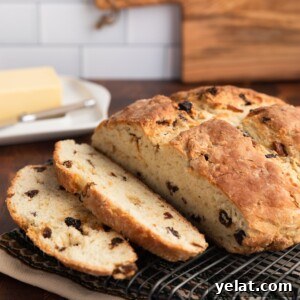
Irish-American soda bread is a dense, slightly sweet loaf studded with raisins and/or caraway seeds. It’s best served just warm or at room temperature with softened Irish butter.
This post contains affiliate links. As an Amazon Associate, I earn a commission (at no additional cost to you) from qualifying purchases made by clicking these links. As always, all recommendations and opinions expressed are my own.
Irish vs Irish-American Soda Bread
Authentic Irish soda bread is a simple, yeast-free loaf made from soft wheat flour, baking soda, salt, and buttermilk. Historically in Ireland, soda bread appeared in the 1800s as a fast, practical everyday bread made with minimal ingredients.
Irish-American soda bread builds on that classic foundation. American-style versions often include granulated sugar for a touch of sweetness, small cubes of butter worked into the dry ingredients, and sometimes a beaten egg. Raisins, dried currants, or caraway seeds are common additions in the United States.
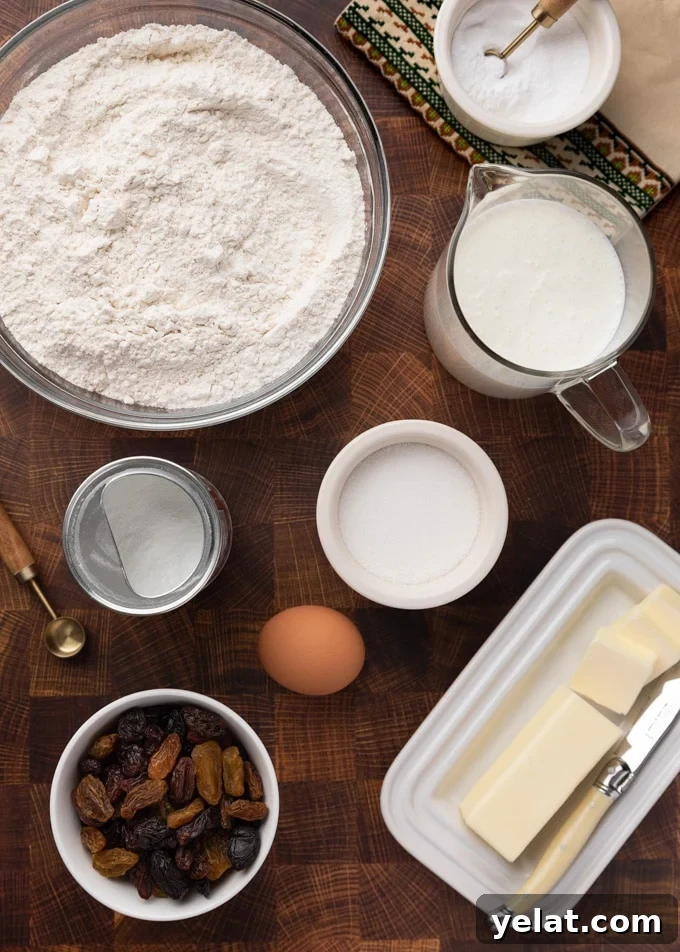
Special Ingredients For the Best Loaf
For a reliably tender, flavorful loaf, I recommend a few ingredient choices:
- Whole buttermilk. Irish buttermilk tends to be richer than many American varieties, so use whole buttermilk when possible for better flavor and texture. If you can’t find it, low-fat buttermilk will work but the loaf will be less rich.
- Medium-protein all-purpose flour. A moderate protein content (around 10–11%) prevents the dough from becoming tough if it’s handled a bit. Brands like Gold Medal or Pillsbury work well.
- Irish butter. When available, Irish butter (such as Kerrygold) improves both the dough and the flavor when served alongside the bread because of its higher butterfat content and appealing color.
How to Make Irish-American Soda Bread
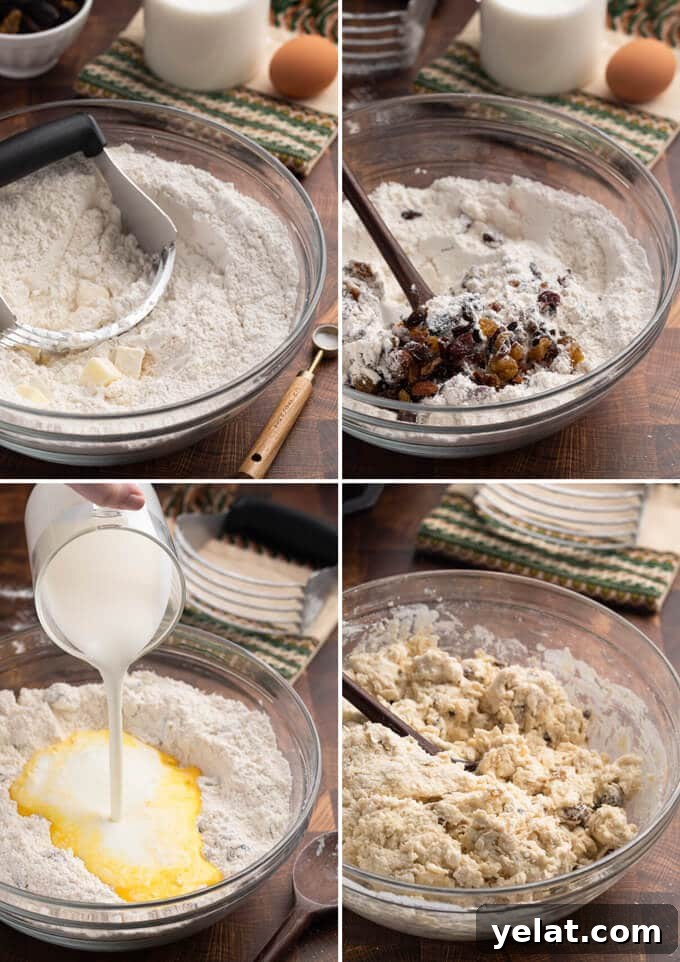
This American-style soda bread is a quick, one-bowl recipe that requires minimal kneading and no rising time.
Begin by whisking the dry ingredients together. Cut cold butter into small cubes and work it into the flour with a pastry blender or fork until the mixture resembles coarse crumbs with tiny butter bits showing. Stir in raisins or caraway seeds if using.
Make a well in the center, add the beaten egg and buttermilk (or mix the egg and buttermilk first), and stir just until the dough comes together. Resist overmixing; too much stirring or kneading will produce a tough crumb.
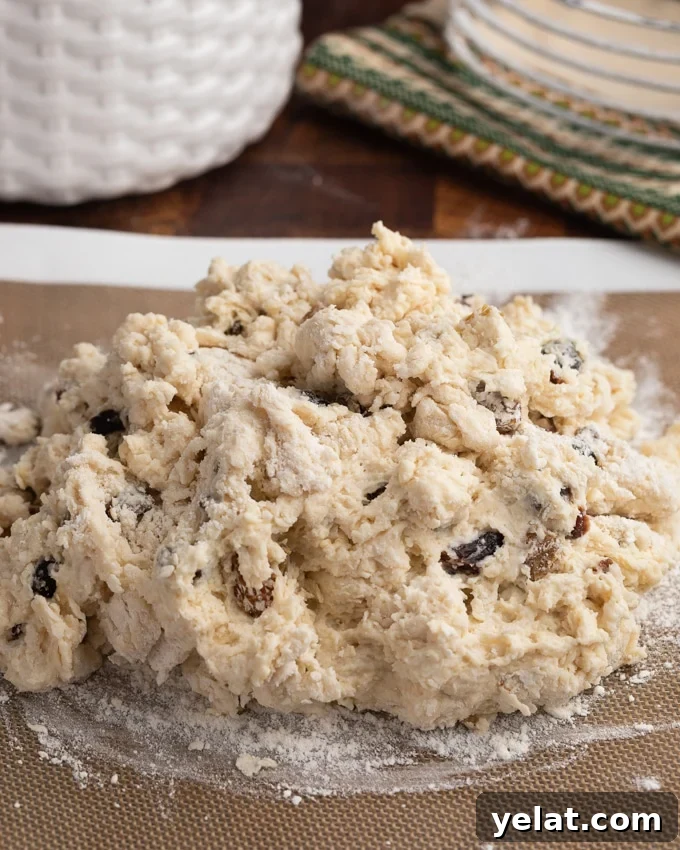
Shaping the Loaf
Turn the dough onto a floured surface and gently knead just until you can shape it into a ball. The dough should look rustic and a little scraggly—this is normal and desirable.
For a crisp bottom crust, bake the round in a lightly buttered cast iron skillet. A parchment-lined baking sheet also works but yields a slightly softer bottom. Before baking, score a cross on top of the dough with a sharp knife, stopping about an inch from each edge; this helps the center bake evenly and follows a long-standing tradition.
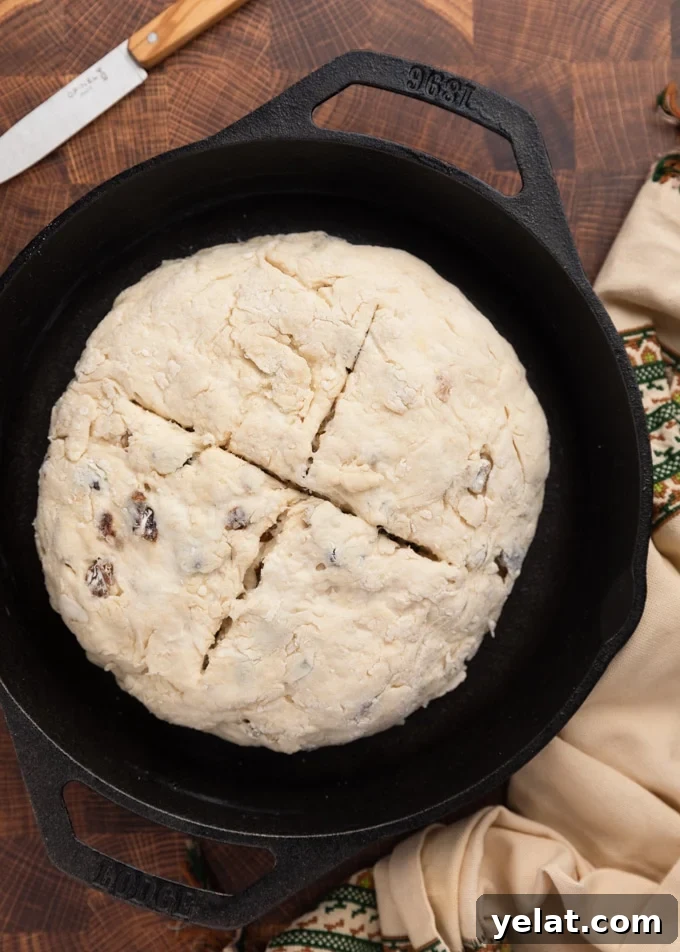
In the Oven
Bake at 400°F for about 40–50 minutes. Cast iron pans may need a few extra minutes compared to a baking sheet. Watch the loaf as it bakes; if the top is browning ahead of the center, tent it loosely with foil.
The bread is done when it’s golden and a skewer inserted into the center comes out clean or with a few moist crumbs. Remove from the oven and immediately brush the top with the remaining tablespoon of melted butter for a soft, glossy crust. Let the loaf cool on a wire rack for 20–30 minutes before slicing.
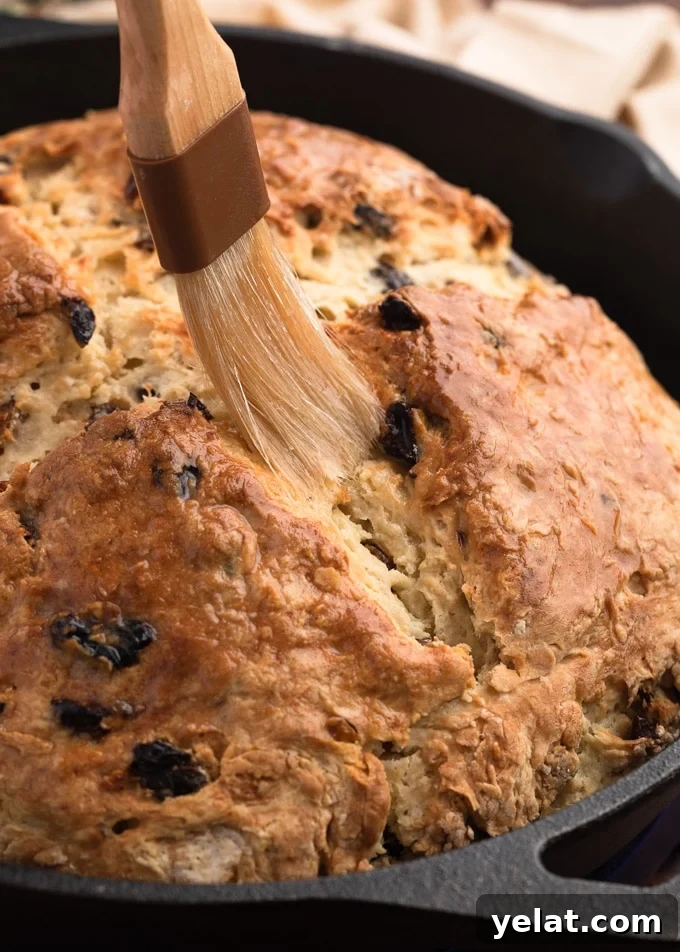
Serving the Soda Bread
Though warm bread is always tempting, this loaf shines nearer room temperature. Serve thick slices with softened Irish butter and a cup of tea for a classic pairing.
The loaf’s mild sweetness also pairs well with savory dishes, such as corned beef or hearty stews, and it complements braised meats. Because the bread is not overly sweet, it works as a breakfast or dinner bread.
This Irish-American soda bread is best eaten the day it’s baked. Leftovers can be tightly wrapped in foil and kept at room temperature for a day, although the texture will become denser by the next day.
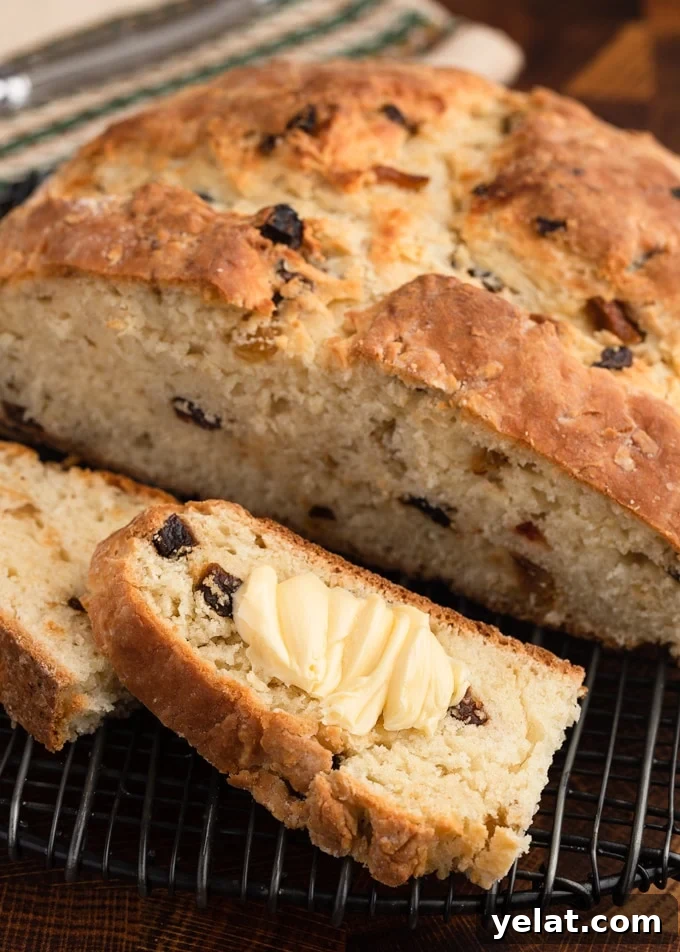
More St. Patrick’s Day Recipes
For a St. Patrick’s Day menu, this rich, slightly sweet soda bread makes a lovely addition. Sláinte!
- Colcannon
- Irish scones
- Homemade Irish cream
- Corned beef and potato cakes
Irish-American Soda Bread
Ingredients
- 4 cups all-purpose flour, plus more for kneading
- 3 tablespoons granulated sugar
- 2 teaspoons baking powder
- 1 teaspoon baking soda
- 1 teaspoon table salt
- 5 tablespoons unsalted butter, divided
- 1-1/2 to 1-3/4 cups buttermilk, preferably whole
- 1 large egg, lightly beaten
- 1 cup seedless raisins or currants
- 1 tablespoon caraway seeds
Instructions
-
Preheat the oven to 400°F. Line a baking sheet with parchment paper or lightly butter a 9-inch cast iron skillet.
-
In a large bowl, whisk together the flour, sugar, baking soda, baking powder, and salt. Cut 4 tablespoons of cold butter into small cubes and cut into the flour mixture with a pastry blender or fork until coarse crumbs form.
-
Stir in the raisins or currants and/or caraway seeds if using. Make a well in the center and pour in the beaten egg and buttermilk. Stir just until the dough begins to come together.
-
Transfer the dough to a floured surface and knead with floured hands only until it forms a ball. The dough will be scraggly; do not over-knead.
-
Shape the dough into a 6–7 inch round and place it on the prepared skillet or baking sheet. Cut a cross on top, stopping about an inch from each edge.
-
Bake until golden and a skewer inserted in the center comes out clean or with a few moist crumbs, about 40–50 minutes depending on your pan. If the top browns too quickly, tent loosely with foil.
-
Melt the remaining tablespoon of butter while the bread bakes. Remove the loaf from the oven, brush with melted butter, and transfer to a wire rack to cool for 20–30 minutes before slicing.
-
This bread is best the day it’s baked. If saving leftovers, wrap the cooled loaf tightly in foil; it will be denser the next day.
Notes
Nutrition Estimate
Nutrition information is automatically calculated and should be used as an approximation.
Our recipes use US customary measurements and have not been tested for high altitude baking.