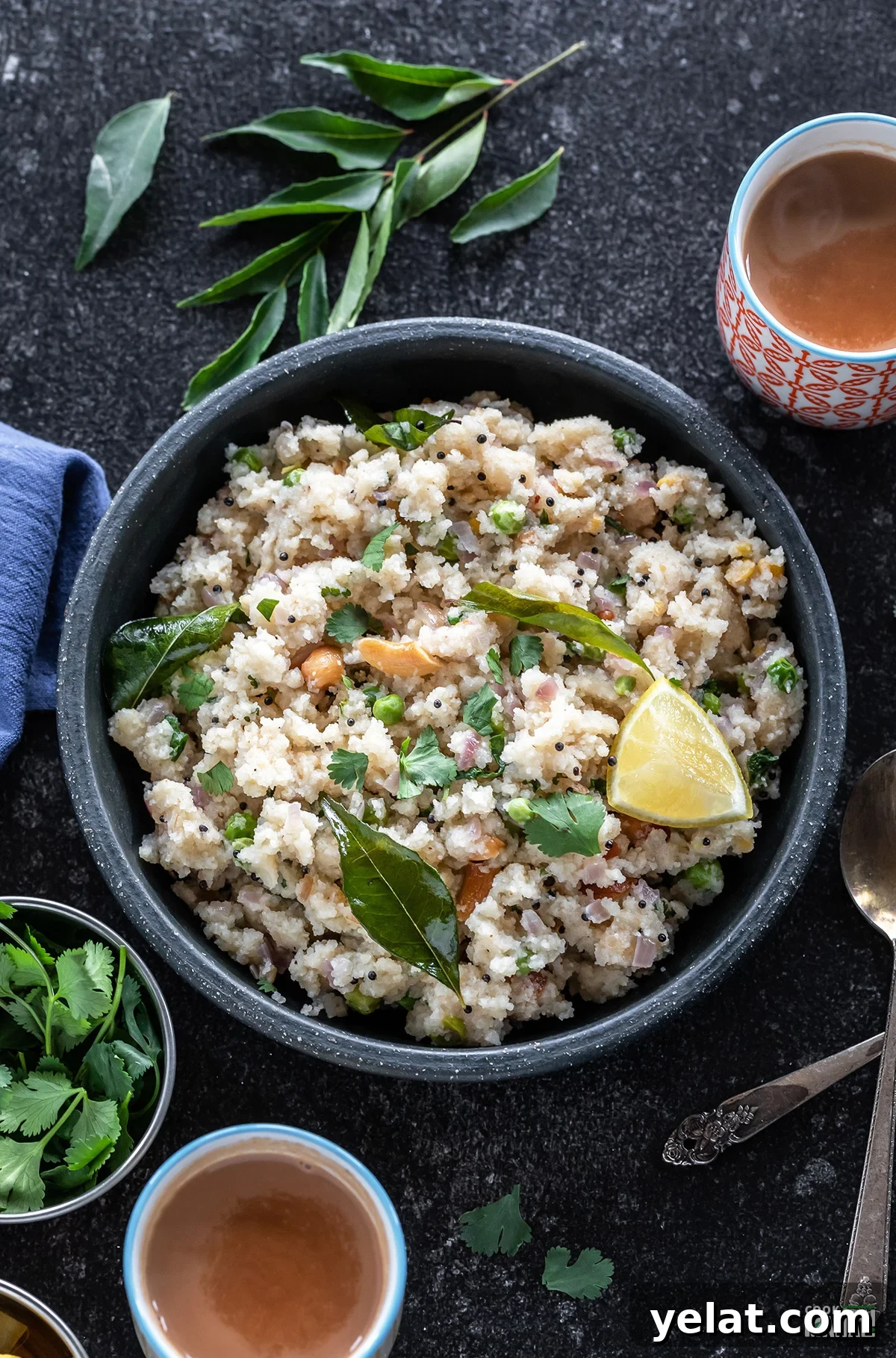
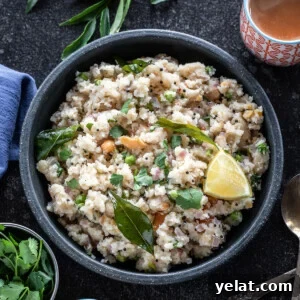
One of the most popular Indian breakfasts, Rava Upma (or simply Upma) is a savory porridge made from semolina and vegetables. It’s filling and satisfying, especially with a cup of chai or filter coffee. This is one of my go-to breakfast recipes and it’s easy to make vegan by skipping the ghee at the end.
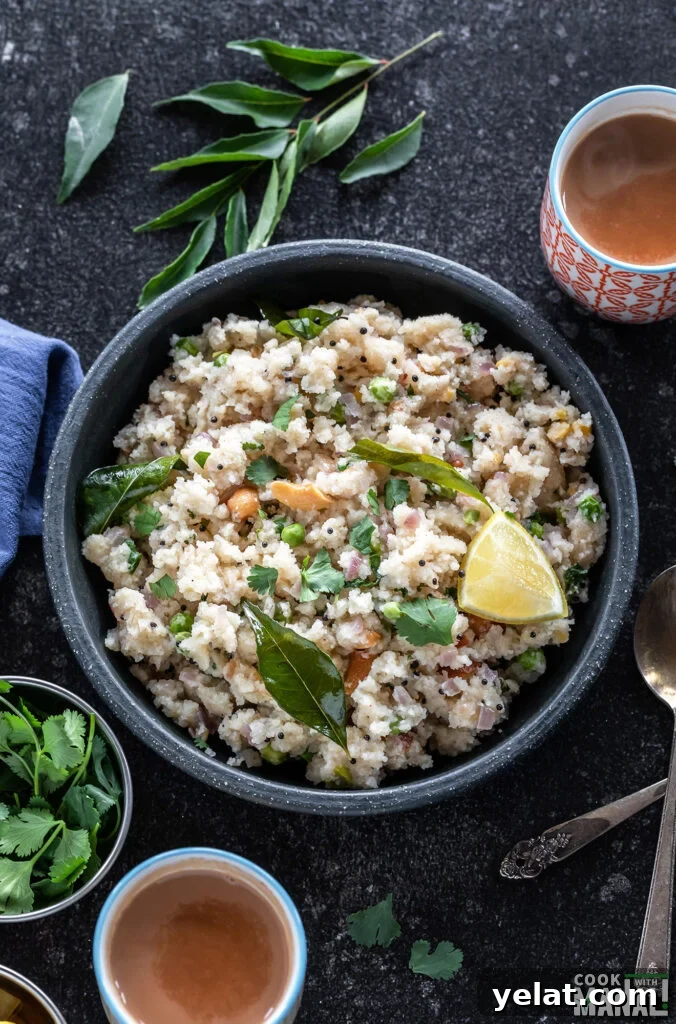
When mornings feel repetitive, quick options like avocado toast or banana oatmeal are helpful. Two Indian breakfasts I often return to are Poha and Upma—both hearty, quick, and delicious. Upma is particularly versatile: you can keep it simple or add more vegetables for extra nutrition and flavor.
Table of contents
- What is Upma?
- Ingredients
- Getting the Water to Sooji Ratio Right For Upma
- How To Make Rava Upma
- Make Ahead Options For Upma
- Manali’s Expert Tips
- Different Upma Recipes
What is Upma?
Upma is a classic Indian breakfast made with sooji (also called rava or semolina). It’s especially common in South India but enjoyed across the country. The traditional rava upma uses semolina, though there are many variations—semai (vermicelli) upma, bread upma, oats upma, and more.
In a way, upma is the savory counterpart to sooji halwa: both use semolina and water, but halwa adds sugar while upma includes vegetables and spices. Rava Upma is often served with coconut chutney and filter coffee; both make the meal more satisfying. Growing up, upma was a weekly breakfast in my home—sometimes eaten with ketchup, though I now prefer coconut chutney.
Ingredients
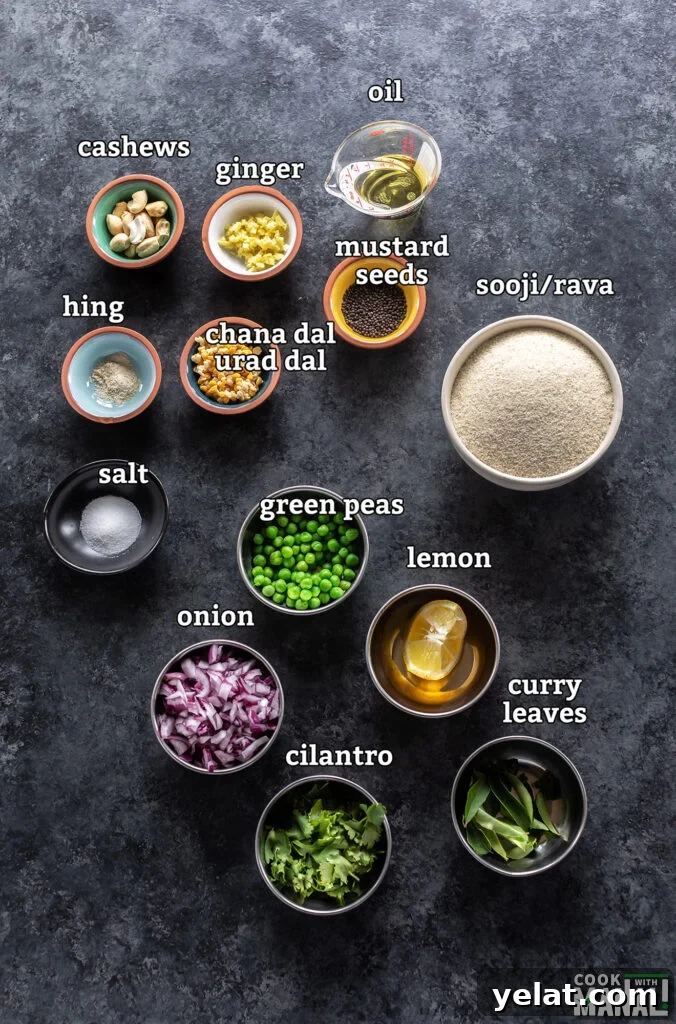
Sooji/Rava: Semolina, called sooji or rava, comes in coarse and fine varieties. For upma, the coarse variety works best for texture.
Seasonings: Whole spices and lentils—like mustard seeds, chana dal and urad dal—along with fresh ginger and curry leaves give upma its characteristic flavor.
Cashews: Optional, but they add a pleasant crunch.
Getting the Water to Sooji Ratio Right For Upma
Texture is the key to great upma. I struggled with dry, crumbly results until I adjusted the water-to-sooji ratio. While many recipes suggest 1:2, I found a 1:3 ratio gives a soft, melt-in-your-mouth consistency. In other words, use 3 cups of water for every 1 cup of sooji.
How To Make Rava Upma
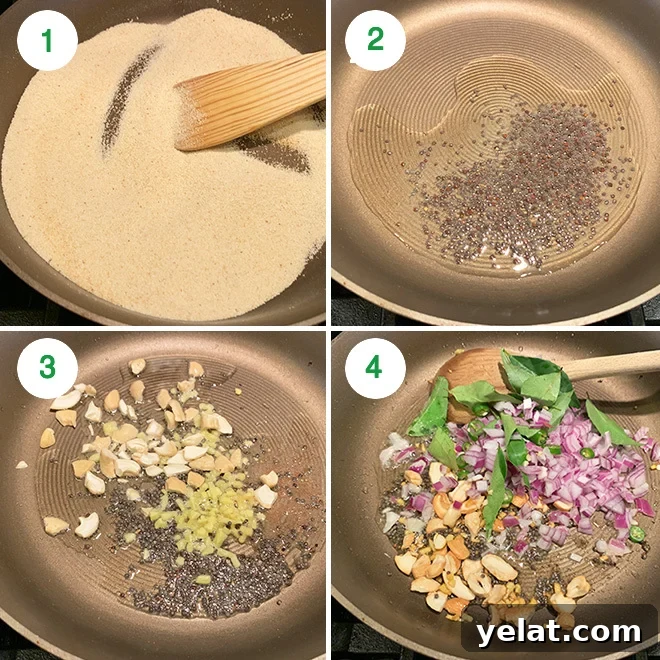
1. Roast 1 cup sooji/rava on medium heat for 5–6 minutes until fragrant, stirring continuously to avoid browning. Transfer to a bowl.
Tip: Roast the sooji in advance to save time on busy mornings.
2. In the same pan, heat 1½ tablespoons oil on medium. Add 1 teaspoon mustard seeds and let them pop.
3. Add a pinch of hing, 7–8 broken cashews, 1 teaspoon soaked chana dal, 1 teaspoon soaked urad dal, and 1 teaspoon finely chopped ginger. Sauté about 1 minute until they begin to turn golden.
4. Add 1 small finely chopped red onion, 1 chopped green chili, and about 12 curry leaves. Cook 2–3 minutes until the onion softens.
5. Stir in 3 tablespoons green peas (soaked if frozen) and cook 1–2 minutes to remove the raw smell.
6. Pour in 3 cups (24 oz) of water,
7. Add 3/4 teaspoon salt (or to taste),
8. Stir in 1 tablespoon chopped cilantro.
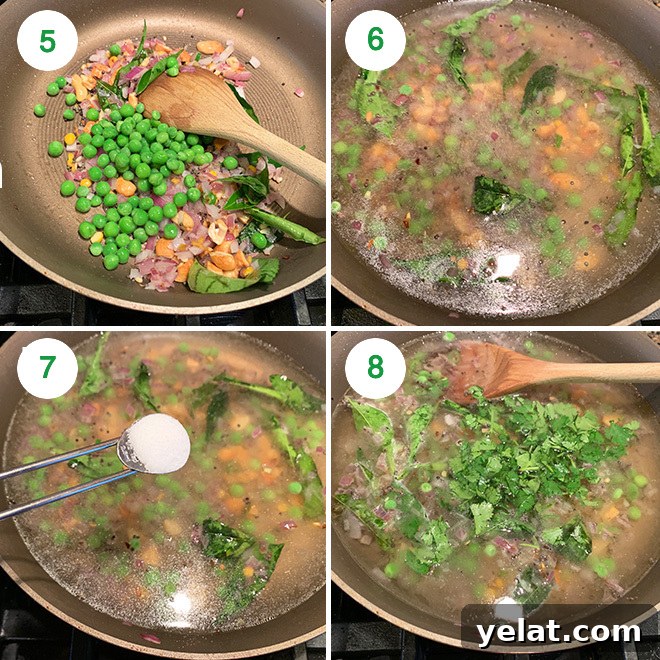
9. Add 1 teaspoon lemon juice and, if you like a hint of sweetness, up to 1/2 teaspoon sugar (optional).
10. Bring the water to a rolling boil.
11. Gradually add the roasted sooji, a little at a time, stirring in one direction with a wooden spatula after each addition to prevent lumps.
12. Continue until all sooji is absorbed.
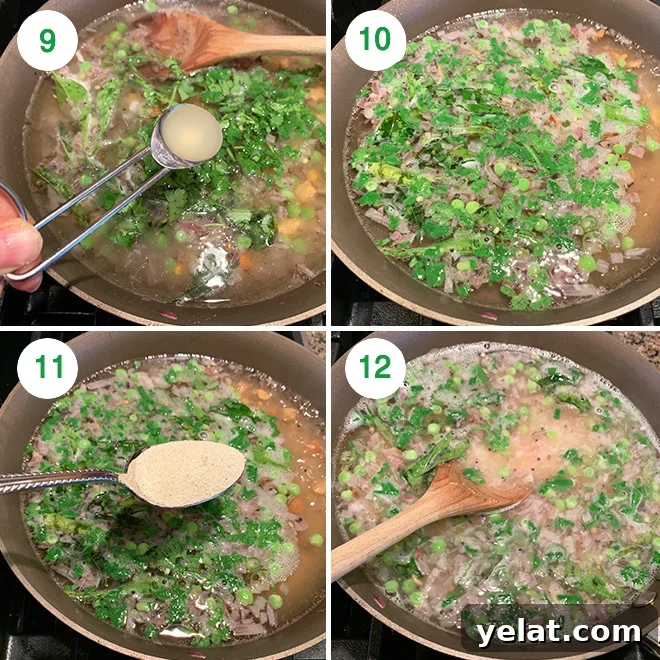
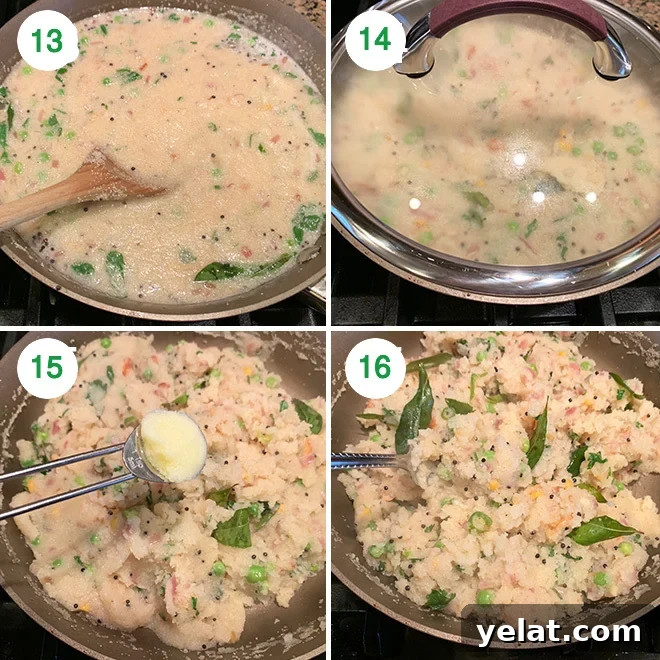
13. Cover the pan, reduce heat to low, and let it steam for 2 minutes.
14. Remove the lid, add 1 teaspoon ghee (optional), turn off the heat, mix, and close the lid for a few seconds.
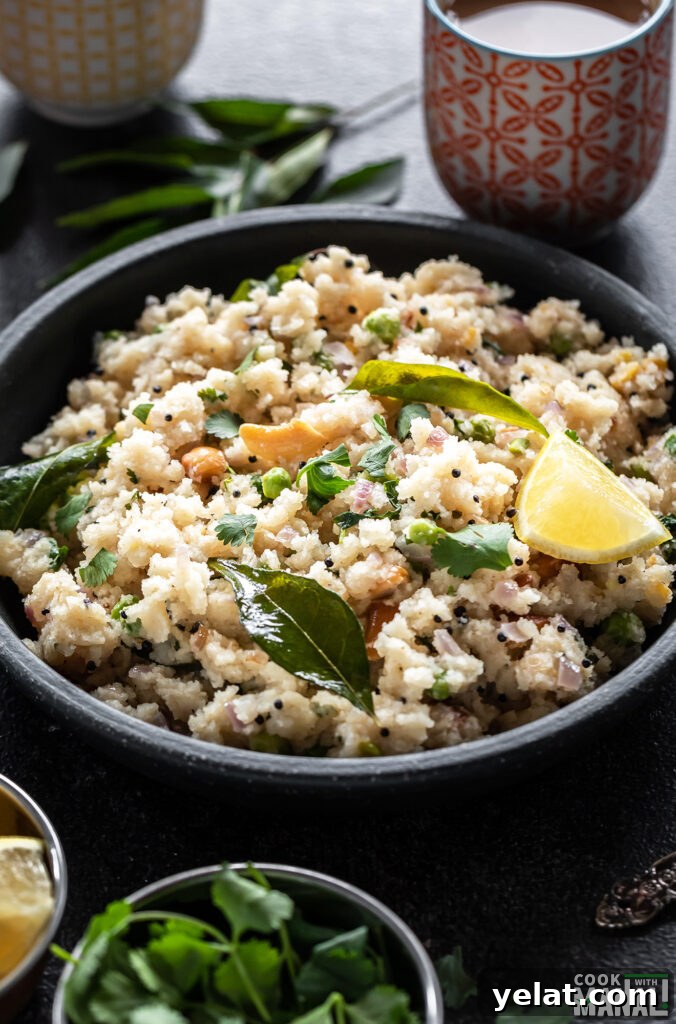
15. Fluff the upma with a fork and serve warm with peanut or cilantro coconut chutney and lemon wedges.
Make Ahead Options For Upma
Upma is best fresh, but you can prep in ways that save time. Roast the sooji ahead and store it; this cuts 5–6 minutes from your morning routine. Leftovers reheat well—use a microwave or reheat in a pan with a splash of water. A potato masher is helpful if the upma has clumped while cooling.
Manali’s Expert Tips
After years of making upma, these tips consistently improve the result:
- Use 3 cups water per 1 cup sooji for a soft, restaurant-style consistency.
- Use oil and ghee freely: 1½ tablespoons oil works well; add 1 teaspoon ghee at the end for extra flavor (optional).
- Add more vegetables: peas, carrots, bell peppers, or small cauliflower florets boost flavor and nutrition.
- Add sooji gradually to avoid lumps—add 1–2 tablespoons at a time and stir between additions.
- Finish with lemon juice to brighten the flavors.
- Serve upma immediately while warm. If texture isn’t ideal, try a different brand or coarseness of sooji.
Different Upma Recipes
If you want variations, try Quinoa Upma for a protein-rich, gluten-free option, or Bread Upma to use leftover bread for a quick and satisfying meal. Both are simple twists on the classic and make great alternatives when ingredients or time are limited.
This post has been updated from the recipe archives, first published in January 2019.
Upma Recipe (How to Make Rava Upma)
Ingredients
- 1 cup sooji/rava, semolina, 182 grams
- 1 & 1/2 tablespoons oil, or ghee; avocado oil used here
- 1 teaspoon mustard seeds
- generous pinch of hing, asafetida
- 7-8 raw cashews, broken
- 1 teaspoon chana dal, soaked 10 mins
- 1 teaspoon urad dal dhuli, soaked 10 mins
- 1 teaspoon chopped ginger
- 1 small red onion, chopped, ~70 g
- 1 green chili, chopped, or to taste
- 12 curry leaves
- 3 tablespoons green peas, frozen
- 3 cups water, 24 oz
- 3/4 teaspoon salt, or to taste
- 1 tablespoon chopped cilantro, + more to garnish
- 1 teaspoon lemon juice
- 1 teaspoon ghee
- lemon wedges, to serve
Instructions
-
Roast the sooji on medium heat for 5–6 minutes until fragrant, stirring constantly so it doesn’t burn. Transfer to a bowl.
-
In the same pan, heat the oil, add mustard seeds, and let them pop. Add hing, cashews, chana dal, urad dal, and ginger. Sauté until they turn light golden.
-
Add onion, green chili, and curry leaves. Cook 2–3 minutes until onions are translucent.
-
Stir in the peas and cook for a couple of minutes to remove the raw smell.
-
Add water, salt, cilantro, and lemon juice. Let it come to a boil. Optionally add 1/2 tsp sugar.
-
Once boiling, add the roasted sooji gradually, stirring in one direction after each addition to prevent lumps.
-
Cover and simmer on low for 2 minutes.
-
Turn off heat, add a teaspoon of ghee if using, mix, cover for another minute, then fluff with a fork.
-
Serve hot with chutney and a lemon wedge.
Notes
- Skip the ghee to keep the upma vegan.
- Use a 3:1 water-to-sooji ratio for the best consistency.
- Add vegetables like carrots, cauliflower, or bell peppers for more flavor.
- Don’t skip the cashews—they add great texture.
Nutrition
Nutrition information is automatically calculated and should be used as an approximation.