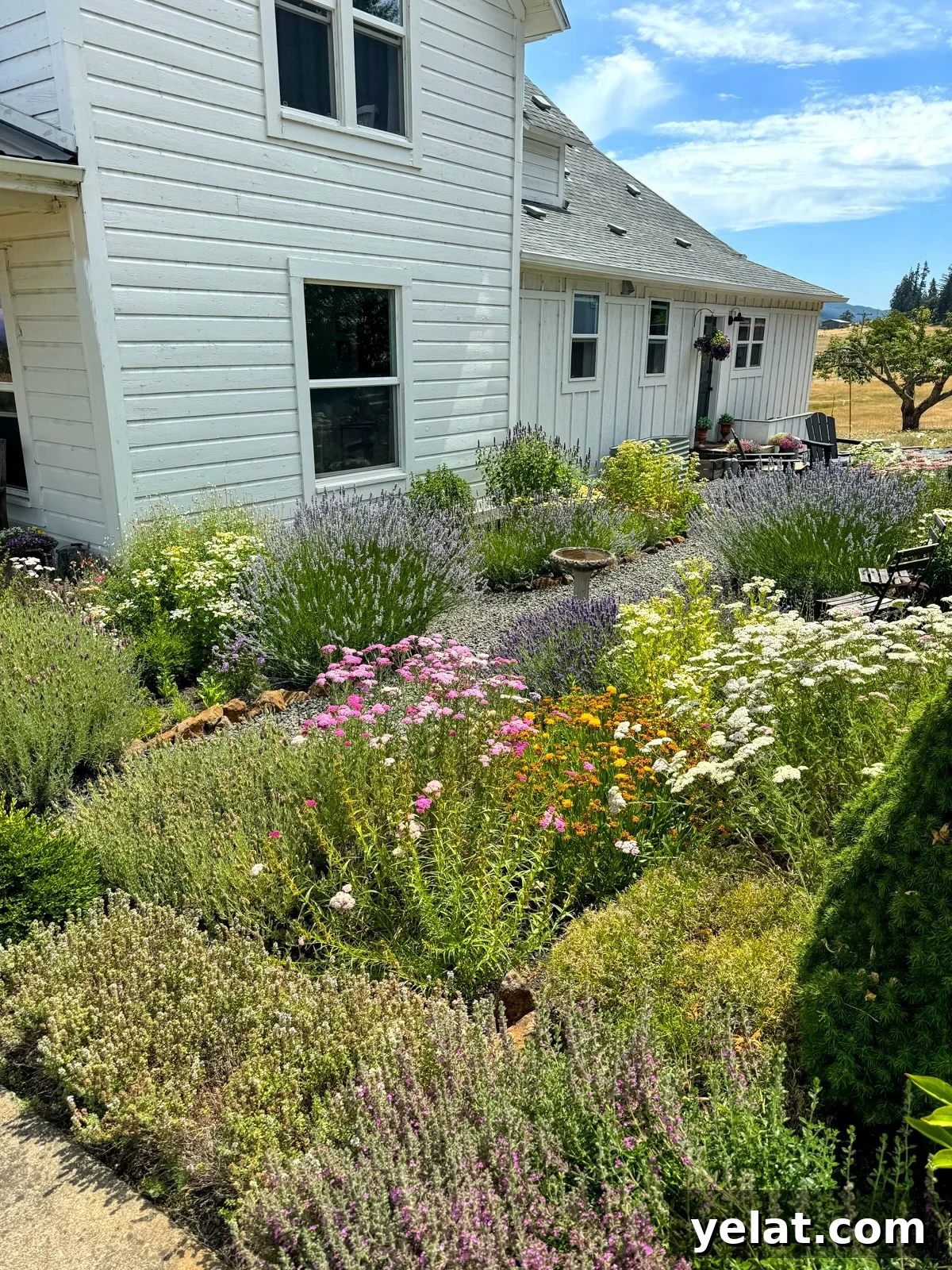
See how we transformed our farmhouse’s herb and flower garden over four years into a thriving, mostly deer-resistant sanctuary. Below I share the before-and-after, our simple DIY watering system, and why maintenance has stayed so easy.
Some links in this article are affiliate links and if you click on them I will receive a small commission at no cost to you.
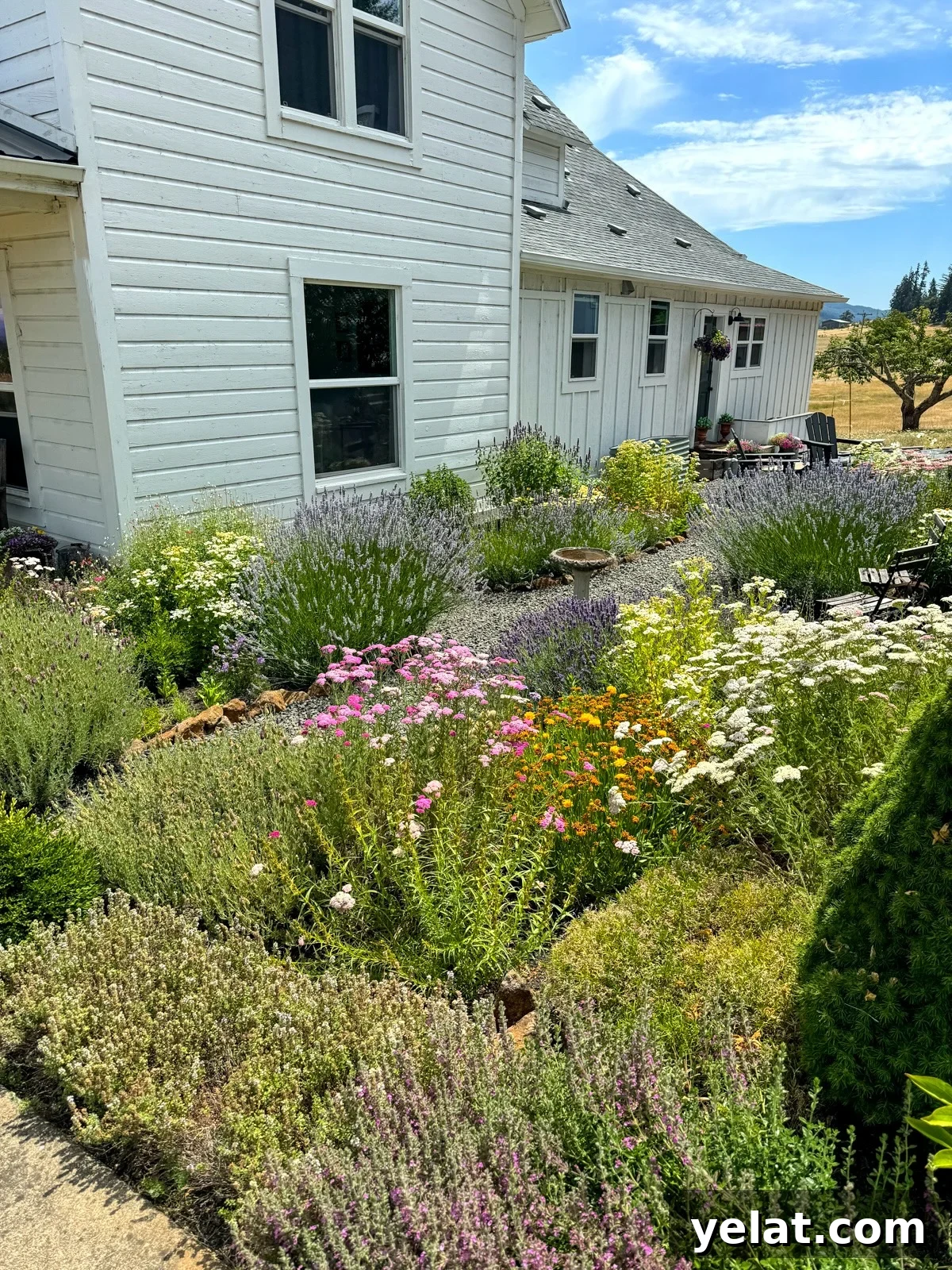
Four years ago I began a deer-resistant flower and herb garden next to our farmhouse, and it has continued to fill in and flourish. We live in an area with a lot of deer, yet by choosing the right plants and keeping the design simple, the garden thrives with minimal effort.
The planting area started as a space that needed excavation when the house got a permanent foundation. Because the area sits a step down from the rest of the yard, I call it the Sunken Garden. Instead of planting deer favorites like roses and hostas, I focused on herbs and scented or less-palatable flowers — lavender, rosemary, thyme, salvias, coneflowers, and penstemon — which have proven to be both attractive and resilient.
Along the way I learned that a thoughtful, staged approach and a basic DIY watering system make this kind of garden easy to maintain and budget-friendly.
The Garden’s Beginnings
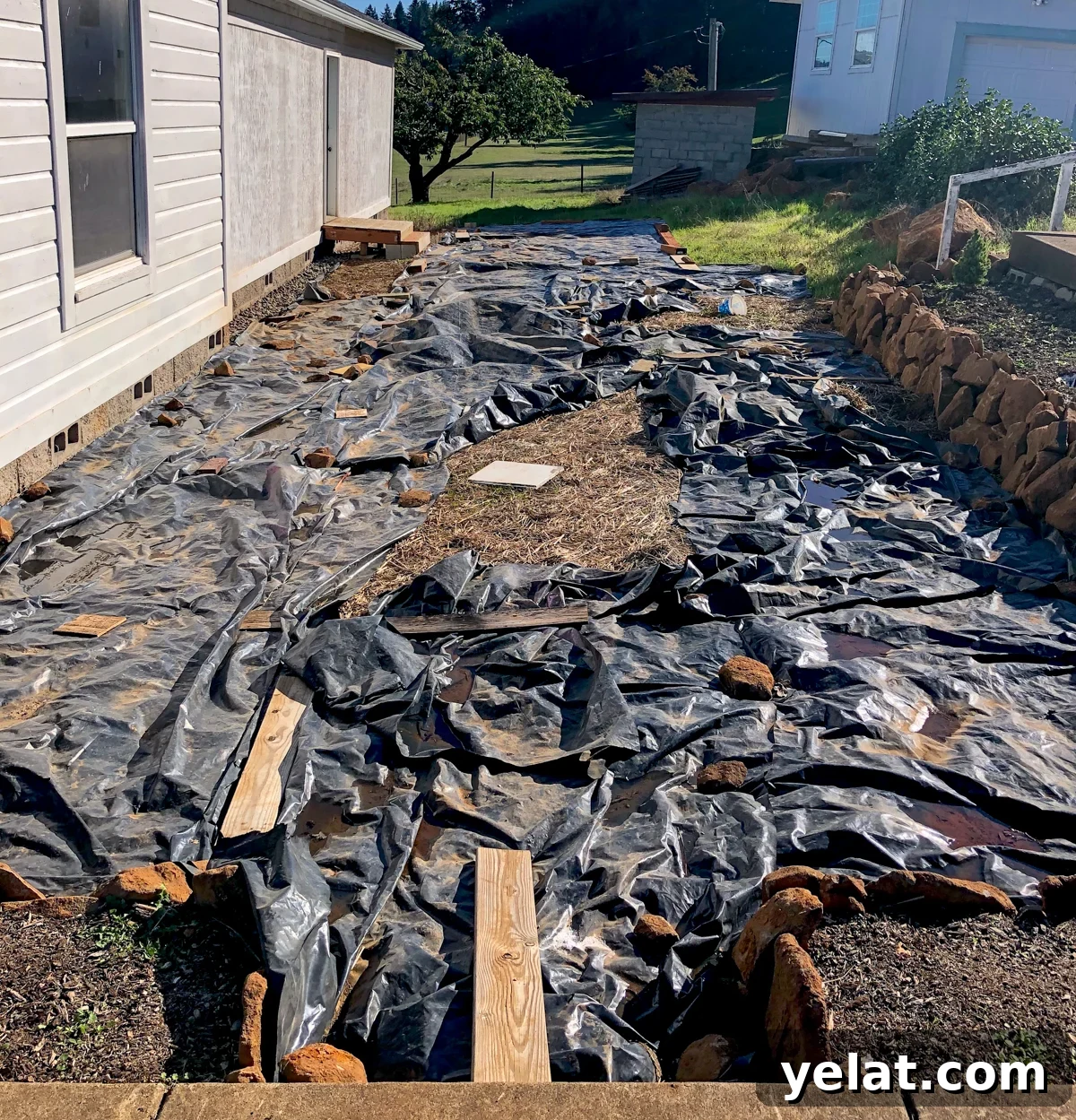
Before: The side yard had been dug out during foundation work and left rocky from the excavation. We used the larger stones to create raised beds around the edges, then covered the area with plastic until we were ready to plant.
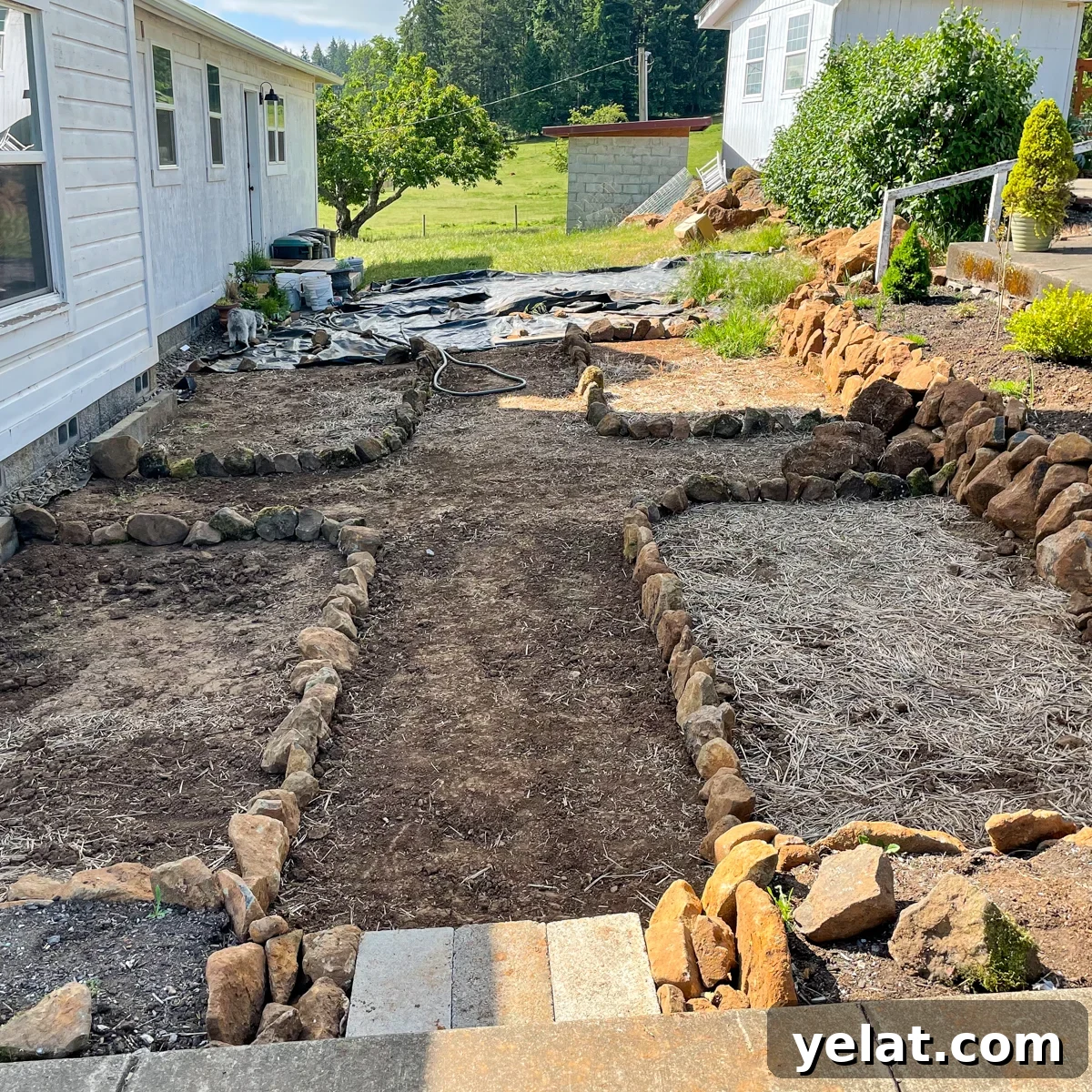
During: In spring 2021 I outlined beds with more rock using a garden plan I drew up. The project moved in stages — the far end still had plastic down as other parts of the house and yard were finished.
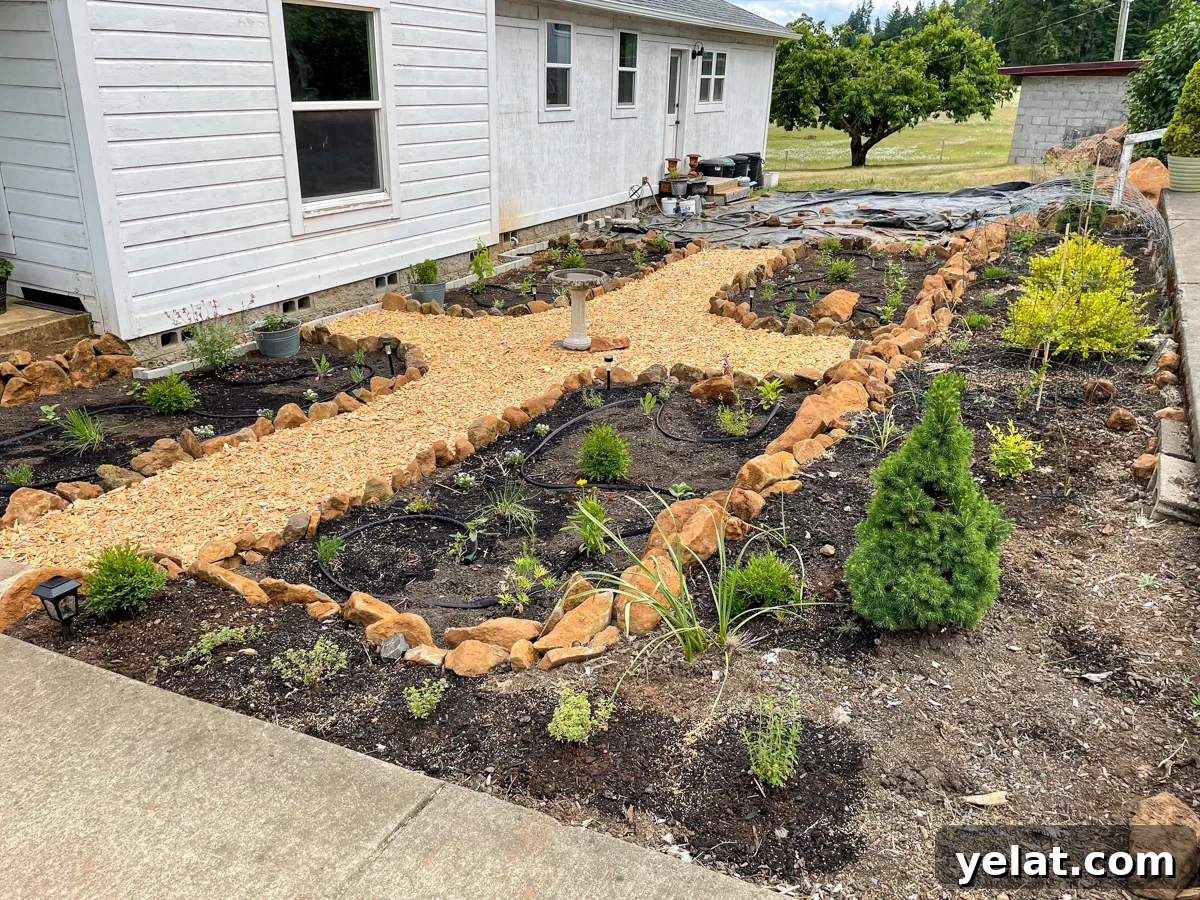
Planted, Year One (June): I built up the soil and planted affordable herbs and flowers that deer usually avoid. I used inexpensive small herbs and 6-packs of annuals to fill space the first season, added compost as mulch, and installed soaker hoses.
Smaller plants saved money and let the beds fill in over months rather than demanding a “full-grown” look immediately. I also planted dwarf boxwoods for evergreen structure and added a top layer of compost to help retain moisture and feed the soil.
The Garden at 2.5 Years
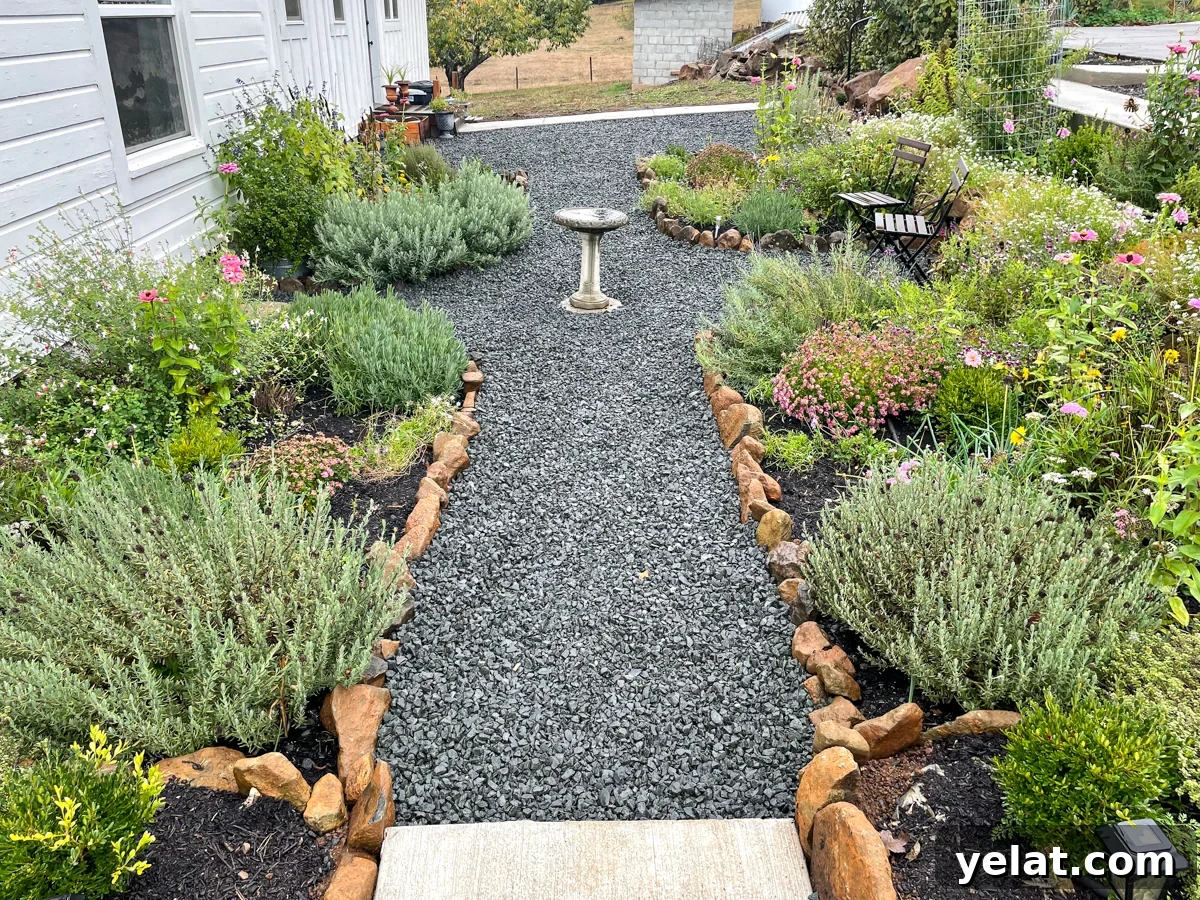
At around two and a half years the plants had filled in nicely. We replaced the temporary wood-chip path with gravel to match a new fire-pit area and cement walkway. I also added and replaced a few plants seasonally where needed.
The Garden at 4 Years + Tips
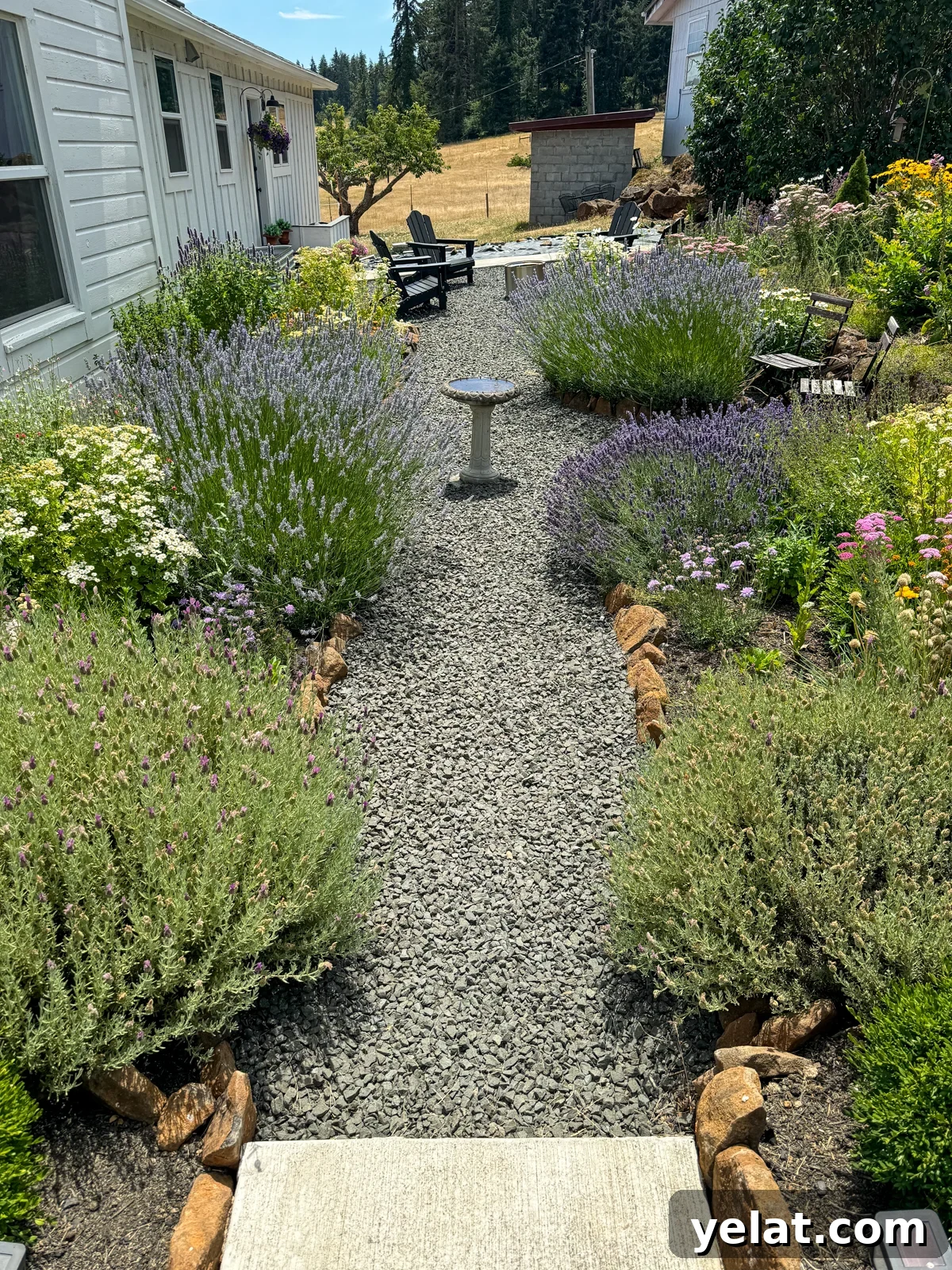
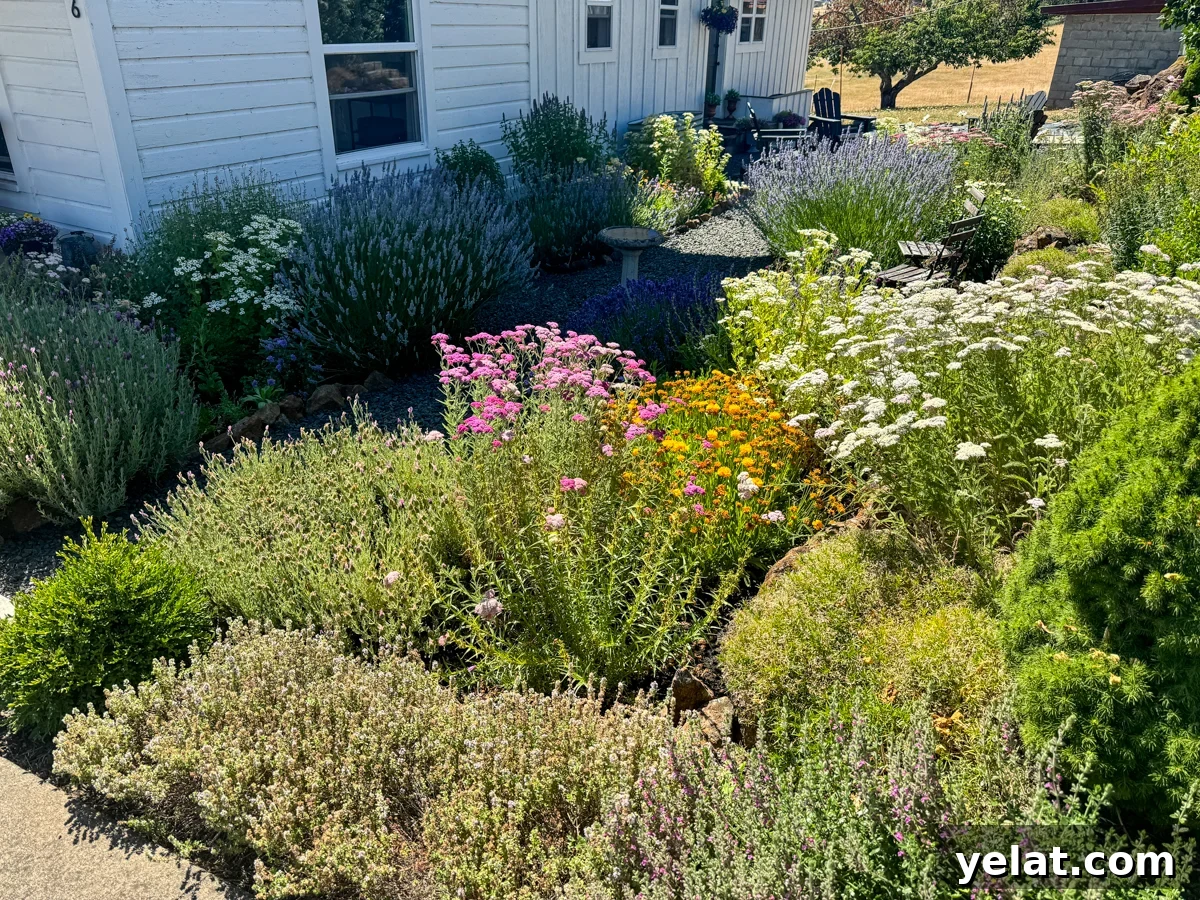
Now in its fourth year the garden is full and lush. Lavender has become a standout — abundant and very cottage-like — although the taller Provence lavender may be a touch too tall for this space. Of the varieties I started with, Spanish lavender, Provence, and a compact English lavender have proven the hardiest through our winters.
I’m still deciding whether to keep the Provence variety because it tolerates winter best, or to replace it with more compact English lavender for a tidier look. Parts of the area still have black plastic where we’ve been preparing future beds and pathways; gravel will eventually replace some of that space.
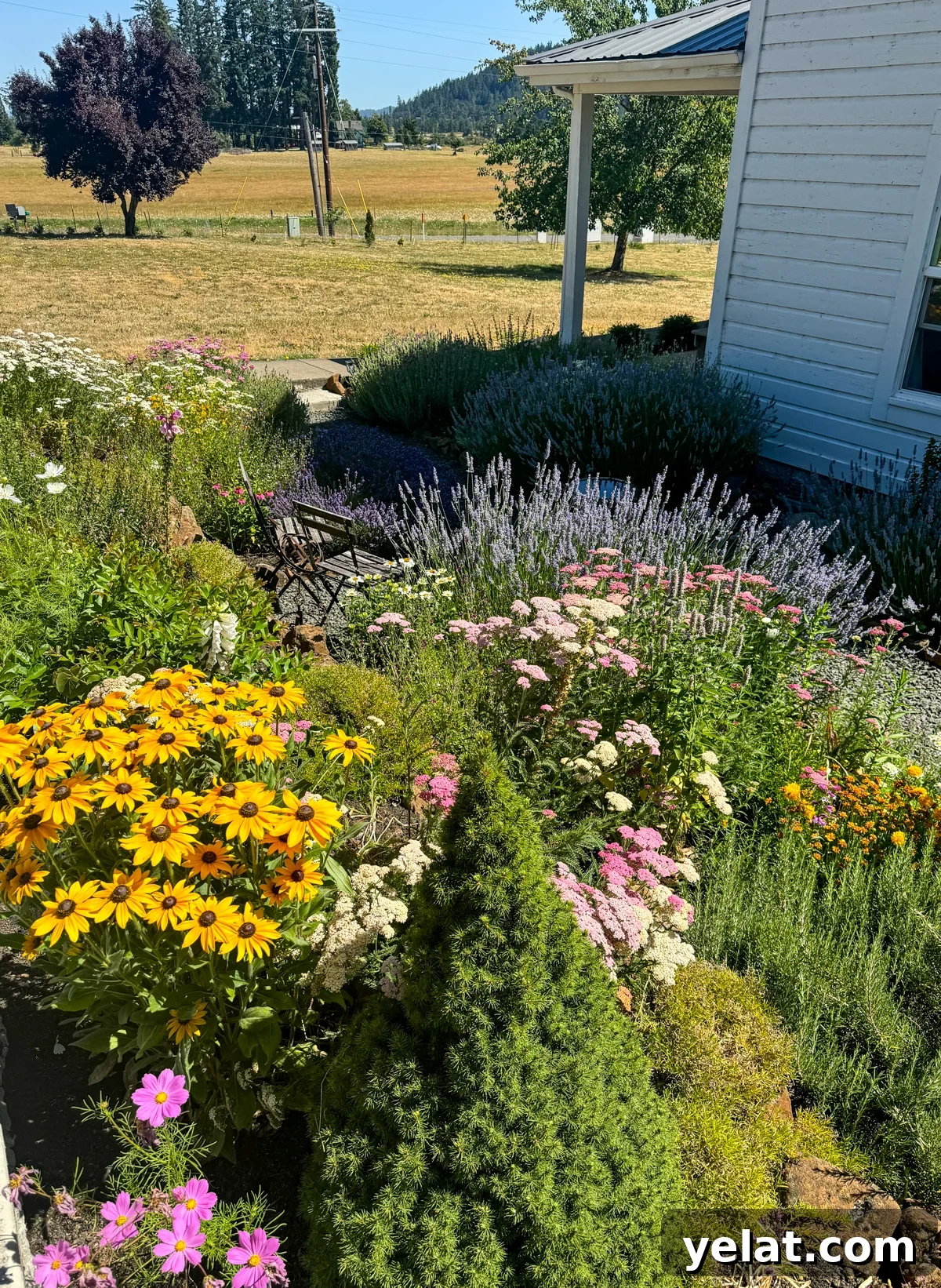
Overall, I’m pleased that most plants are left alone by deer, which means I don’t rely on constant repellents or motion-activated deterrents. A few practical takeaways from starting a garden like this:
- Accept the early “fresh” look: Smaller, inexpensive plants look clean and save money compared with buying many larger specimens.
- Use affordable herbs and annuals: These act as placeholders while perennials establish.
- Build in stages: Use temporary materials like wood chips and plastic as you make decisions about permanent paths, patios, or additional beds.
- Enjoy the process: Gardening can be gradual and rewarding — there’s no need to rush a mature look.
Easy DIY Watering System
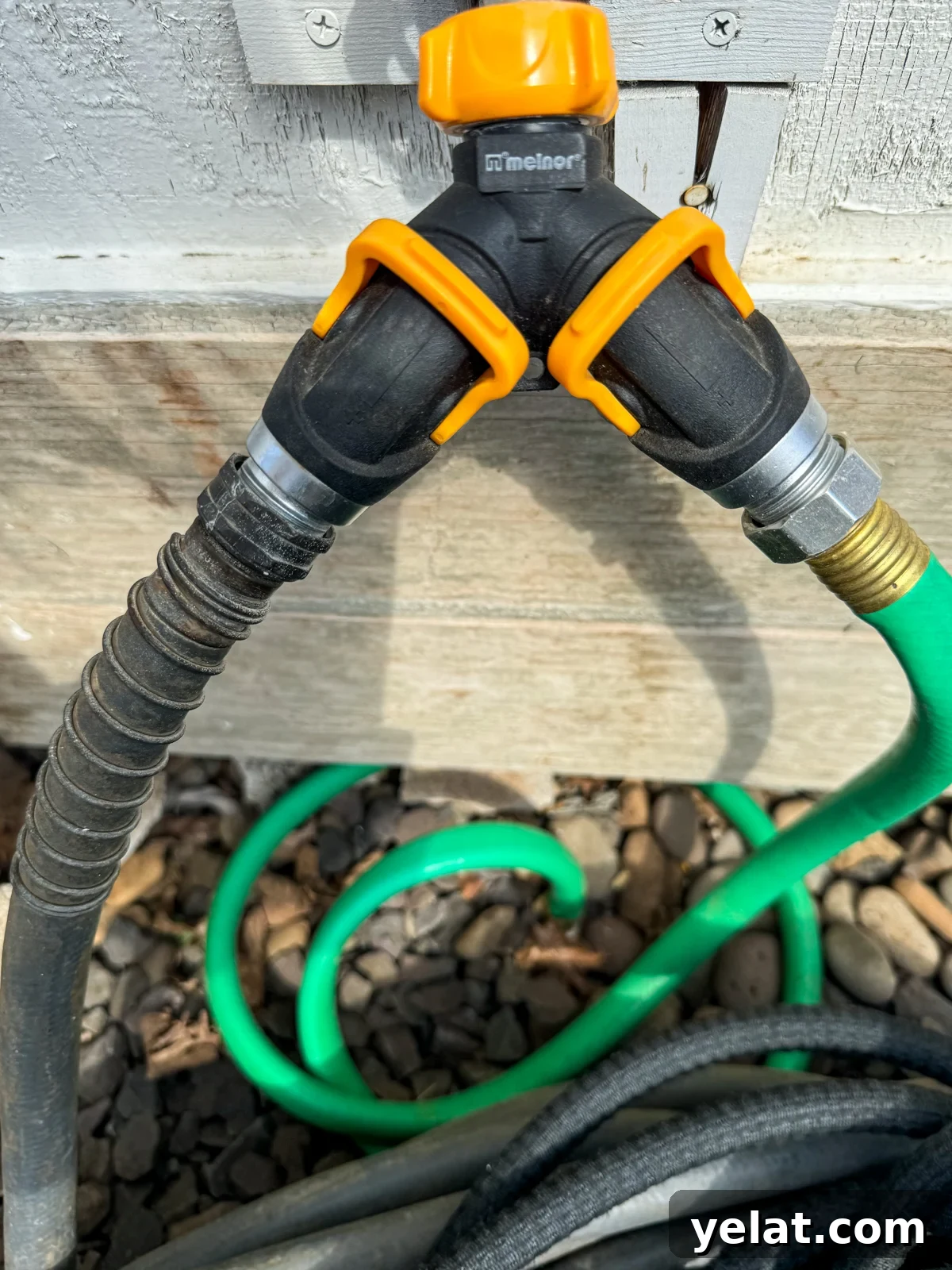
We installed a simple PVC-and-soaker-hose watering system that lets us water the beds with a single lever or a timer. The system connects to a two-way hose valve at the spigot so one side can be used for hand-watering while the other runs to the underground piping.
PVC trenches were dug to each bed, pipes glued and connected, and short hoses link the underground PVC to cloth soaker hoses laid through the planting areas. We made the PVC elbows low to the ground and painted them brown so they blend in better.
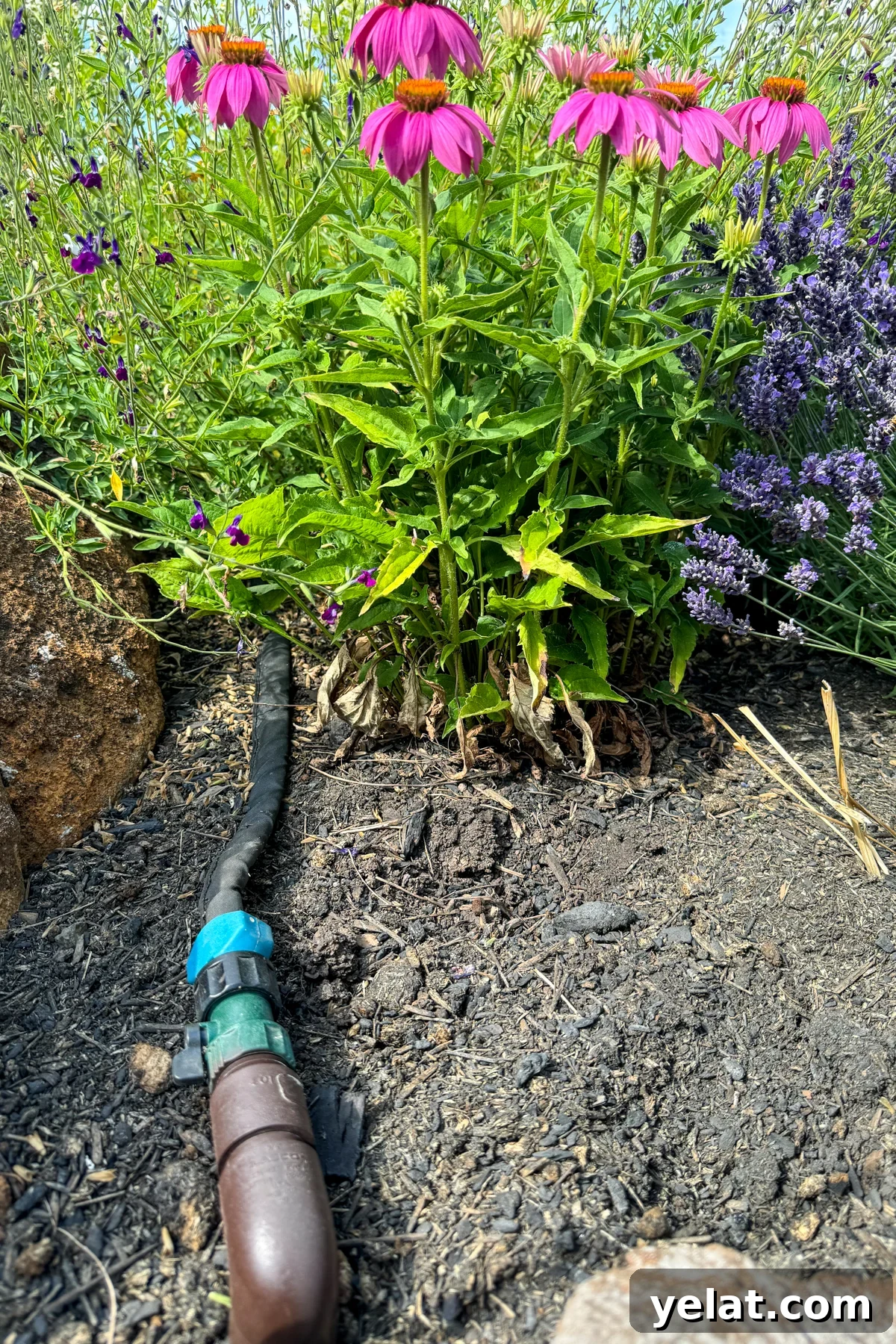
The cloth soaker hoses perform well; they’re easy to position and move as plants fill the beds. Most of the hose connections get hidden once the plants grow in, though they remain accessible if you need to pull back foliage to reach a valve or connection.
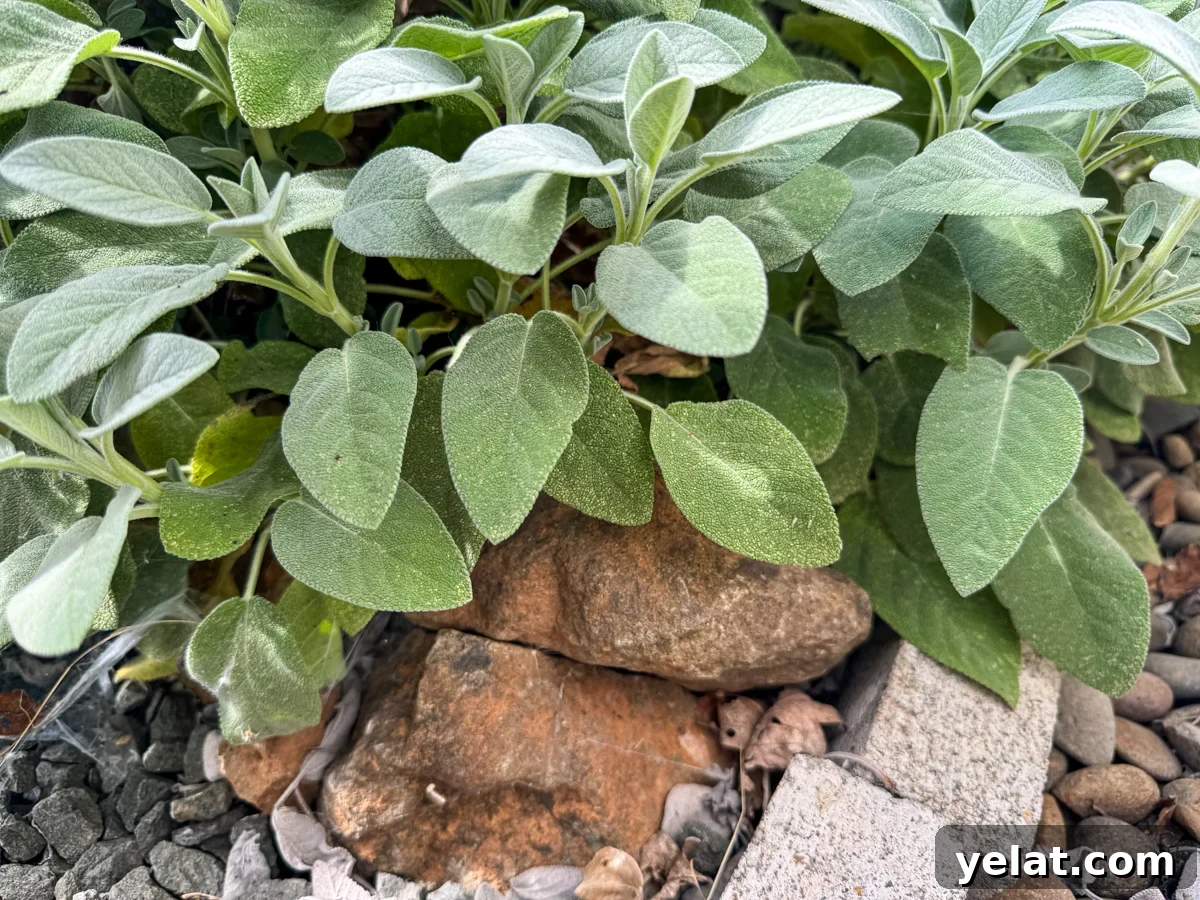
Many connections become hidden by the first full season of growth.
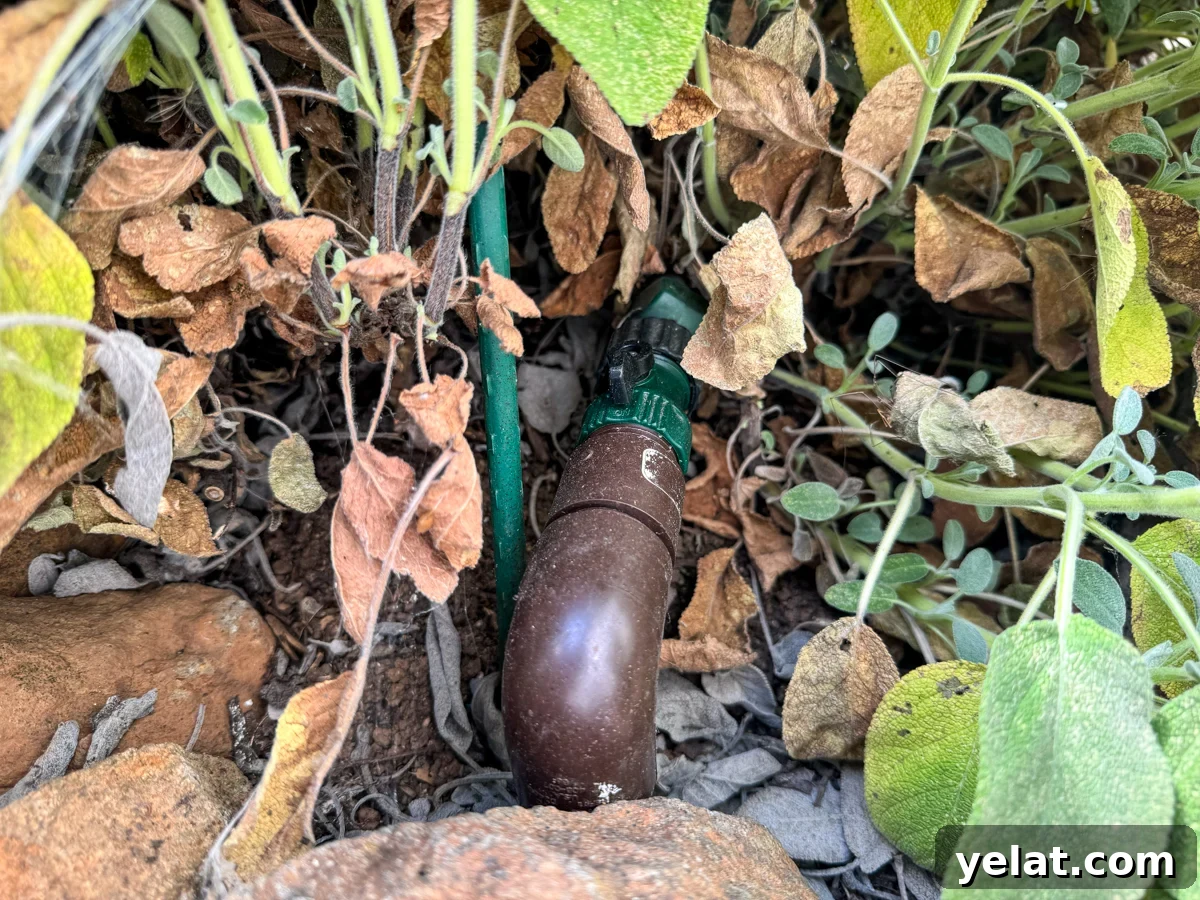
If needed, the hoses and valves are easy to access by moving back surrounding plants.
Low Maintenance Tips
Besides the watering system, a few choices keep maintenance low:
- Paper and mulch for weed suppression: Using a paper layer topped with mulch for the first few years suppressed weeds well. After plants established, I removed the paper and continued with compost mulch.
- Pick low-pruning varieties: I selected compact boxwoods and avoided large, high-maintenance shrubs so trimming stays minimal.
- Create permanent paths and patios: Wide paths and a dedicated patio for a fire pit reduce planted areas to maintain.
- Use clean gravel with a plastic base for paths: I lay 6-mil black plastic under clean 3/4″ gravel (no fines) to prevent wind-blown weed seed and reduce maintenance. Avoid landscape fabric; gravel with sharp edges helps drainage and durability.
What maintenance is needed for a garden like this?
- Late winter or early spring: cut back perennials (a hedge trimmer works well) and tidy beds.
- Spring: add a layer of compost mulch to feed and protect the soil; I haven’t needed to use additional fertilizer.
- After spring bulbs finish: cut back spent foliage.
- Optional: plant annuals or replace any plants lost over winter.
- Summer: deadhead as desired to keep things tidy and encourage reblooming; harvesting blooms and herbs for the house helps with appearance naturally.
- Fall: light clean-up is optional; leaving seedheads and stems over winter can benefit birds.
Bonus: Monthly garden chore checklists can help you stay on top of tasks throughout the year.
I hope this update on the Sunken Garden — and the simple systems and plant choices that keep it low-maintenance — encourages you to create a pretty, durable garden that deer mostly leave alone. With the right plants and a straightforward watering setup, you can enjoy color and fragrance without constant intervention.
Disclosure: affiliate links in this article will earn commission based on sales, but it doesn’t change your price.