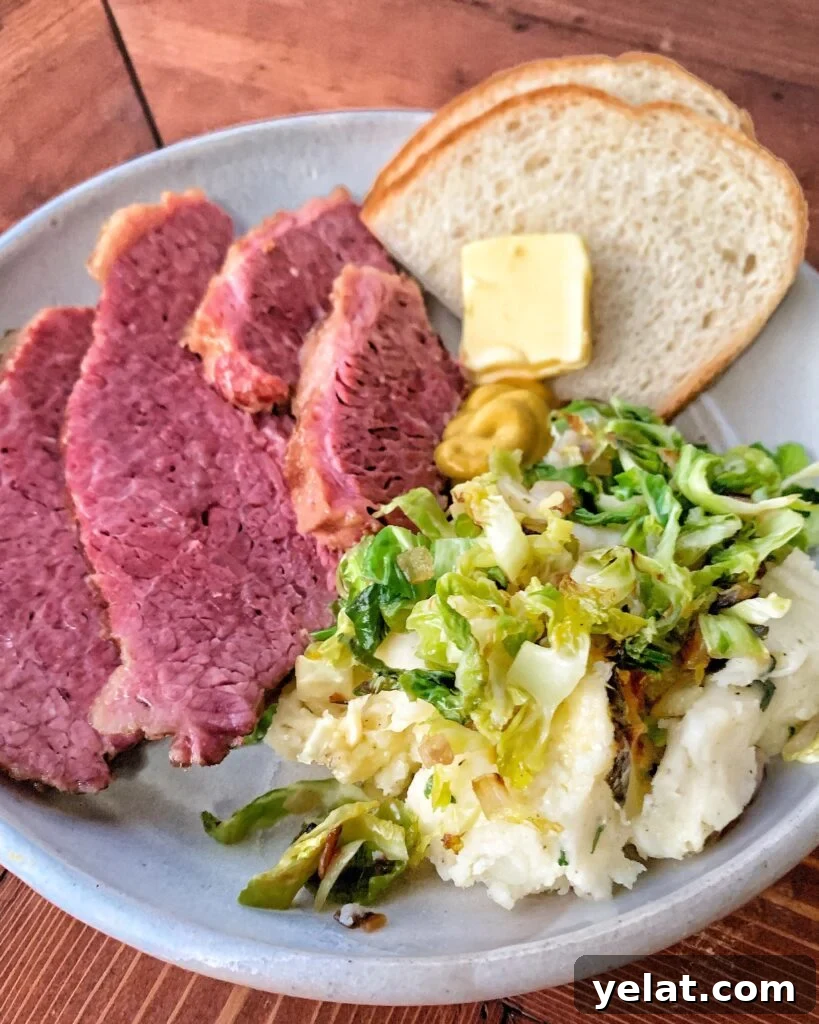
Even Better than Your Deli
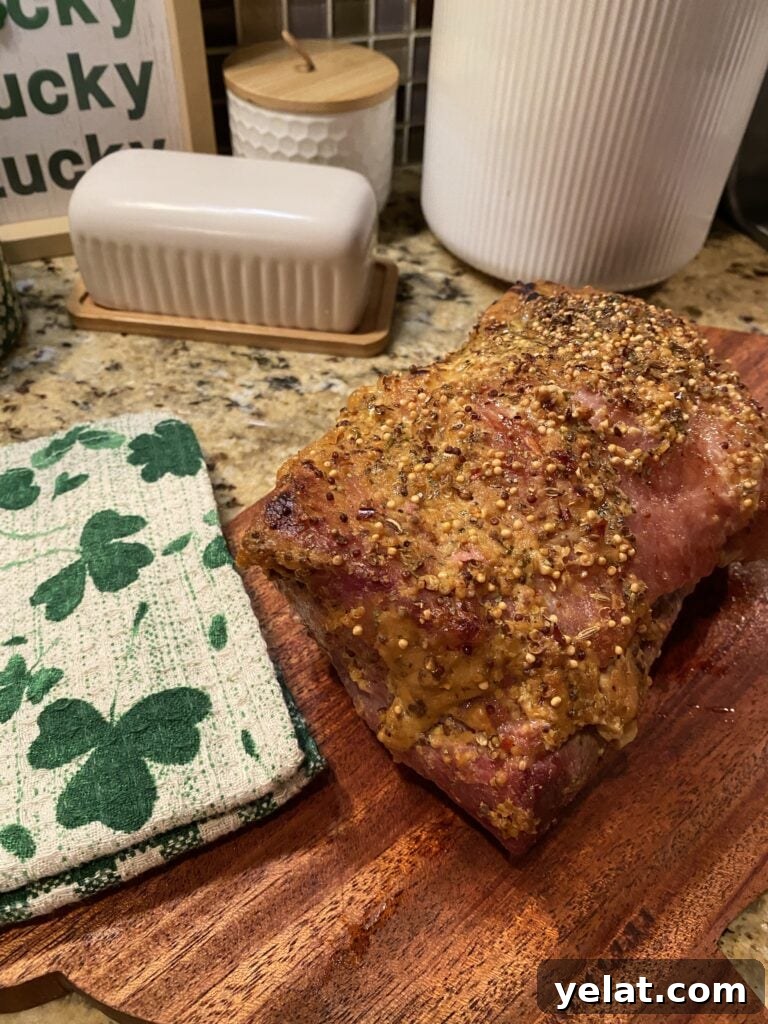
This oven-baked corned beef with mustard glaze is my favorite way to prepare corned beef. While boiling is the traditional and most common method, baking the brisket gives it a firmer texture and more concentrated flavor.
If you prefer boiled corned beef, no hard feelings—both methods are delicious. I’ve found that baking produces a tender, flavorful result with a lovely glazed crust.
I learned this oven-baked technique from my mother-in-law years ago. The recipe uses simple ingredients that pair perfectly with the saltiness of the beef, and it’s easy to scale for a crowd.
Below is the full, printable recipe with ingredients and step-by-step instructions. After the recipe you’ll find additional photos and helpful tips for the best results.
Full, Printable Recipe
Oven Baked Corned Beef with Mustard Glaze
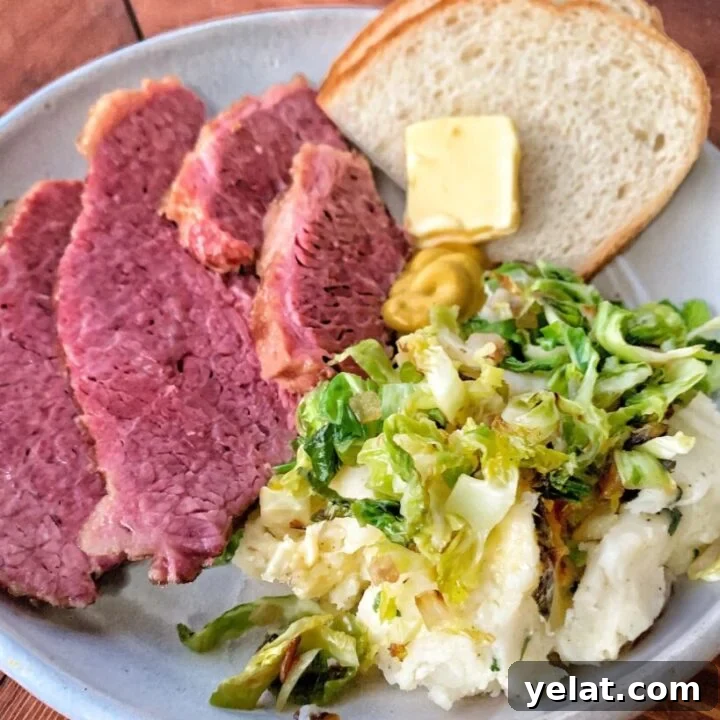
A tender, juicy corned beef baked with a sticky mustard glaze is my preferred method for Saint Patrick’s Day. This oven approach concentrates flavor, yields tender meat that slices beautifully, and creates a caramelized glaze that elevates the dish.
Ingredients
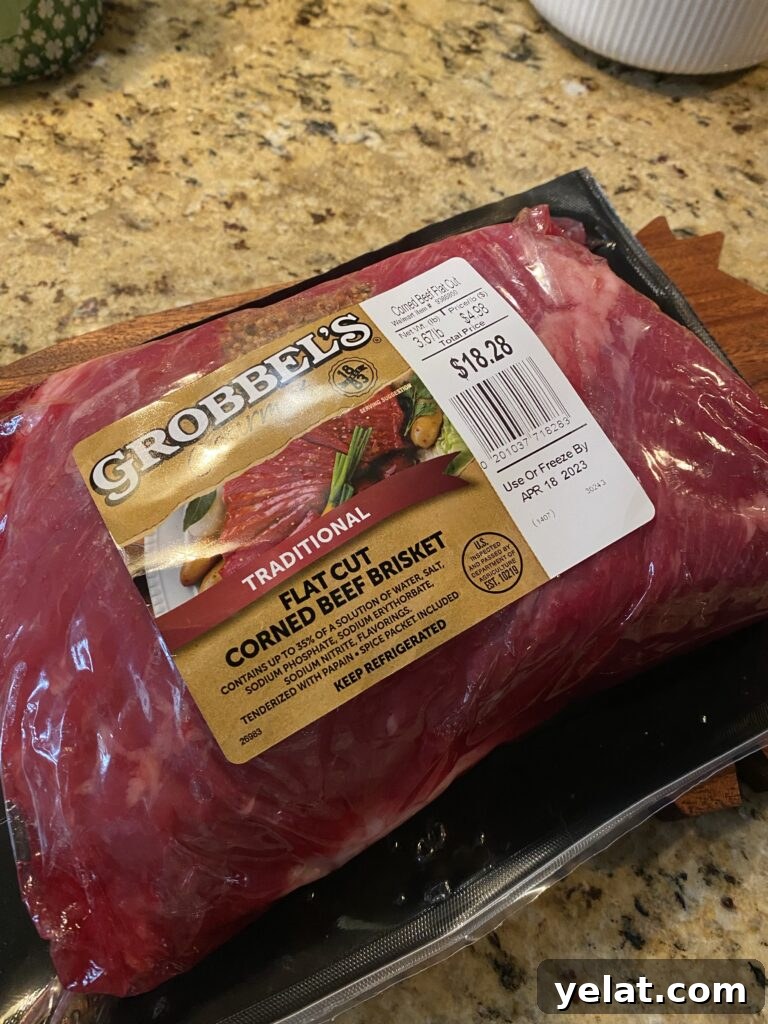
- 3 lb flat cut corned beef (this method also works for point cut; point cut has more fat and renders nicely, while flat cut is leaner)
- Approximately 1 tablespoon each of yellow mustard, Dijon mustard, and grainy mustard
- 1 tablespoon brown sugar
- 1/2 teaspoon sweet paprika
- Black pepper to taste
- 1 teaspoon onion powder
Instructions
- Remove the corned beef brisket from its package and set aside the seasoning packet.
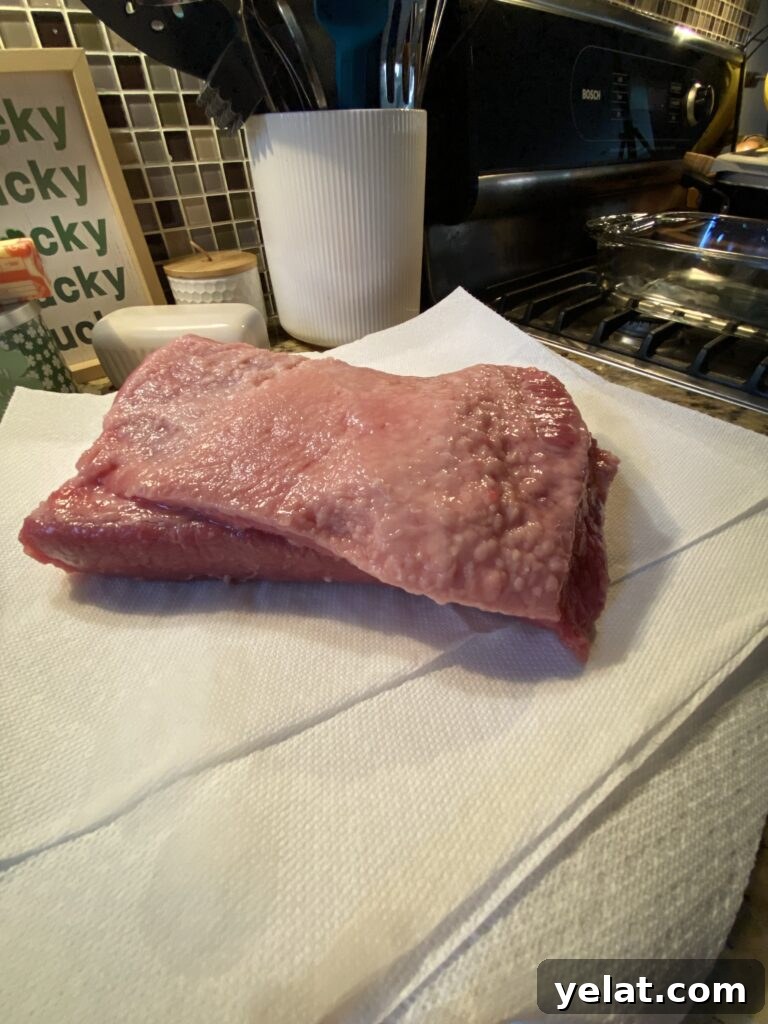
- Rinse the brisket thoroughly under cold running water to remove excess brine and any gelatinous residue.
- Pat the corned beef dry with paper towels.
- Place a few sheets of foil in a baking dish with tall sides (do not use a cookie sheet). Position the brisket in the foil with the fatty side up.
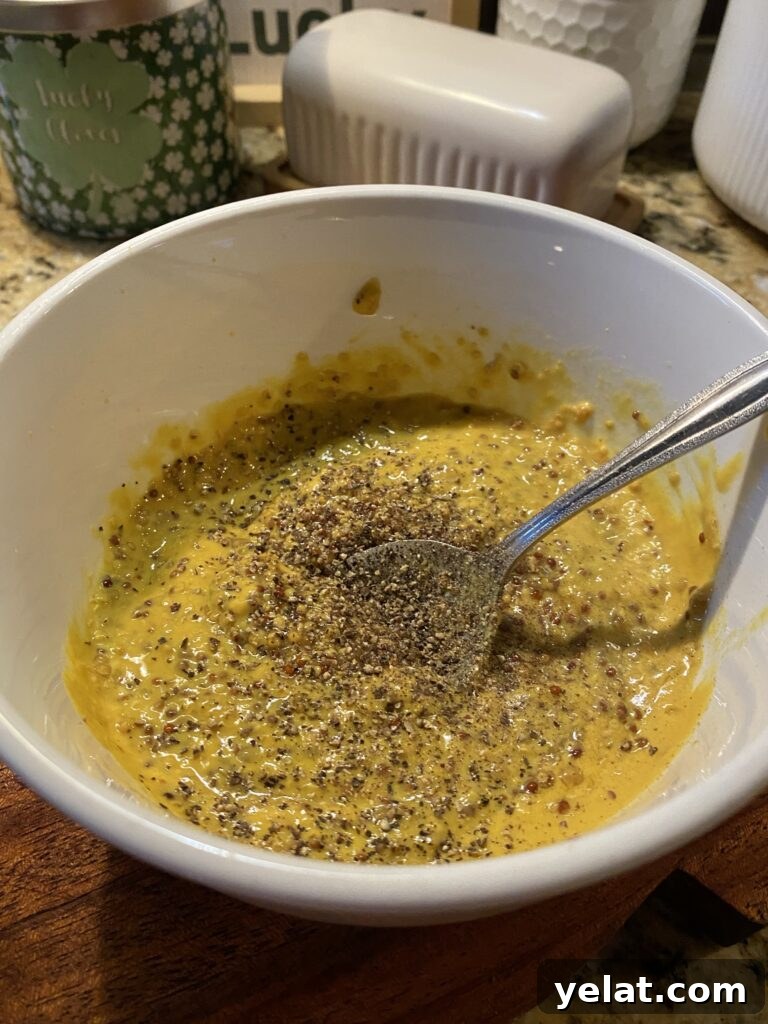
- In a bowl, mix the three mustards, brown sugar, onion powder, black pepper, and paprika. Adjust seasoning to taste and reserve a few tablespoons of the mixture for later.
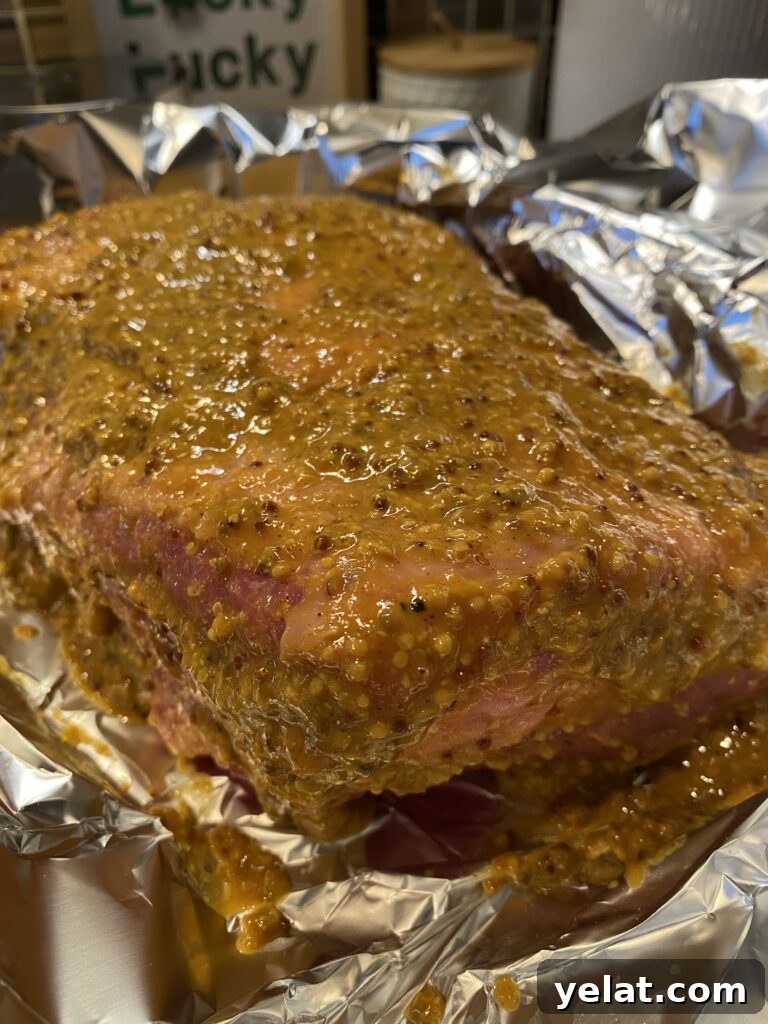
- Spread most of the mustard mixture over the top and sides of the brisket.
- Seal the foil tightly around the brisket, taking care that the foil does not rest directly on the meat. Preheat the oven to 350°F (175°C). Bake for about one hour per pound.
- Bake low and slow. A meat thermometer can be used, but oven temperatures and brisket shape affect readings. The general guideline here is one hour per pound, which produces tender results; longer cooking usually increases tenderness.
- After the allotted bake time, carefully open the foil. Spread the reserved mustard mixture on top and sprinkle the seasoning packet over the surface. Increase the oven temperature to 375°F (190°C) and bake uncovered for an additional 15 minutes. For a deeper caramelized crust, broil for a few minutes at the end—watch closely to prevent burning.
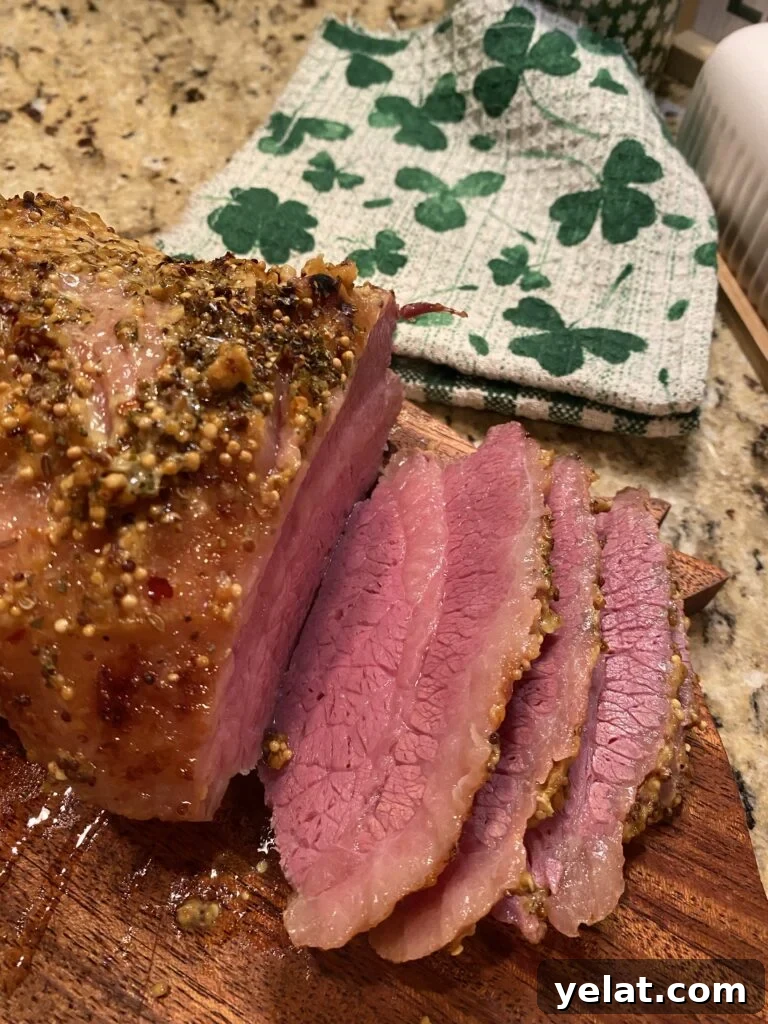
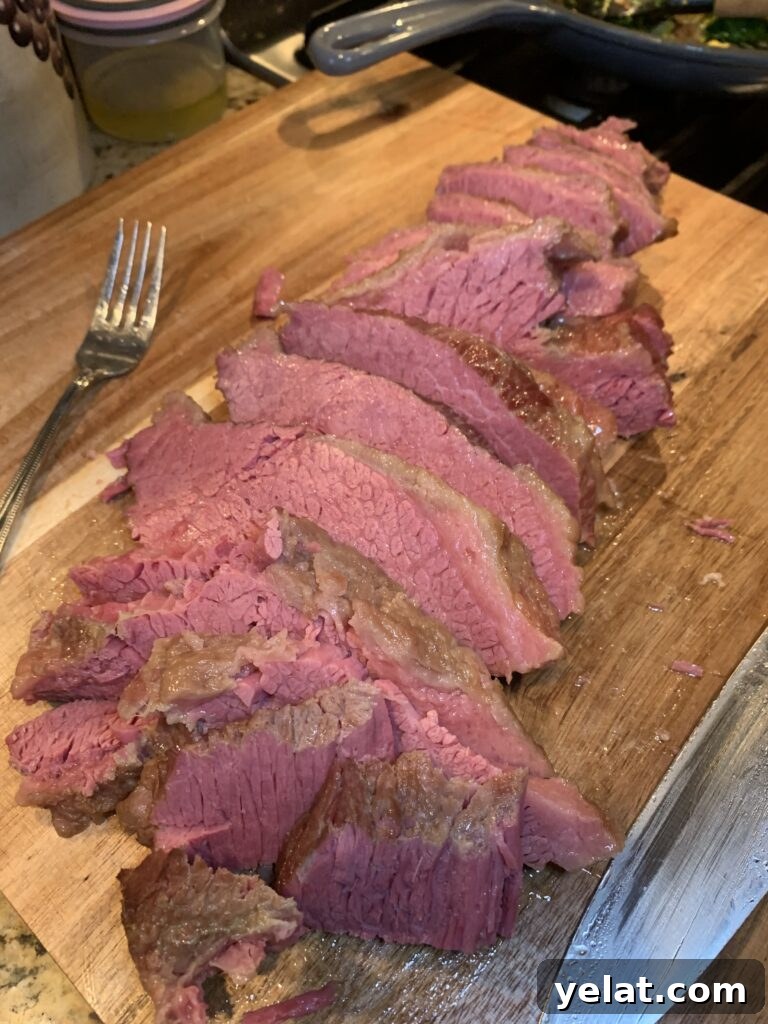
- Remove the brisket from the oven, loosely tent with foil, and let it rest 15–20 minutes. Slice against the grain to your preferred thickness for the best texture.
Irish Skillet Potatoes
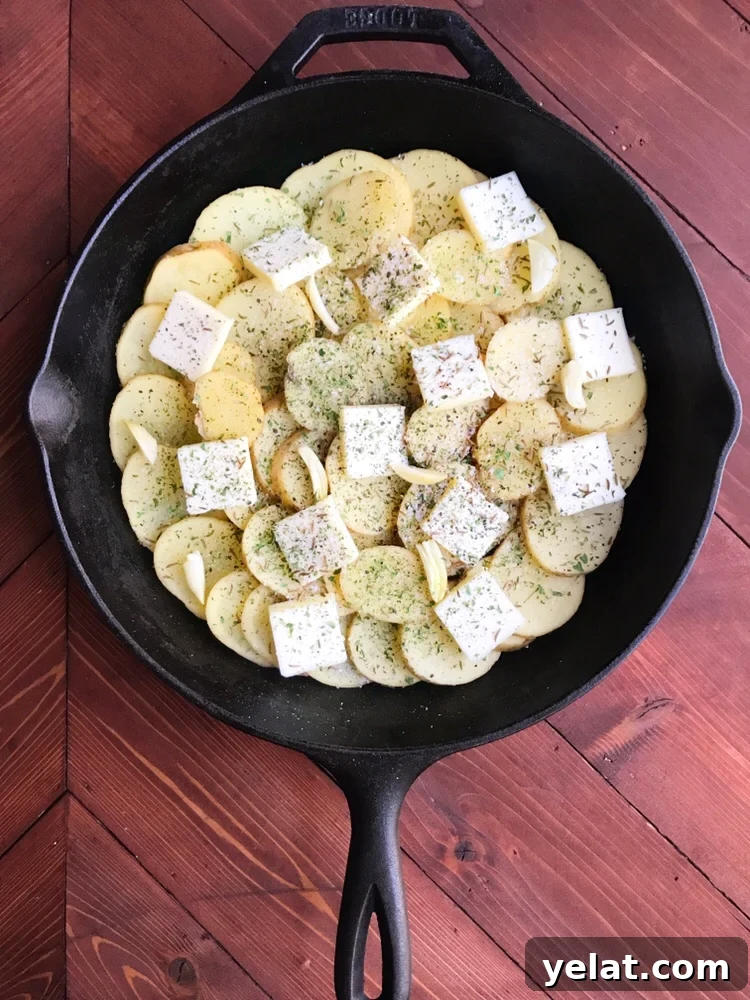
Irish skillet potatoes make a perfect side for this corned beef. They pair well with the tangy mustard glaze and complete a hearty meal for St. Patrick’s Day or any time you crave a comforting plate.
Serve this glazed corned beef with skillet potatoes and sautéed cabbage or your preferred sides for a satisfying feast.
Point Cut Versus Flat Cut
The point cut and flat cut differ mainly in fat content and shape. Point cut has more fat, which often means extra flavor and a more tender final product. It can be a bit trickier to slice neatly, but the flavor payoff is worth it for many cooks.
Flat cut is leaner and typically presents more evenly for neat slices. Choose the cut you prefer based on texture and appearance—both will work with this oven-baked method.