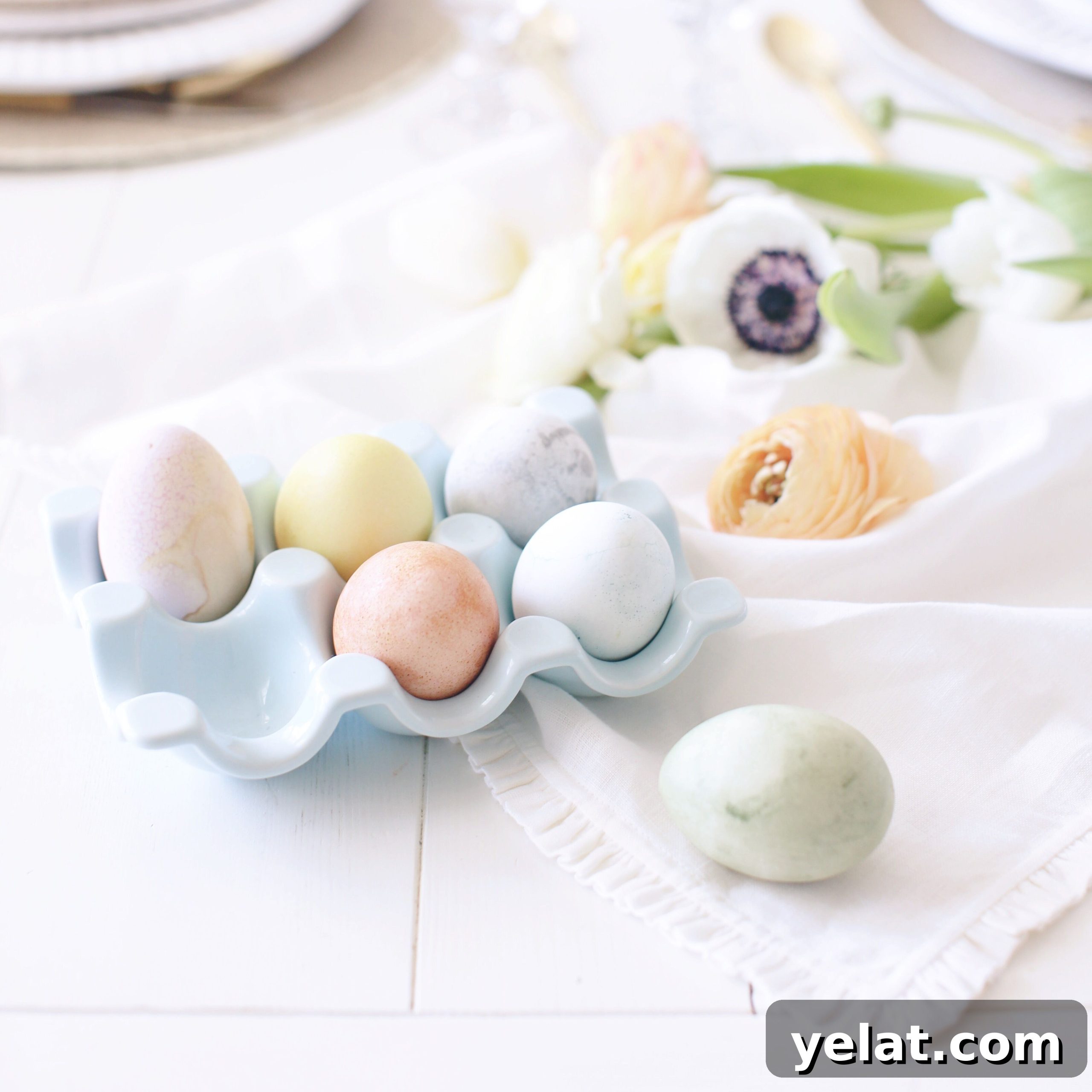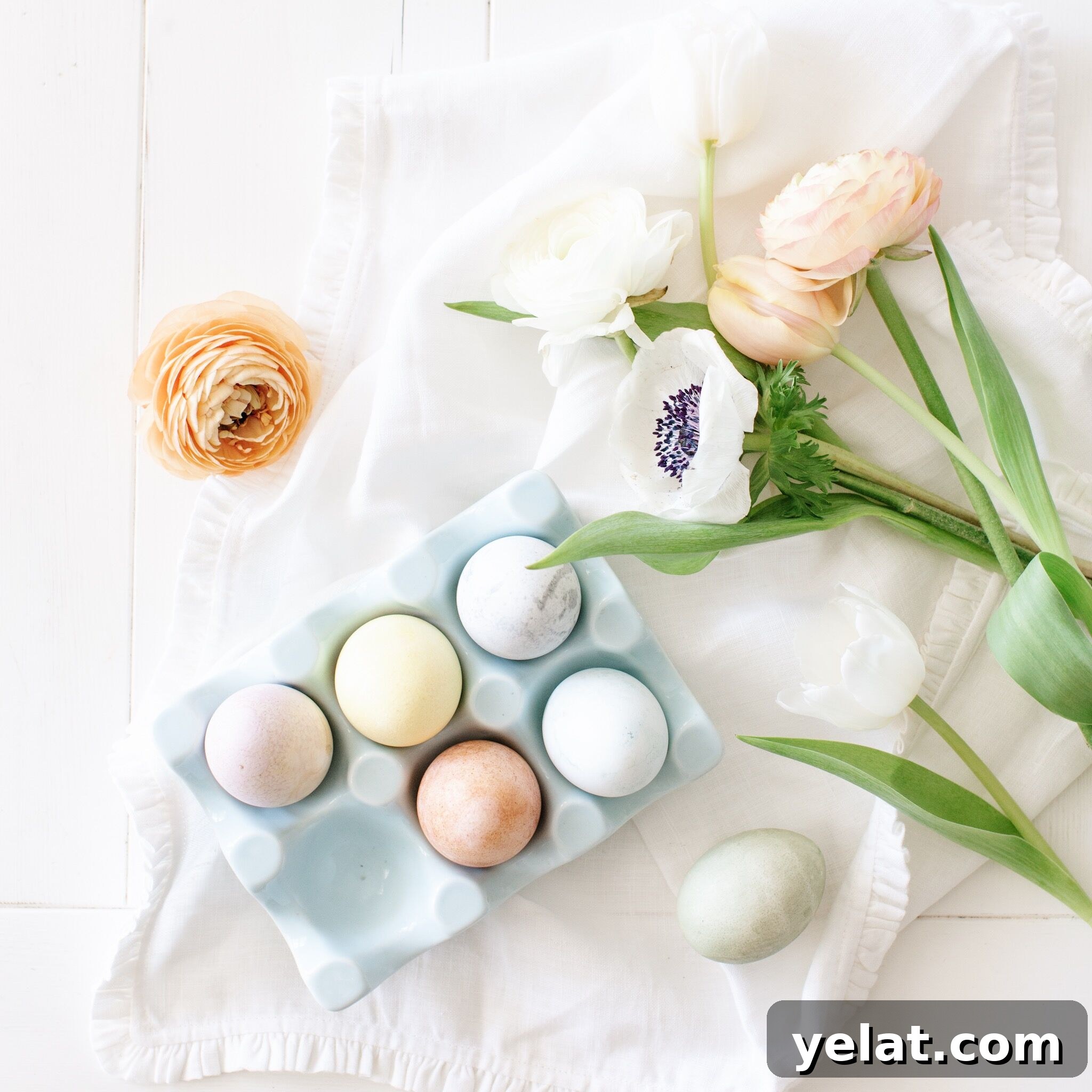
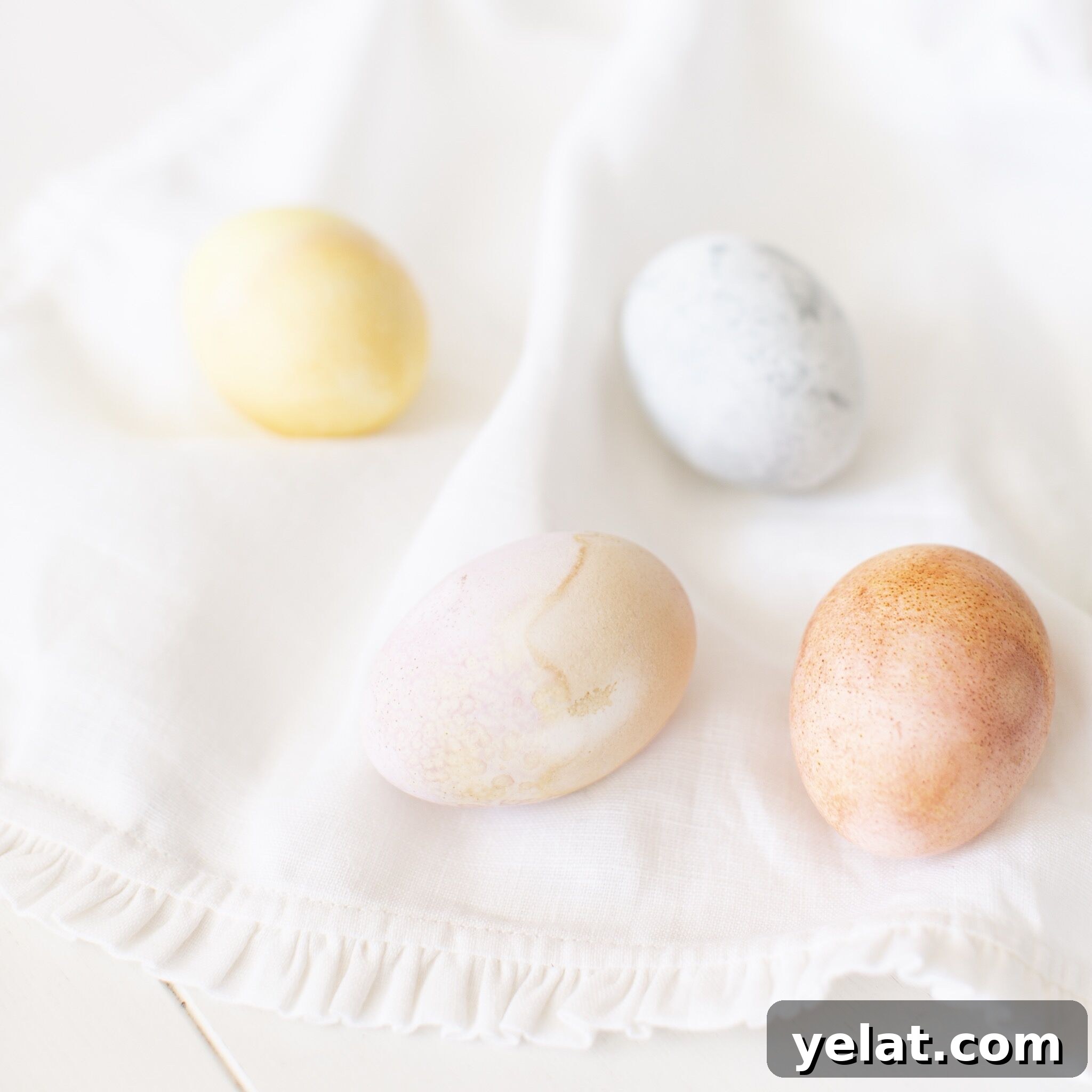
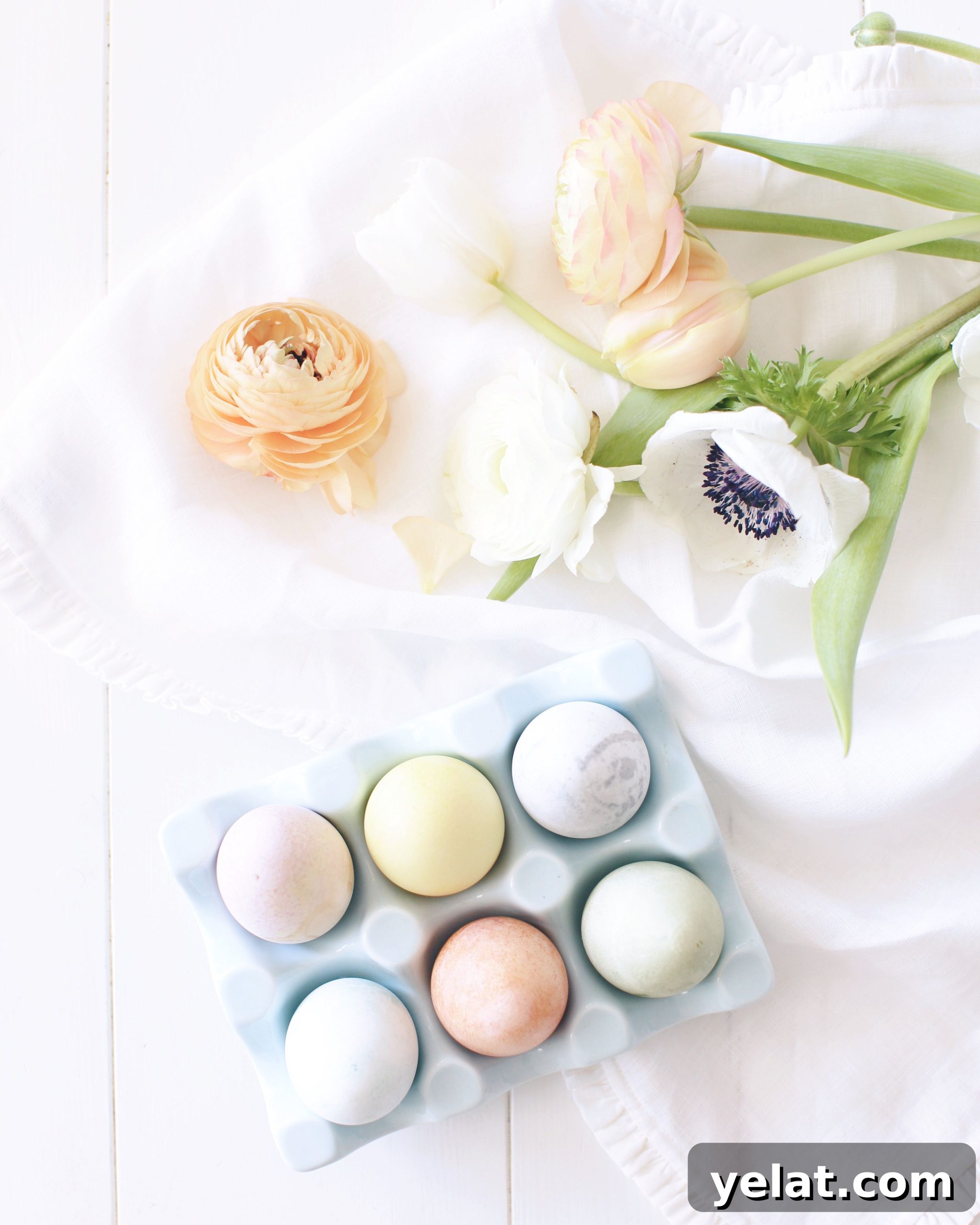
Naturally dyed Easter eggs are simple to make and a delightful way to involve kids in the kitchen while encouraging creativity. The best part is these eggs are still edible, so there’s no waste.
I’ve wanted to try natural dyeing for years and finally gave it a go. It felt a bit like a science experiment—some methods worked beautifully and others fell flat. A little common sense helped: if a substance stains your hands or clothes (hello turmeric), it usually stains an egg, too. Some surprises popped up, though—matcha barely changed the eggs at all.
Equipment
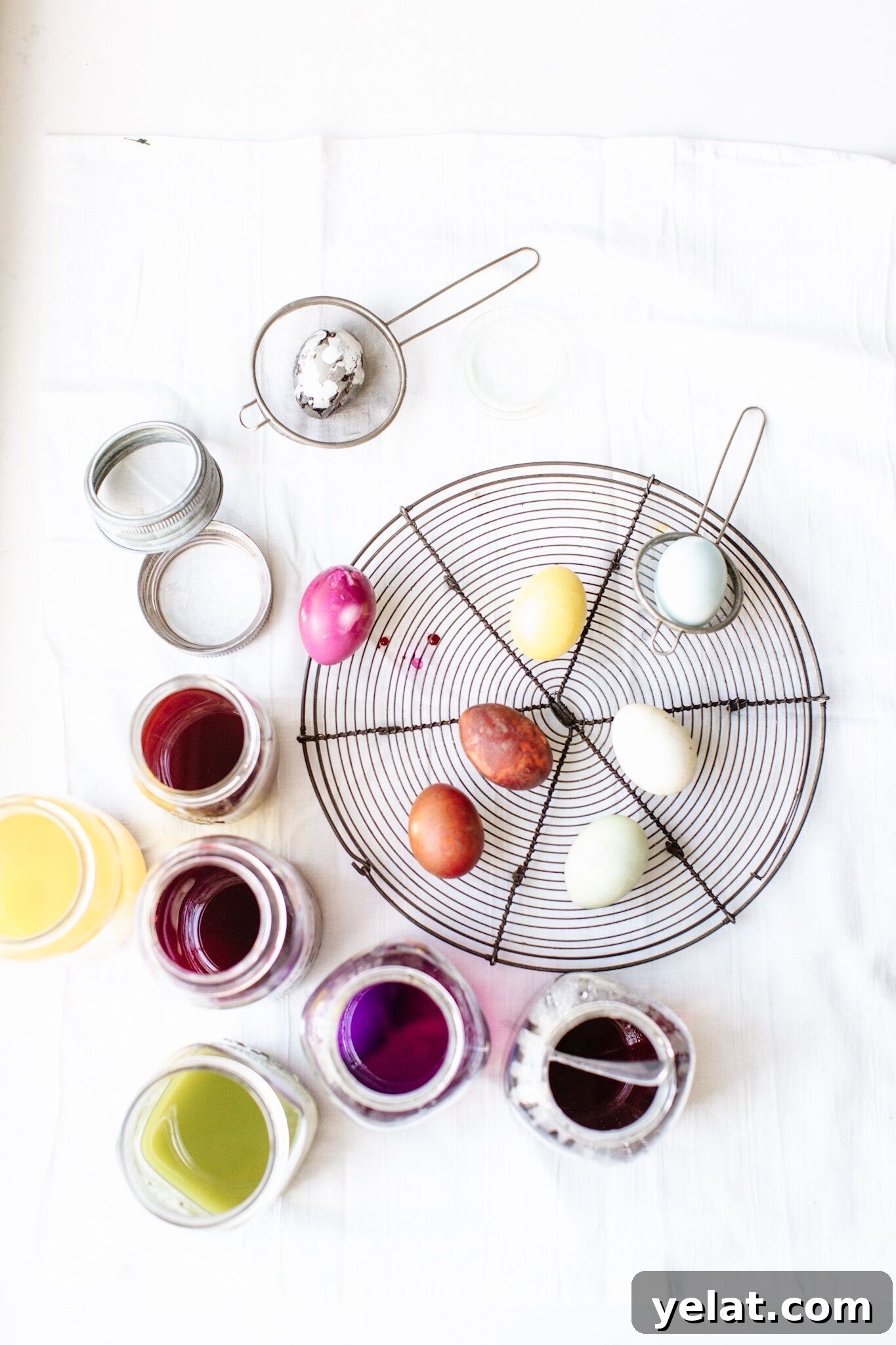
Quart-sized canning jars are ideal because they have tight lids and are large enough to fully submerge eggs in liquid. We pre-boiled our eggs so they were cooked to preference (about 7–10 minutes depending on how set you like the yolk). You could cook the eggs directly in the dye solution for stronger color, but be aware that leaving eggs in hot liquid risks overcooking them.
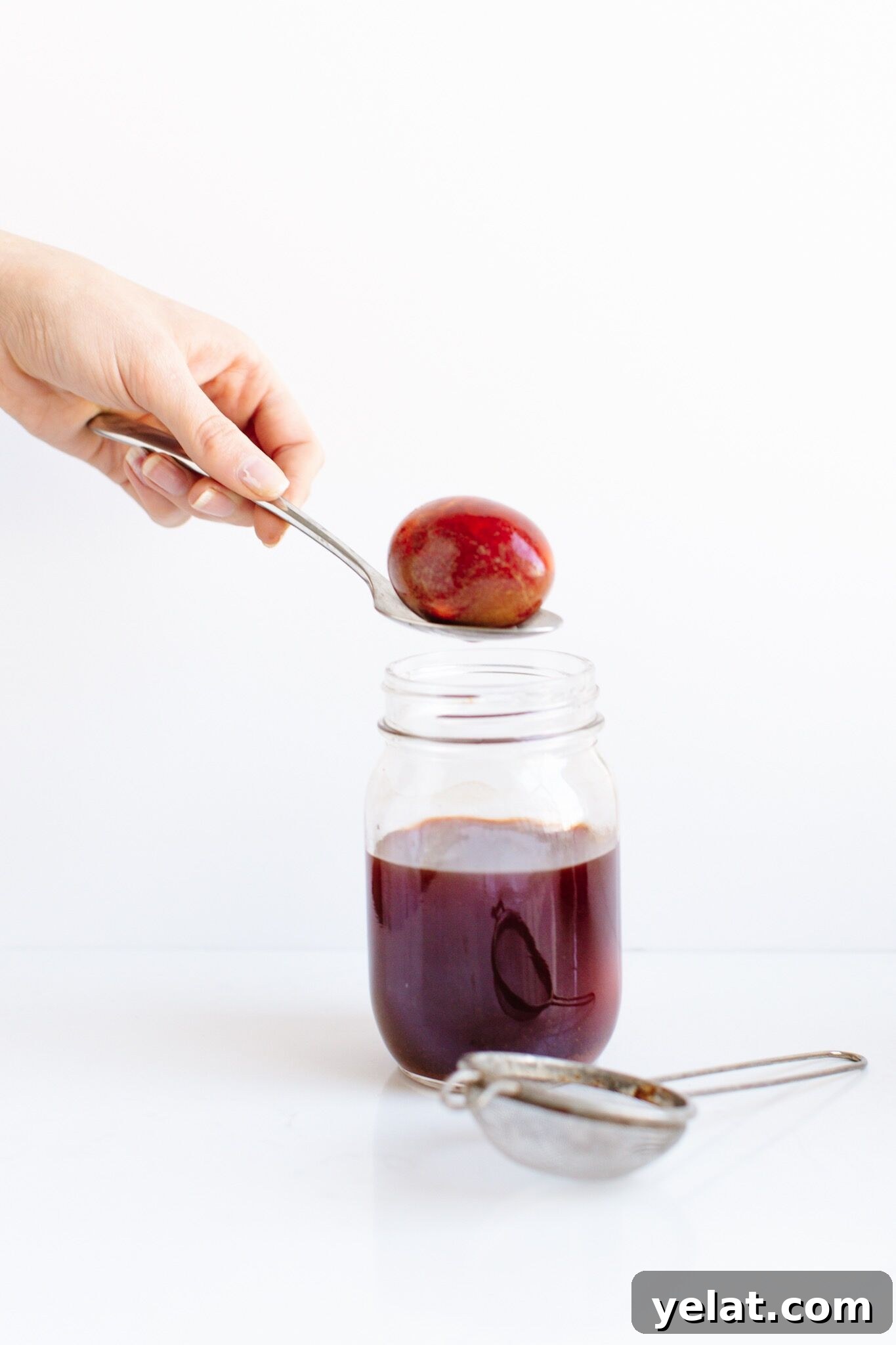
When eggs first come out of the dye, the color may look very intense or blotchy. Rinsing a few under cool running water often tones the color down to a lovely pastel—my preferred finish. Each jar will hold two to three eggs; scale the recipe by color for larger batches. White eggs produce the truest pastels; brown eggs will result in deeper tones.
What You’ll Need
- Quart-sized canning jars—one per color
- Slotted spoon (that fits in the jar) or a regular spoon
- Old towel or rag to catch drips
- Cooling rack
- Eggs
- White vinegar
- Natural coloring agents (listed below)
Tips for Success
Add one tablespoon of white vinegar to each dye pot before heating to help set the color. My favorite result was from red cabbage, which produced a surprising and beautiful blue instead of purple. Be cautious with turmeric—it stains surfaces and fabrics easily. Place an old towel under your wire rack to catch drips when lifting eggs from the jars.
How to Make the Eggs
For each color below, use a small pot with 2 1/2 cups of water and 1 tablespoon of white vinegar unless otherwise noted. Prepare separate pots or jars for each color you want.
- BLUE: 3 cups grated red cabbage
- PURPLE: 2 1/2 cups blueberry juice or Concord grape juice (use juice without added water)
- PINK: 2 cups grated fresh beets
- YELLOW: 2 teaspoons ground dried turmeric
- ORANGE: 2 1/2 cups fresh carrot juice (use juice without added water)
- GREEN: 1/4 cup chlorophyll (food-grade liquid chlorophyll)
- GREEN: 1 cup fresh spinach juice
- BROWN: 4 black tea bags (orange pekoe)
- Bring the mixture to a gentle boil. If you prefer, add eggs and cook for 7–10 minutes to your desired doneness; otherwise, cook the dye first and add already-boiled eggs later to avoid overcooking.
- If you boiled eggs in the dye, remove them with a slotted spoon and transfer to a cooling rack. Pour the strained dye into a quart jar while still warm.
- Once the solution is closer to room temperature, place the eggs into the jar, cover, and refrigerate. Leave them overnight for deeper color or up to three days for maximum saturation.
- When ready, remove eggs with a slotted spoon and set on a cooling rack. Rinse briefly under cool water to soften or even out the color for a pastel look, if desired.
Wishing you a happy Easter filled with family, laughter, good food, and a little chocolate. Have fun dyeing—and enjoy the eggs afterward!
xo
Tori