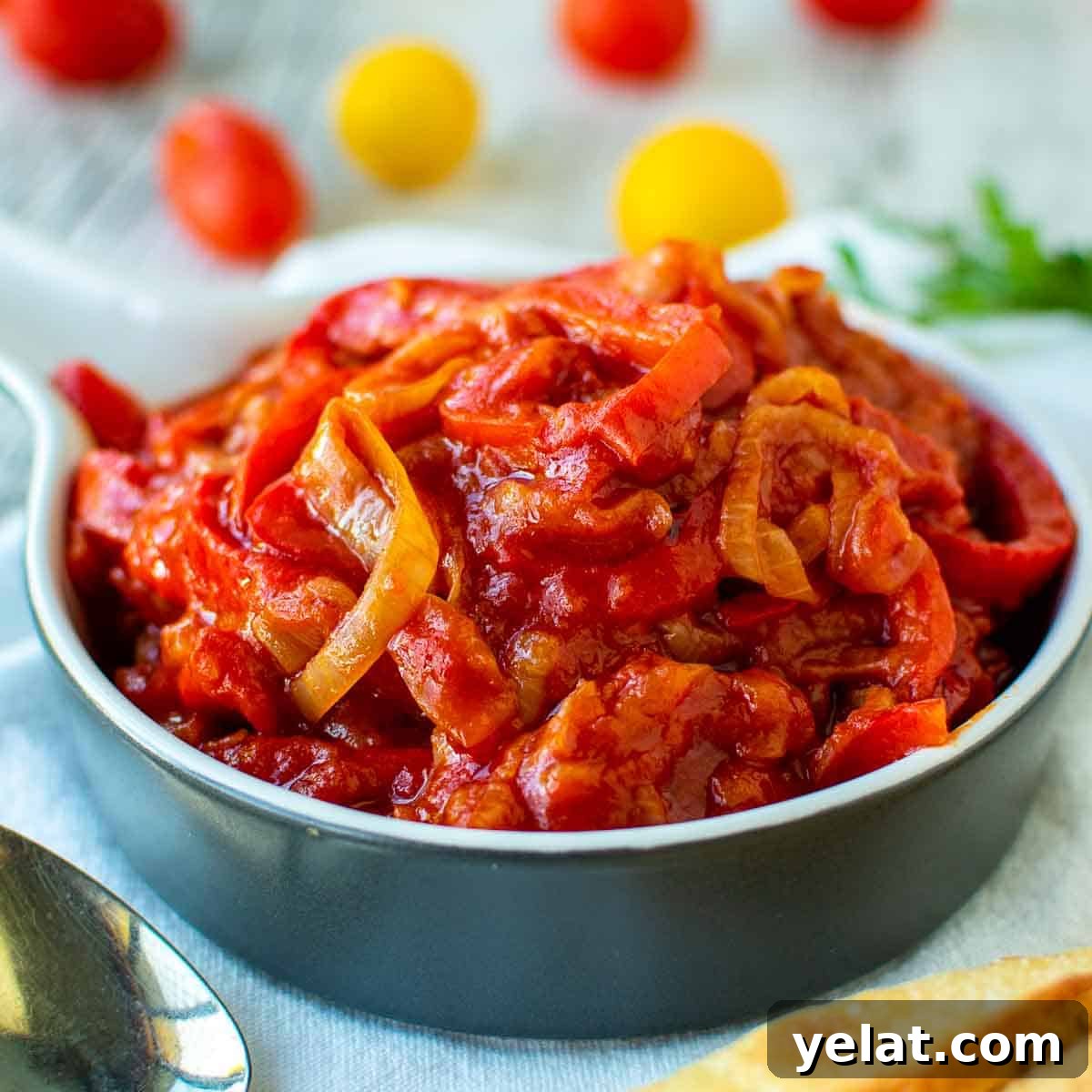
Traditional Peperonata is a beloved Italian dish that highlights the best of summer vegetables. Bright, fragrant, and full of flavor, this slow-cooked vegetable stew celebrates simple ingredients prepared with care.
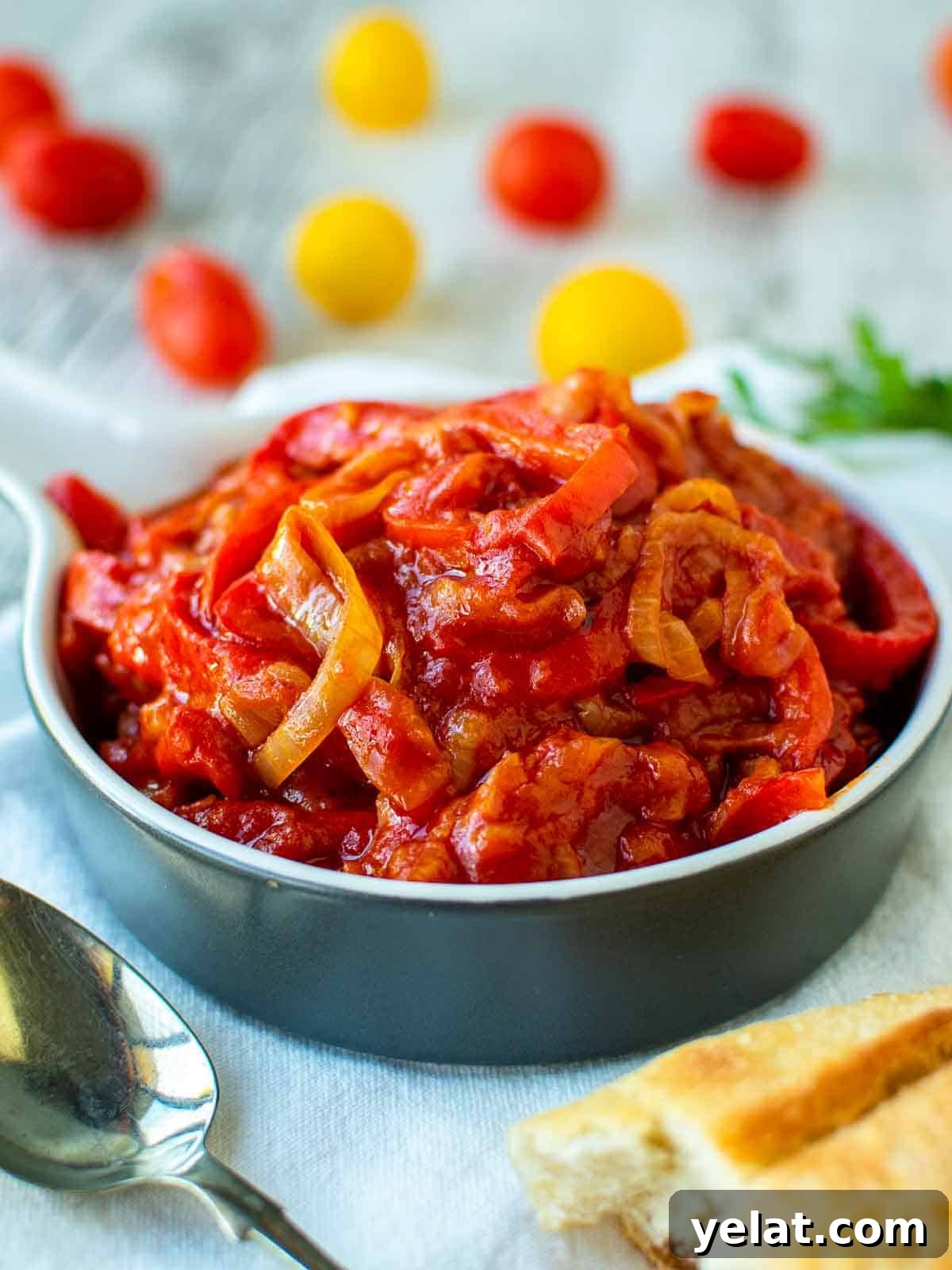
So, what is Peperonata? Originating from Italy, peperonata is a rustic stew made primarily from bell peppers, onions, and tomatoes that are gently simmered until tender and sweet. Regional variations exist across Italy, and you can adapt the recipe by adding other vegetables or aromatics to suit your taste.
Although commonly served as a side dish, peperonata also works brilliantly as a sauce for pasta or as a topping for crusty bread and bruschetta. It stores well and can be served warm or at room temperature, making it a versatile addition to many meals.
This version is Nonna Lucia’s peperonata—rich, generous with olive oil, and intuitively seasoned. It’s simple to make, forgiving, and full of authentic Italian character.
For exact ingredient amounts and step-by-step directions, please refer to the printable recipe card at the bottom of the page.
Table of Contents
Ingredients
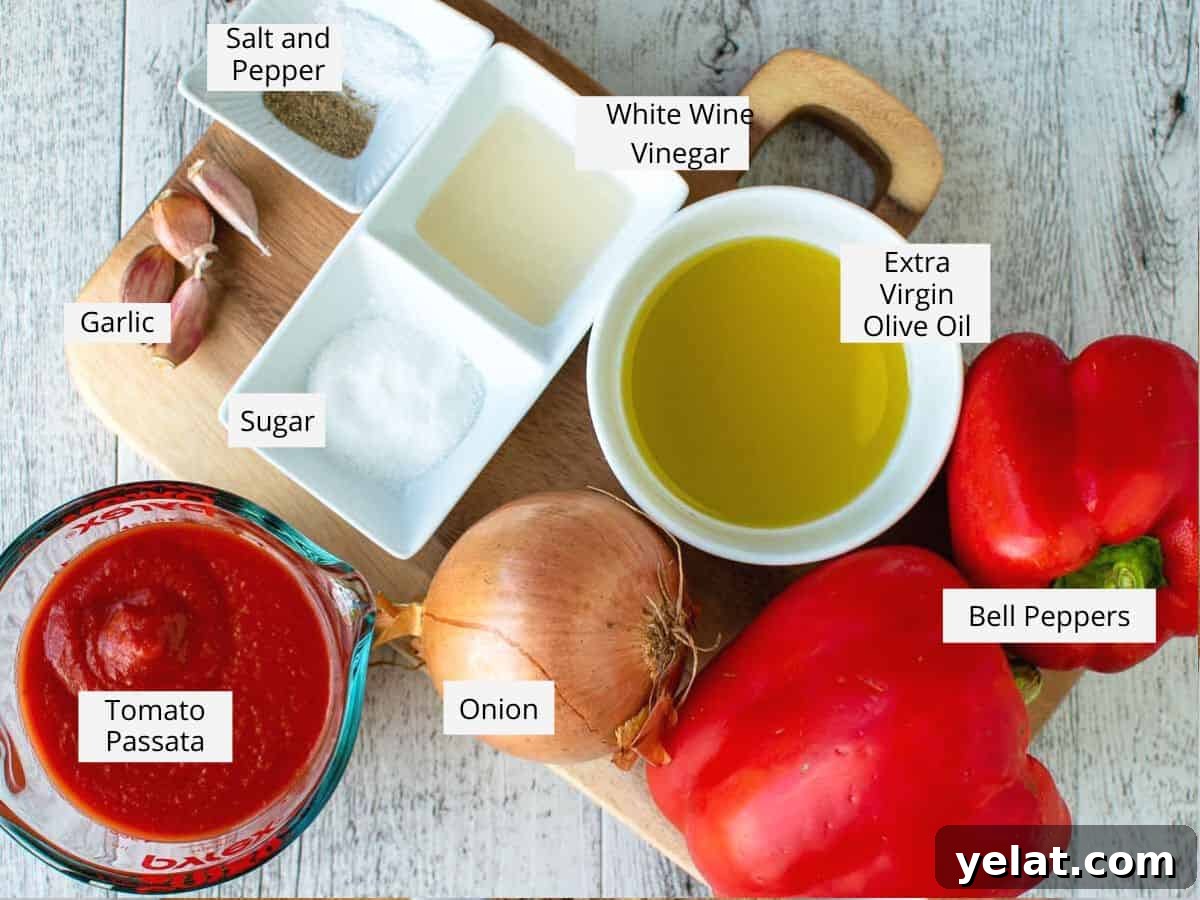
- Bell peppers – Use red, yellow, or orange bell peppers for a sweeter flavour. Choose peppers that feel heavy for their size and have smooth, unblemished skin.
- Onion – Yellow or brown onions work best, but white or red onions can also be used.
- Tomato passata – A good-quality passata makes a thicker, more flavorful sauce. See substitutions below if you don’t have passata.
- Garlic – Fresh garlic cloves are preferred over bottled alternatives for the best flavor.
- Extra virgin olive oil – Use a decent olive oil; it contributes significantly to the final taste.
- Sugar – A small amount of white sugar balances acidity and highlights the peppers’ natural sweetness.
- White wine vinegar – A splash of acidity brightens the dish; balsamic can substitute if needed.
- Salt – Adjust to taste. Add sparingly at first and increase as needed.
- Black pepper – Optional, to taste.
Instructions
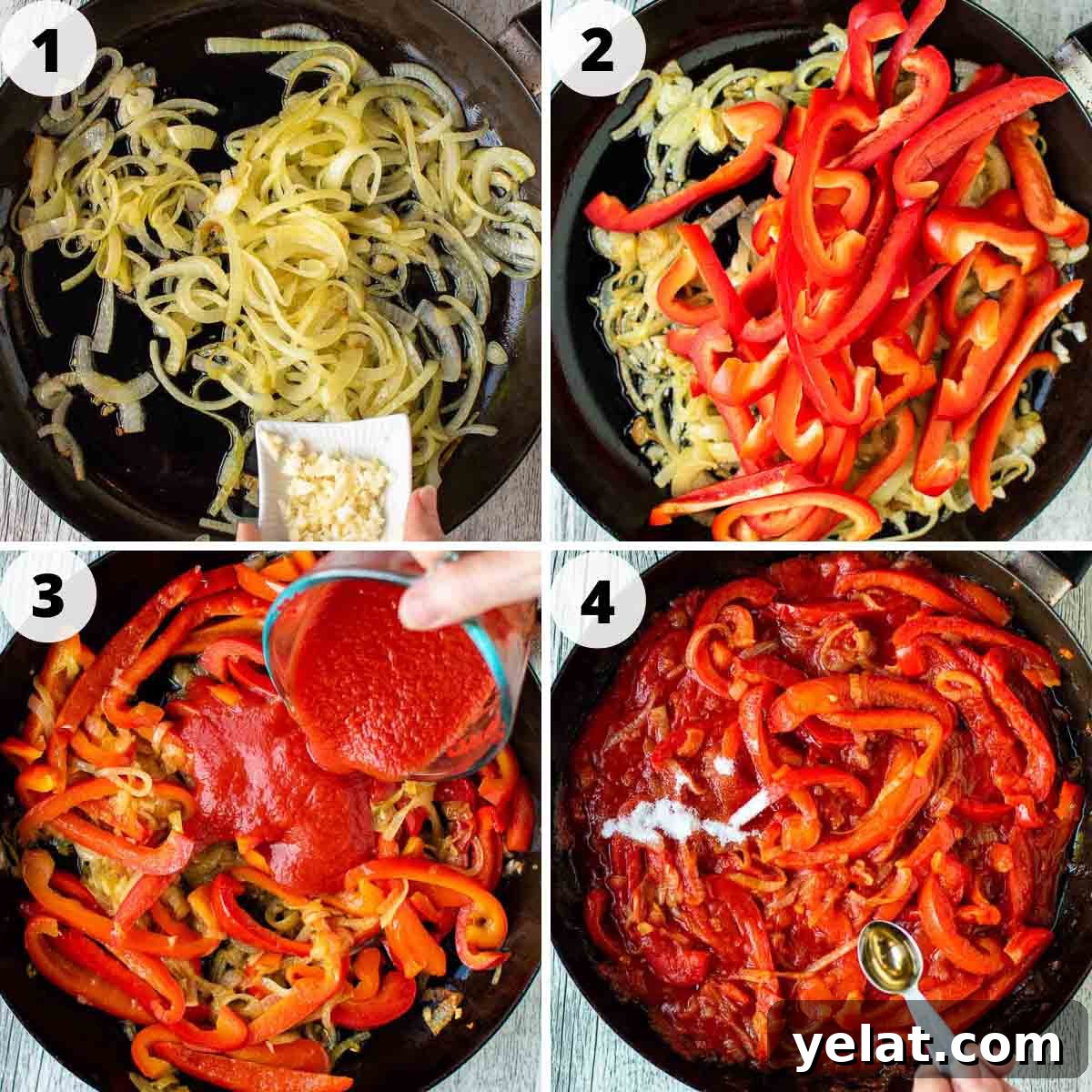
Below are the basic steps; full, detailed instructions are available in the recipe card.
- Sauté the sliced onion in extra virgin olive oil over medium-low heat with a pinch of salt until it begins to soften.
- Add the garlic and sliced bell peppers, then continue cooking until the peppers start to wilt (about 6–10 minutes).
- Stir in the tomato passata, reduce heat to low, cover, and simmer gently for 20–30 minutes, stirring occasionally.
- Uncover, add sugar and white wine vinegar, then simmer a few more minutes until the sauce thickens slightly. Taste and adjust seasoning before serving.
Substitutions
- Bell peppers – Sweet long peppers or a mix of colors can be used.
- Tomato passata – Substitute with 1/3 cup tomato paste diluted with 2/3 cup water for a similar consistency.
- White wine vinegar – Balsamic vinegar works well if you prefer a richer, slightly sweeter acidity.
Variations
There are many regional takes on peperonata; try these ideas to change the dish:
- Add thick slices of zucchini or fingers of eggplant when cooking the peppers.
- Include cubed peeled potatoes with the tomato passata and simmer until tender.
- For heat, stir in ½ teaspoon of red pepper flakes.
- Season with dried oregano when adding the passata, or finish with chopped fresh basil off the heat.
Storage
Store peperonata in a sealed container in the refrigerator for 3–5 days. Reheat gently on the stovetop or in the microwave, or serve cold or at room temperature.
Tips for Success
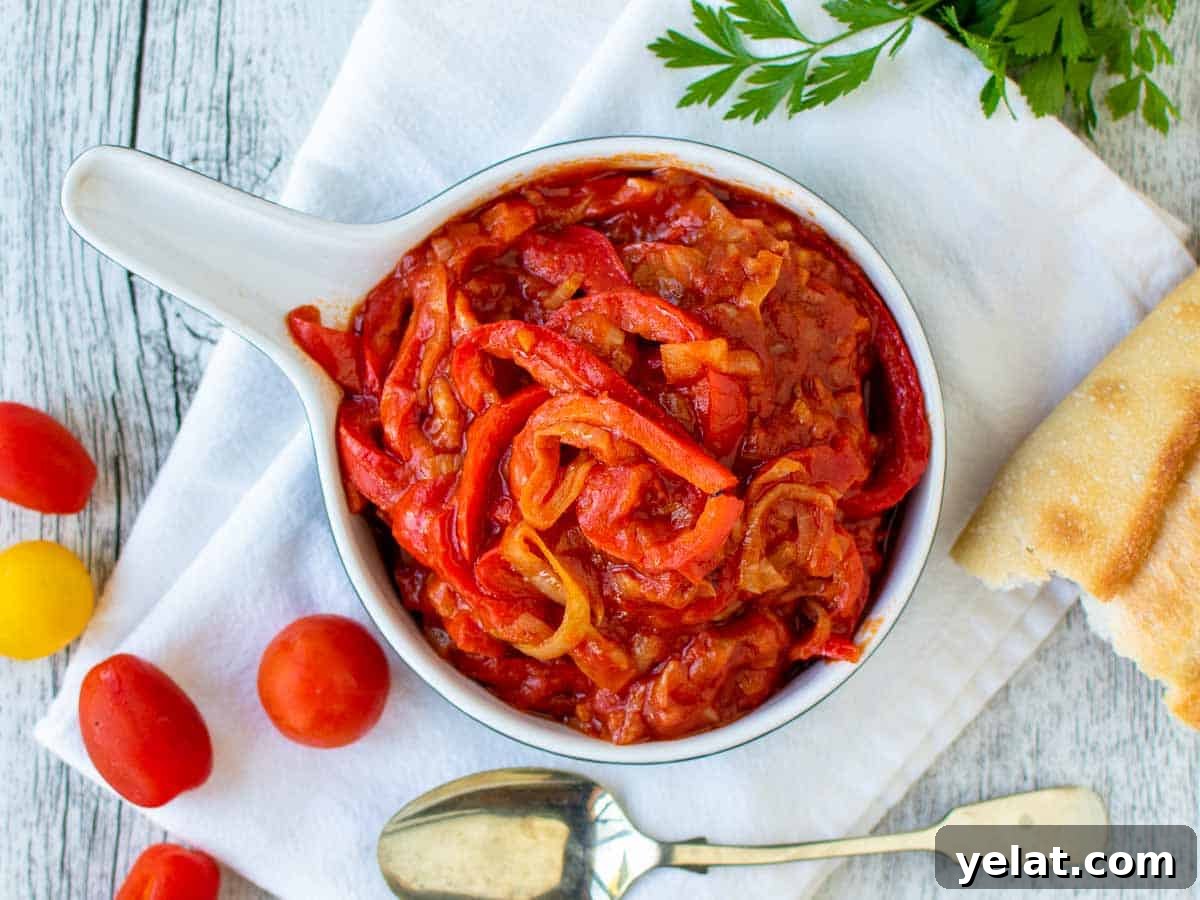
- Choose red, orange, or yellow peppers for the sweetest result; green peppers can be slightly bitter.
- Cooking time varies by pepper thickness and freshness—cook until peppers are soft but not disintegrating.
- If peppers are hard to digest, peel them first or use roasted peppers to make the dish easier on the stomach.
- Maintain medium-low heat to avoid burning or drying out the vegetables.
- Taste as you cook and adjust salt, sugar, or vinegar to balance flavors to your preference.
FAQ
Leftover peperonata will keep in the refrigerator for 3–5 days when stored in a sealed container.
You can freeze peperonata, though the texture of the vegetables may change slightly after thawing, as with most frozen vegetables.
Yes. The recipe scales well, though you may need to extend the cooking time slightly to ensure the peppers become tender.
What can I serve peperonata with?
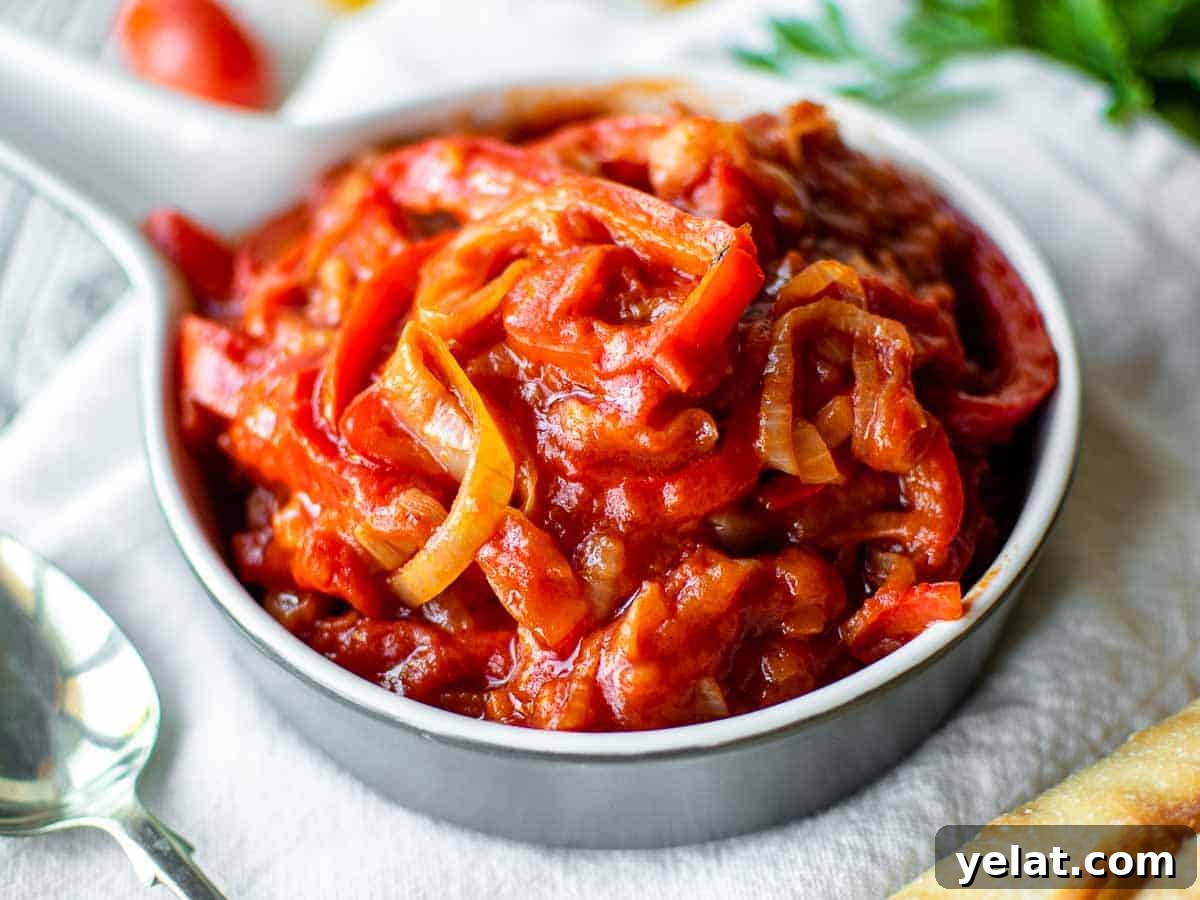
- Serve alongside grilled steak, pork, or Italian chicken cutlets.
- Toss through pasta for a flavorful, simple sauce.
- Offer as part of an appetizer board with cheeses, cured meats, and crusty bread.
- Use as a topping for bruschetta or toasted slices of rustic bread.
- Pair with fried Italian sandwiches like mozzarella in carrozza for a delicious contrast.
The options are numerous—peperonata complements a wide range of dishes and makes for a bright, satisfying addition to any meal.
Made this recipe?
Please leave a ★★★★★ rating and a review below. Don’t forget to subscribe to the newsletter for updates and new recipes.
Peperonata Recipe
Ingredients
- 1 pound (450 grams) red bell peppers (capsicum)
- ¼ cup extra virgin olive oil
- 1 onion
- 3-4 garlic cloves
- 1 cup tomato puree (passata)
- 1 teaspoon white wine vinegar
- ½ teaspoon sugar
- ½ teaspoon salt (divided)
- ⅛ teaspoon ground black pepper
Instructions
-
Cut the bell peppers in half, remove seeds and membranes, and slice into ¼ inch (6 mm) strips.
-
Peel and thinly slice the onion.
-
Peel and finely chop the garlic.
-
Heat a skillet over medium-low heat, add the olive oil and onions, and cook gently, breaking up the slices with a wooden spoon until they begin to soften (about 5 minutes).
-
Add the garlic and continue to cook gently for another 5 minutes until the onions are soft but not colored.
-
Add the sliced bell peppers, stir, and fry gently for 6–8 minutes until they begin to wilt.
-
Stir in the tomato passata, salt, and pepper.
-
Cover and simmer gently for 20–30 minutes, stirring occasionally.
-
Remove the lid, add the vinegar and sugar, and simmer uncovered about 10 minutes until the sauce thickens slightly and the peppers are tender.
-
Taste and add an additional ¼ teaspoon salt or a touch more sugar if needed. Serve warm or at room temperature.
Notes
- Peppers – Red bell peppers are my preference for sweetness, but yellow or orange peppers are also good.
- Onions – Yellow or brown onions are preferred, though white or red work as well.
Tips for success
- Cooking time varies with the peppers; aim for soft but intact pieces.
- If peppers are hard to digest, peel them first or use roasted bell peppers.
- Keep the heat at medium-low to prevent burning and drying out the vegetables.
- Taste and adjust salt and acidity as you cook.
See the post above for additional information and FAQs.
Nutritional Estimate Per Serving
Nutritional Disclaimer
Nutritional information is an estimate from an online calculator. For precise values, calculate using the exact ingredients and brands you use.
This post was originally published on November 16, 2017. It has been updated with new photos, additional information, and an improved recipe.