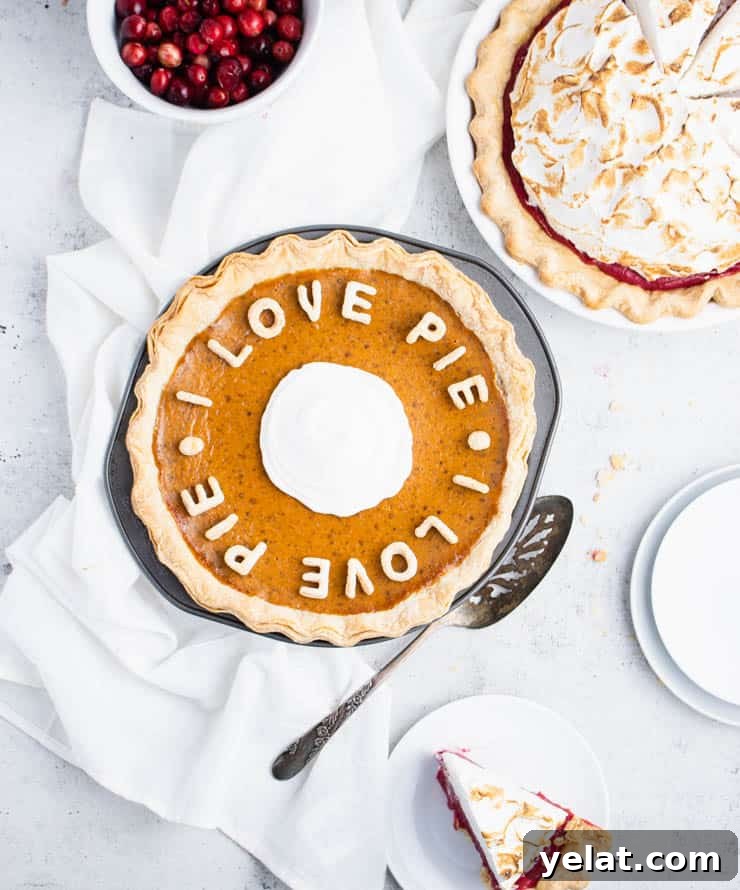
Tender, buttery and full of flavor, this easy flaky pie crust uses just three ingredients. Read on for clear, practical instructions, troubleshooting tips and suggestions for using the dough in sweet and savory pies.
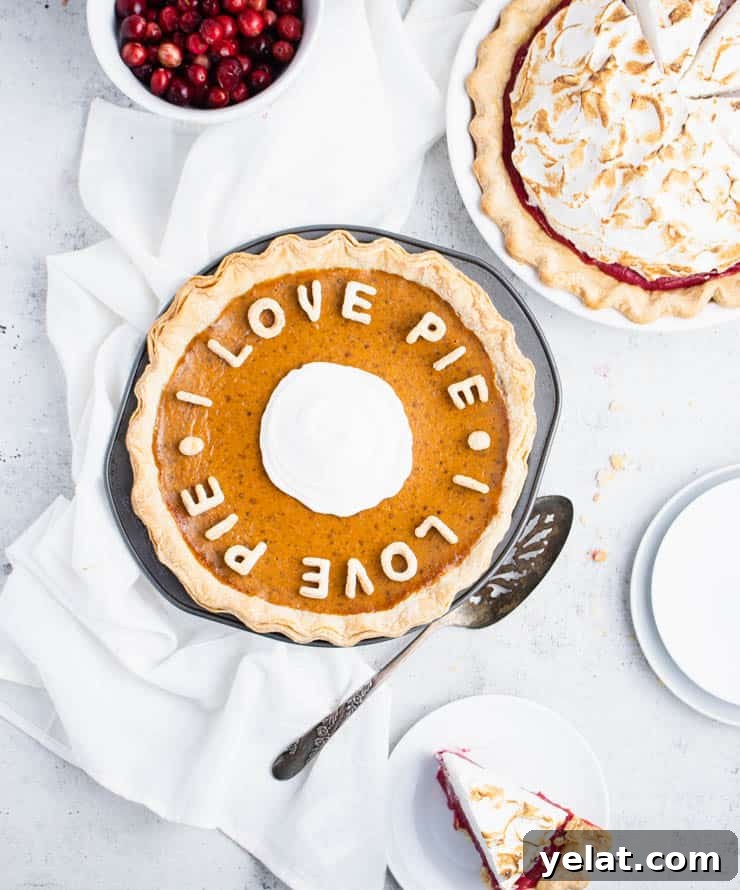
Whether you’re making a light summer tart or a cozy fall pie, a flaky homemade crust transforms the final result. Though this recipe has only three ingredients, technique matters: cold ingredients and minimal handling create the best texture. Below is a straightforward 3-ingredient pie crust recipe, step-by-step instructions, tips for success, and solutions to common problems.
The basic 3-ingredient pie crust
This recipe makes a single pie crust and can be doubled for two crusts. Avoid making more than two at once for best results.
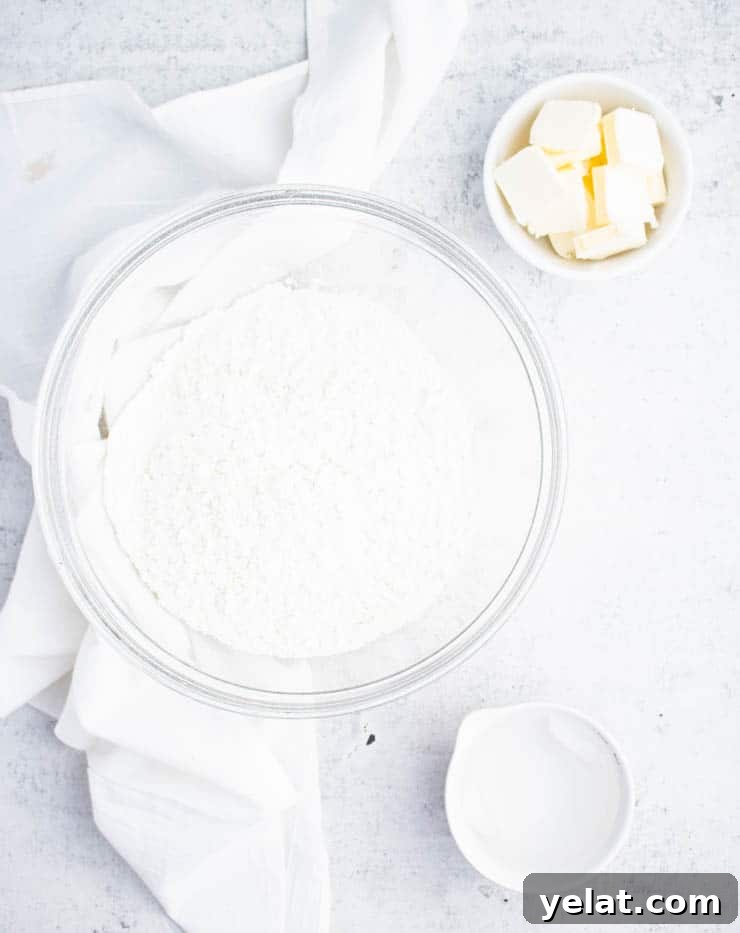
- 1 stick (½ cup) cold salted butter
- 1 ½ cups all-purpose flour
- ¼–½ cup ice-cold water
Keep the butter and water cold: leave butter in the refrigerator until use and add ice to your water if needed. Cold fat creates pockets in the dough that yield a flaky crust when baked.
How to make the dough
1. Create a rough dough.
Cube the butter into roughly 1-inch pieces. In a large bowl, cut the cold butter into the flour until the mixture resembles coarse crumbs with pea-sized bits of butter. A pastry cutter works best; if you don’t have one, use your fingers briefly or a potato masher, taking care not to warm the butter.
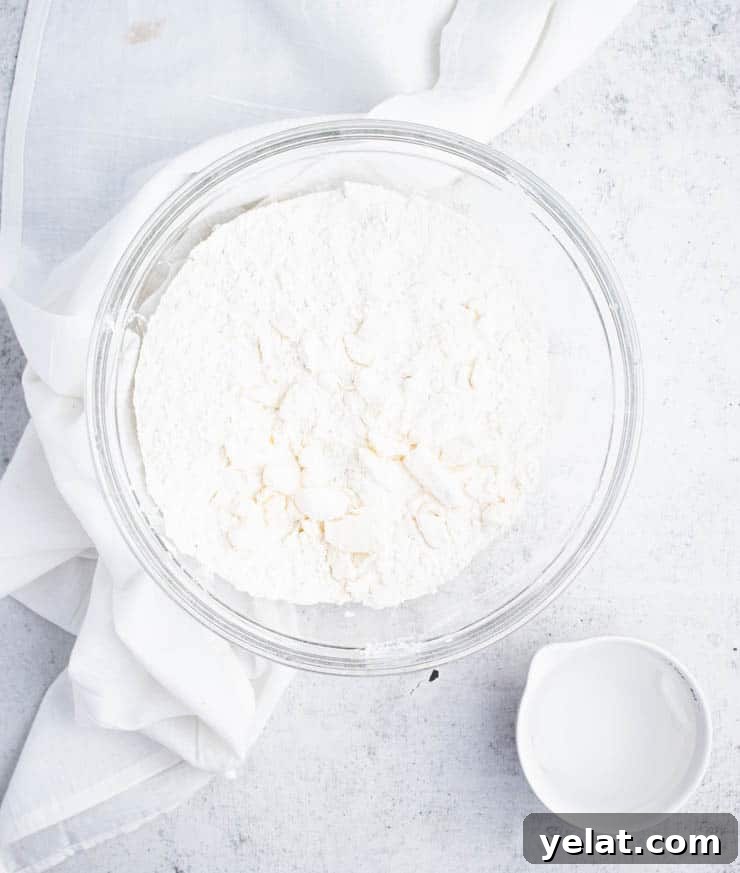
Add ¼ cup cold water and gently bring the dough together with your hands. The goal is a shaggy, cohesive dough with visible chunks of butter. If it’s too dry and crumbly, add water one tablespoon at a time (up to another ¼ cup) until it holds together. Avoid adding too much water—stop as soon as the dough forms.
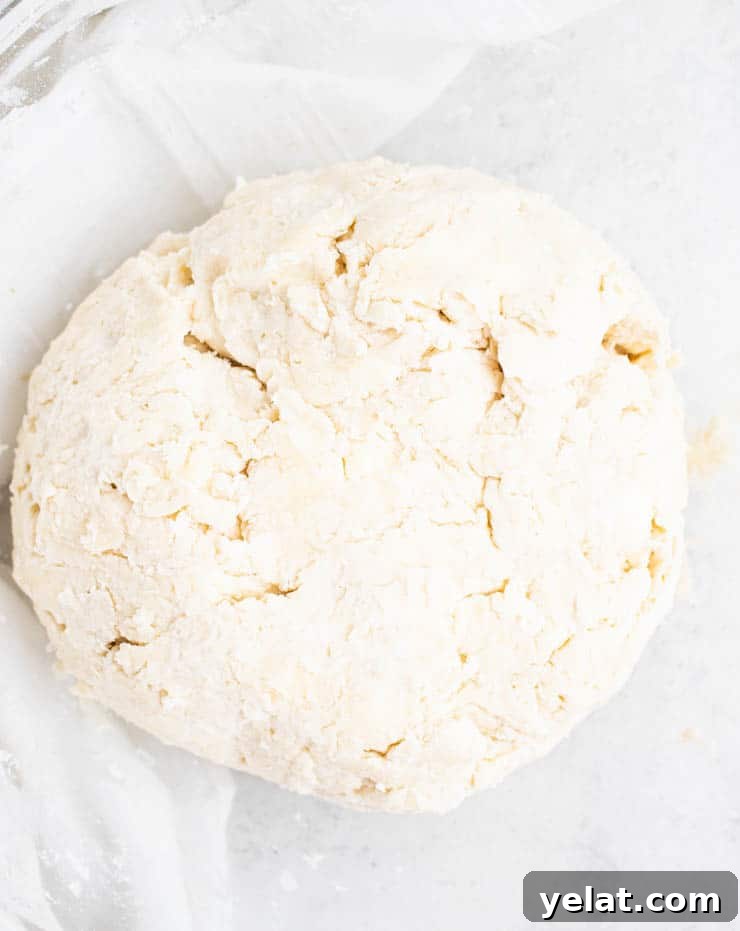
2. Chill the dough.
Wrap the dough tightly in plastic wrap and chill for at least 1 hour. You can also chill longer if needed; chilling firms the butter and relaxes the dough for easier rolling.
3. Laminate for flakiness (folding).
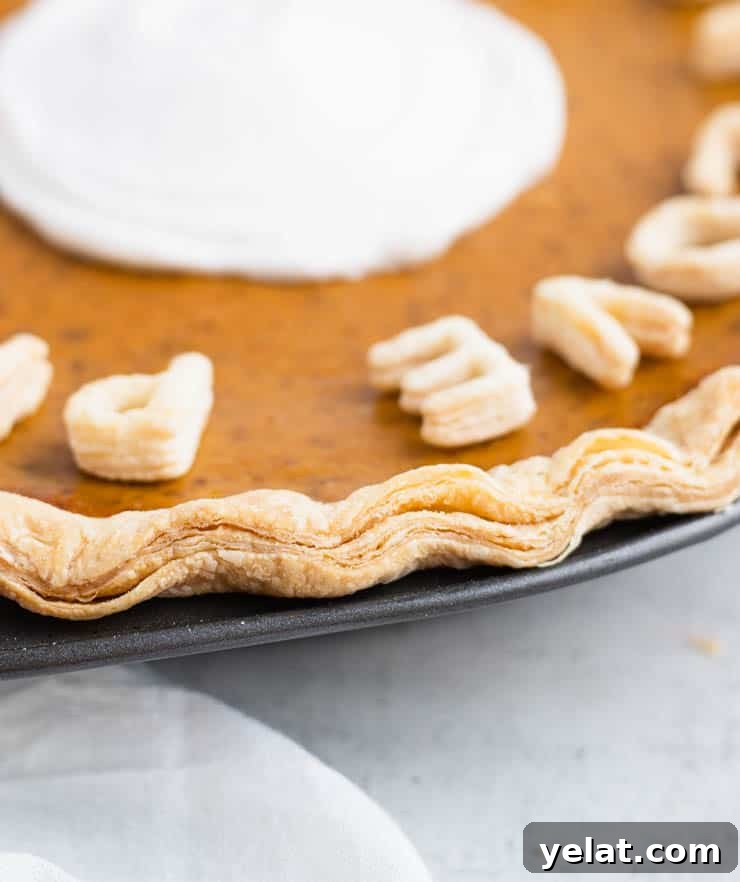
A simple folding technique creates layers that bake into a flaky crust. On a lightly floured surface, roll the chilled dough into a rectangle. Fold the short ends into the center so the dough is folded into thirds, like a letter. Rotate, roll again into a rectangle, and fold into thirds from the opposite direction. Repeat once more for three total folds. Keep the dough cold between rolls if it softens.
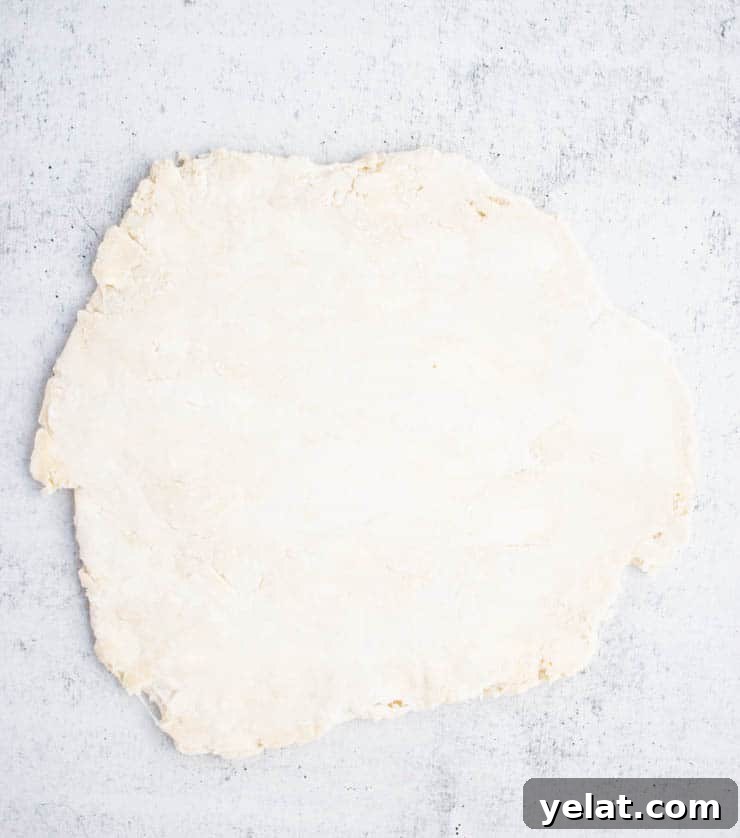
4. Roll and fit into the pan.
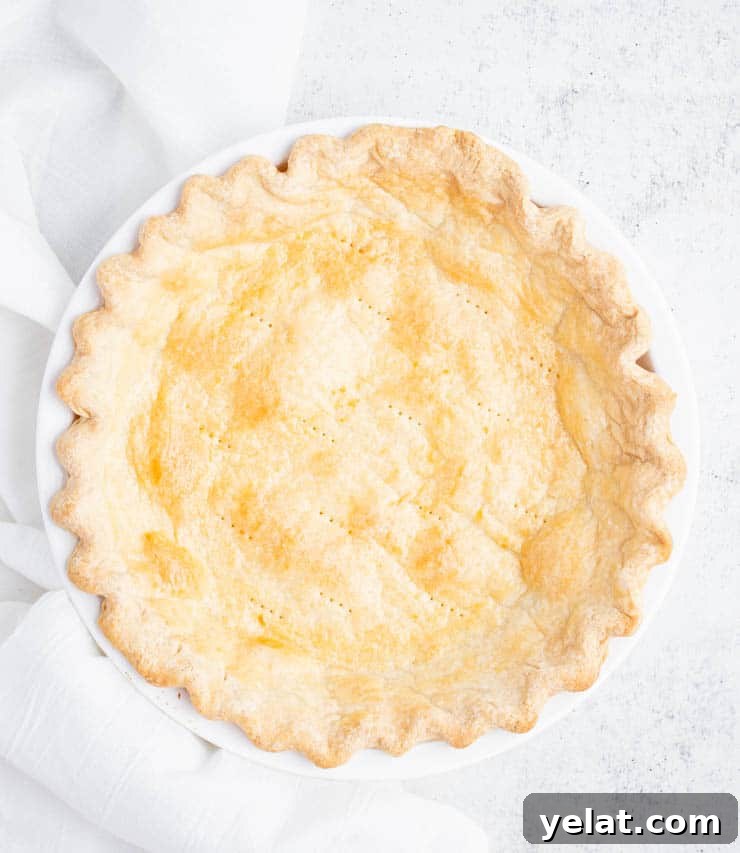
If you’re using the dough right away, roll it out to about 1 inch larger than your pie pan, let it rest 5 minutes, then transfer and press it into the pan. Trim excess so about ½” overhangs, fold the overhang under and crimp the edge with your fingers or a fork. If you’re saving it, wrap tightly and refrigerate for up to 3 days or freeze for up to 3 months.
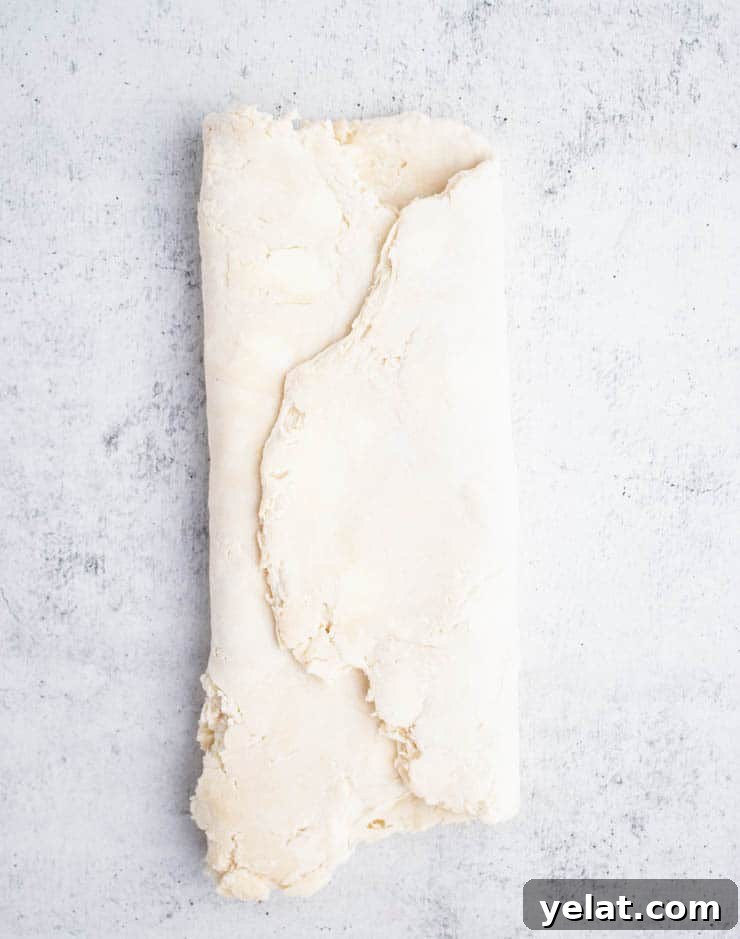
Making dough by hand vs. in a food processor
Making dough by hand gives you more control and reduces the risk of overworking, but a food processor speeds the job. If using a processor:
- Pulse on low and check frequently to avoid overmixing.
- When adding water, rely on feel: stop when the dough holds together when pinched.
- It’s safer to stop early—if the dough looks nearly ready, test it by hand. You can always add a tiny bit more water or pulse a few more times, but you can’t undo overmixing.
Storing and working ahead
Refrigerator: Dough keeps up to 3 days tightly wrapped in plastic. Roll and use directly from the fridge.
Freezer: Dough freezes well for up to 3 months. Wrap tightly in plastic and place in a sealed bag or container. Thaw overnight in the refrigerator before rolling.
Expert tips
- Keep everything cold: Cold ingredients and brief handling yield the flakiest crust.
- Underwork rather than overwork: Aim to handle the dough as little as possible—you can always work it more if needed but you can’t reverse overmixing.
Common problems and fixes
- Tough dough: Overworking causes toughness. A small splash of acid (lemon or lime juice) can help soften the texture, though it won’t fully restore lost flakiness.
- Crumbly dough: Dry dough needs water. Add one tablespoon at a time until it holds together.
- Sticky dough: Too much water can make dough sticky. Work in a teaspoon of flour at a time until the texture is manageable.
- Dough tears when transferring: If it tears, press small scraps of dough into the tear to patch it. To avoid tearing, roll the dough around the rolling pin and lift it into the pan rather than picking it up directly from the counter.
Frequently asked questions
All-butter crusts tend to be flakier and have more flavor. Shortening produces a very tender crust but lacks the buttery taste.
Eggs are not required in pie dough. Brushing the baked crust with an egg wash (before baking) will promote browning and a shiny finish, and can help prevent a soggy bottom.
No. The fat in the dough prevents sticking, so greasing the pan is unnecessary.
Recipes to try with this crust
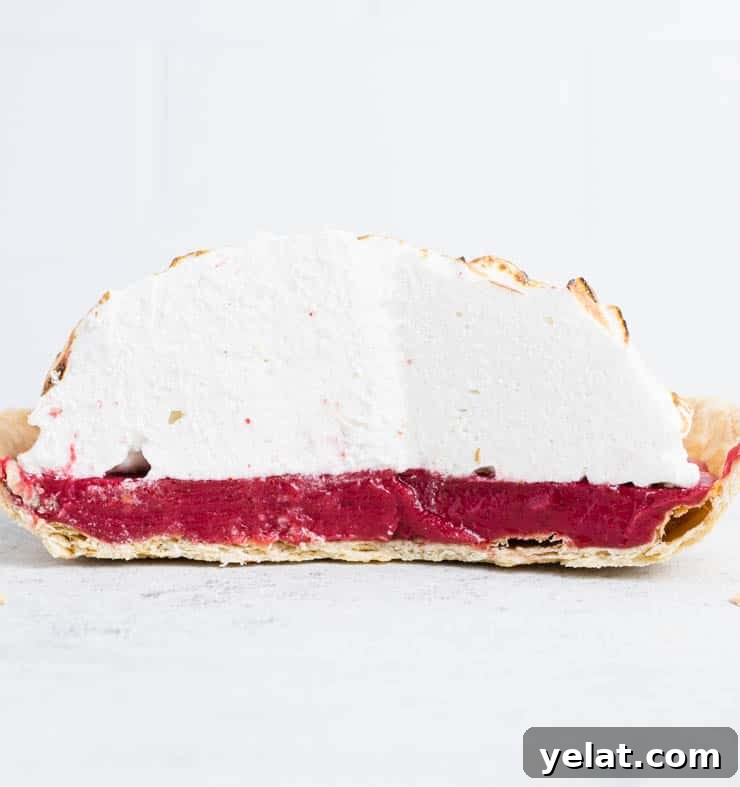
This versatile pie dough works well for fruit pies, custards and savory tarts. Try it in your favorite recipes for cranberry pies, pecan pie, apple pie or other classics.
Recipe
Flaky Pie Crust Recipe
Tender, buttery and full of flavor, this easy flaky pie crust calls for three simple ingredients.
- Author: Claire | The Simple, Sweet Life
- Prep Time: 20 minutes
- Chill Time: 1 hour
- Total Time: 1 hour 20 minutes
- Yield: 1 pie crust
- Category: Dessert
- Method: Baking
- Cuisine: American
Ingredients
- 1 stick (½ cup) cold salted butter
- 1 ½ cups all-purpose flour
- ¼–½ cup ice-cold water
Instructions
- Cube the butter into 1-inch pieces.
- Cut the cold butter into the flour until the mixture is coarse with pea-sized bits of butter.
- Add ¼ cup ice-cold water and gently massage the dough until it begins to hold together.
- If needed, add water a tablespoon at a time (up to an additional ¼ cup) until a shaggy dough forms.
- Wrap the dough tightly and chill for 1 hour.
- Roll chilled dough into a rectangle on a lightly floured surface.
- Fold the dough in thirds (short sides toward the center).
- Roll again and fold in thirds from the opposite direction. Repeat once more.
- Either wrap and refrigerate or roll out to fit your pie pan, trim and crimp the edges.
Notes
- Keep everything cold. Cold ingredients and minimal handling create flakiness.
- Underwork the dough. Handle as little as possible to avoid developing gluten and making a tough crust.
Nutrition
- Serving Size: 10
- Calories: 149
- Sugar: 0.1g
- Sodium: 65mg
- Fat: 9.4g
- Saturated Fat: 5.8g
- Carbohydrates: 14.3g
- Fiber: 0.5g
- Protein: 2g
- Cholesterol: 24mg