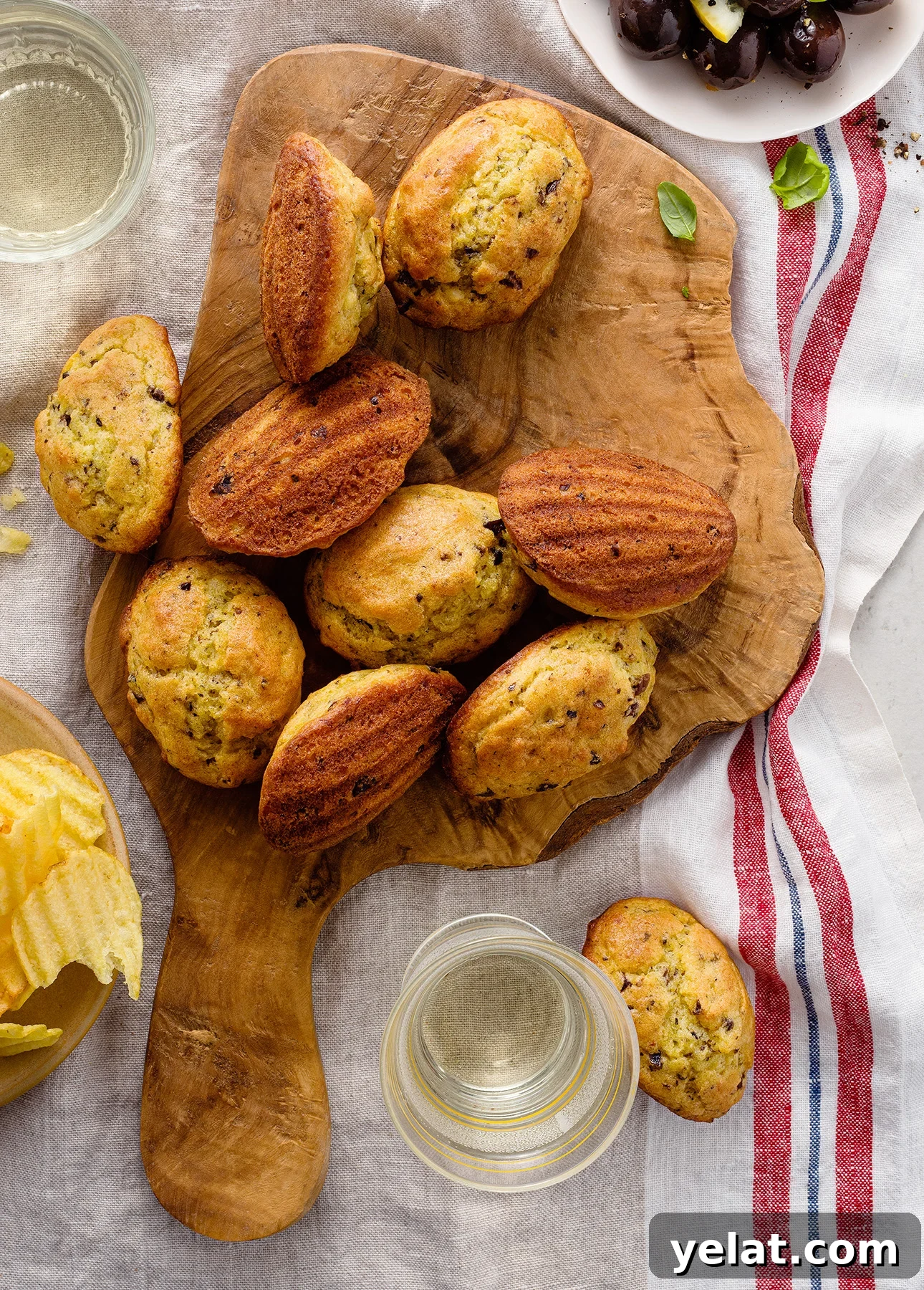
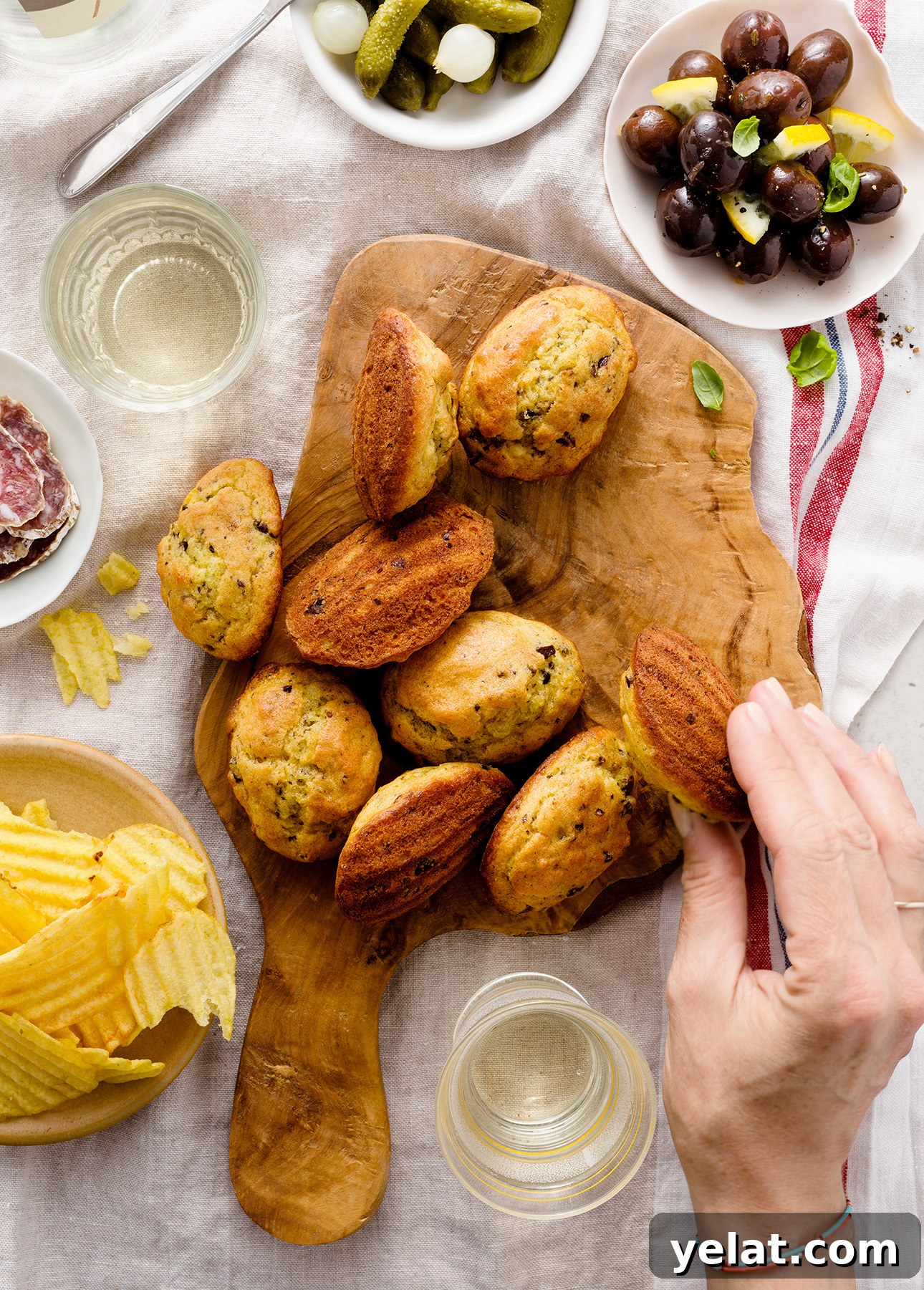
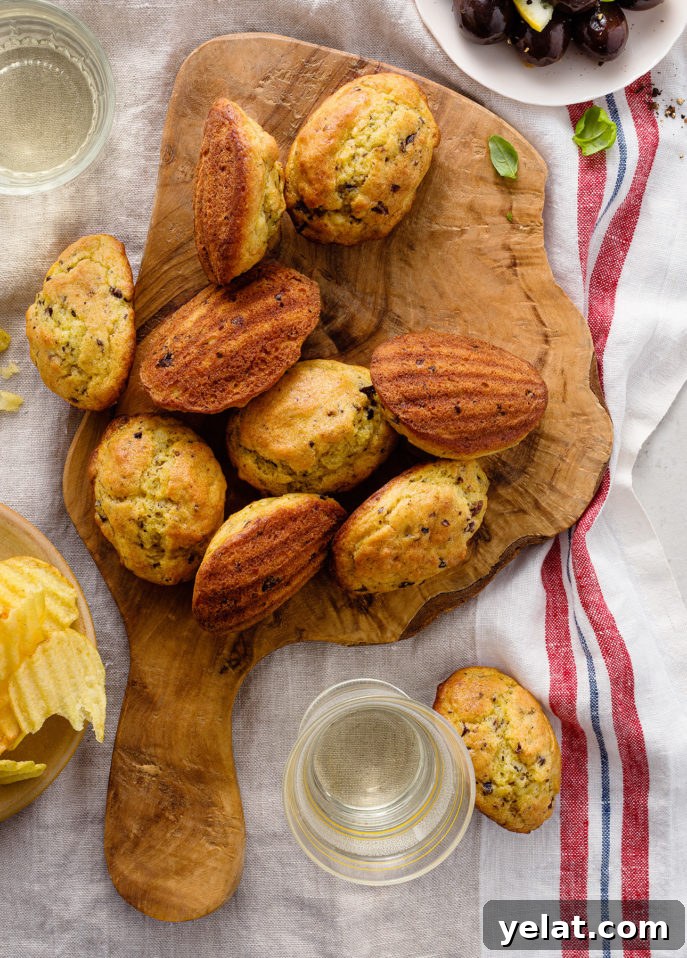
These elegant savory madeleines are irresistibly fluffy, salty, and cheesy. They’re simple to make and work well for make-ahead entertaining—ideal for a French-themed happy hour.
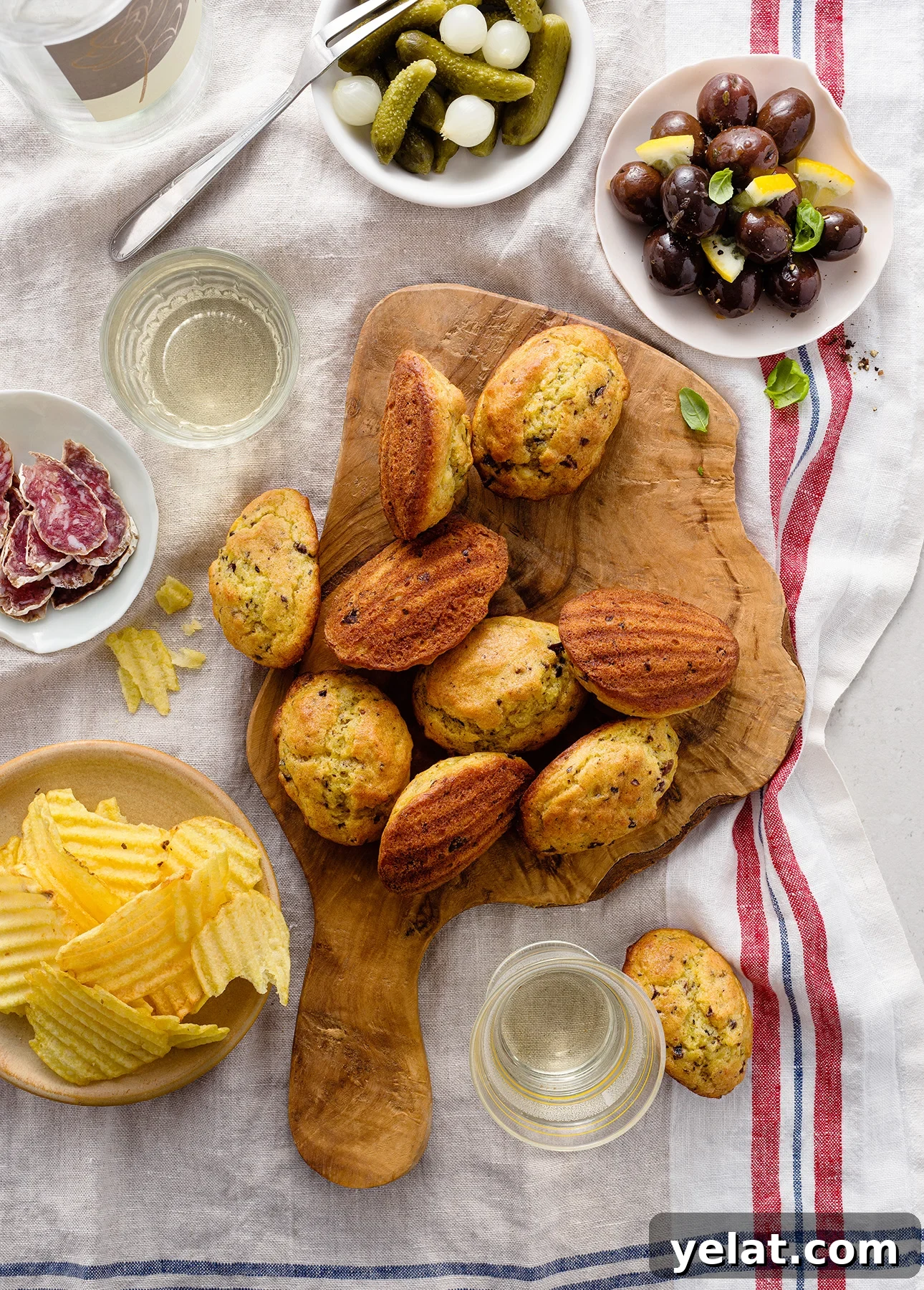
A few years ago I published a book about l’apéro, the French approach to happy hour. While developing recipes for the book I set out to create savory versions of classic French snack cakes—financiers, macarons, madeleines, and more. Not every experiment succeeded, but savory madeleines were a clear winner.
Madeleines are the iconic shell-shaped cakes found in French bakeries. Sold loose or in bags, they’re wonderfully versatile: serve them as a sweet brunch treat, a snack, a light dessert, or a thoughtful homemade gift. I’ve shared tips for making classic madeleines at home and many variations to adapt them to the seasons, and the savory take is just as delightful.
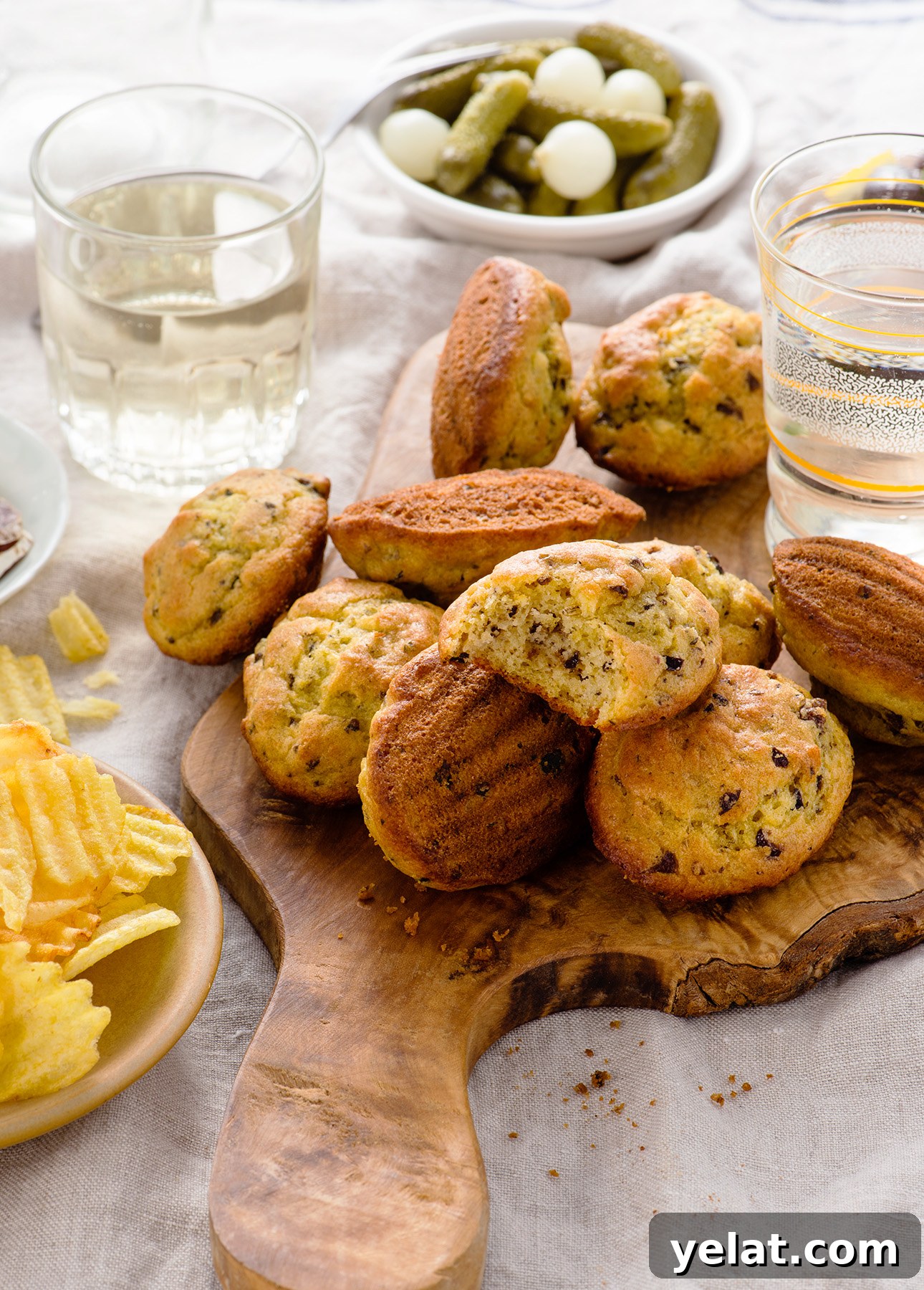
Instead of sugar, the batter is flavored with cheese and other savory ingredients while following the same basic steps as the sweet version. The result is a tiny, pillowy cake that pairs beautifully with drinks, makes a pretty picnic addition, and is a memorable homemade gift.
Helpful Tips for Making Savory Madeleines
I don’t have a madeleine pan. What can I use instead?
If you don’t own a madeleine pan, you can still make delicious savory madeleines in a muffin pan. A true shell shape requires a madeleine mold, but a well-prepared muffin tin produces tasty round madeleines that closely mimic the texture of the original.
Grease and lightly flour the muffin cups (or use parchment liners). Use a small amount of batter in each cup to create thinner cakes with crisp edges. If you freeze the pan and refrigerate the batter as described below, your round madeleines can still develop a pleasing central hump.
How can I get those perfect humps on savory madeleines?
The signature madeleine hump is produced by a temperature shock: an icy-cold pan and cold batter meet a very hot oven. Chilling the filled pan briefly in the freezer and refrigerating the batter before baking encourages a dramatic rise. Skipping these steps usually yields flatter madeleines, so patience is rewarded.
That said, flatter madeleines are still delicious—don’t discard a batch that doesn’t rise perfectly. Practice and small adjustments will get you there.
How can I make sure savory madeleines don’t stick to the pan?
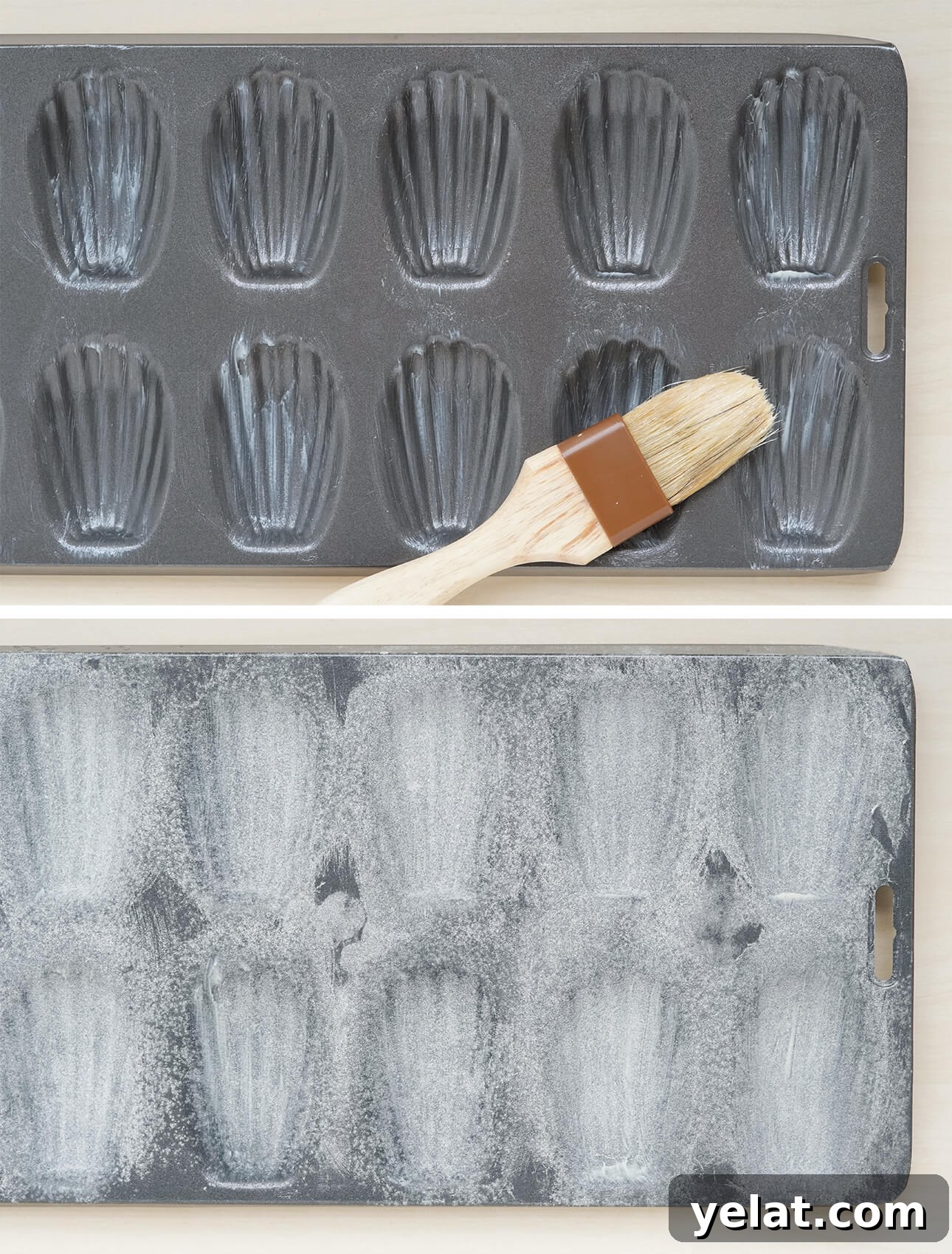
Even “nonstick” pans can cause delicate cakes to adhere, and the cheese in savory madeleines increases the risk. The best prevention is to generously butter each cavity with soft (not melted) butter and lightly dust with flour. Use a pastry brush to spread the butter into every nook, sift a bit of flour over the pan, tap to distribute, then invert the pan and tap off the excess.
Can I use a silicone madeleine pan?
Metal pans are preferred for the fluffiest, most pronounced humps because metal chills very well in the freezer, creating a stronger temperature contrast with the hot oven. Silicone pans rarely get cold enough for the same effect. If a silicone pan is all you have, you can still use it—thoroughly butter and flour it first to reduce sticking.
Can I make savory madeleines ahead of time?
Yes—unlike some sweet madeleines, savory madeleines store very well thanks to olive oil and cheese, which help retain moisture. You can bake them, cool completely, and store them in an airtight container in the refrigerator for up to 3 days or freeze for up to 1 month. Rewarm in a 300°F (150°C) oven for 5–8 minutes to restore their tender texture and flavor.
Savory madeleine batter also keeps in the fridge for up to three days, so you can bake small batches as needed and enjoy fresh madeleines over several days.
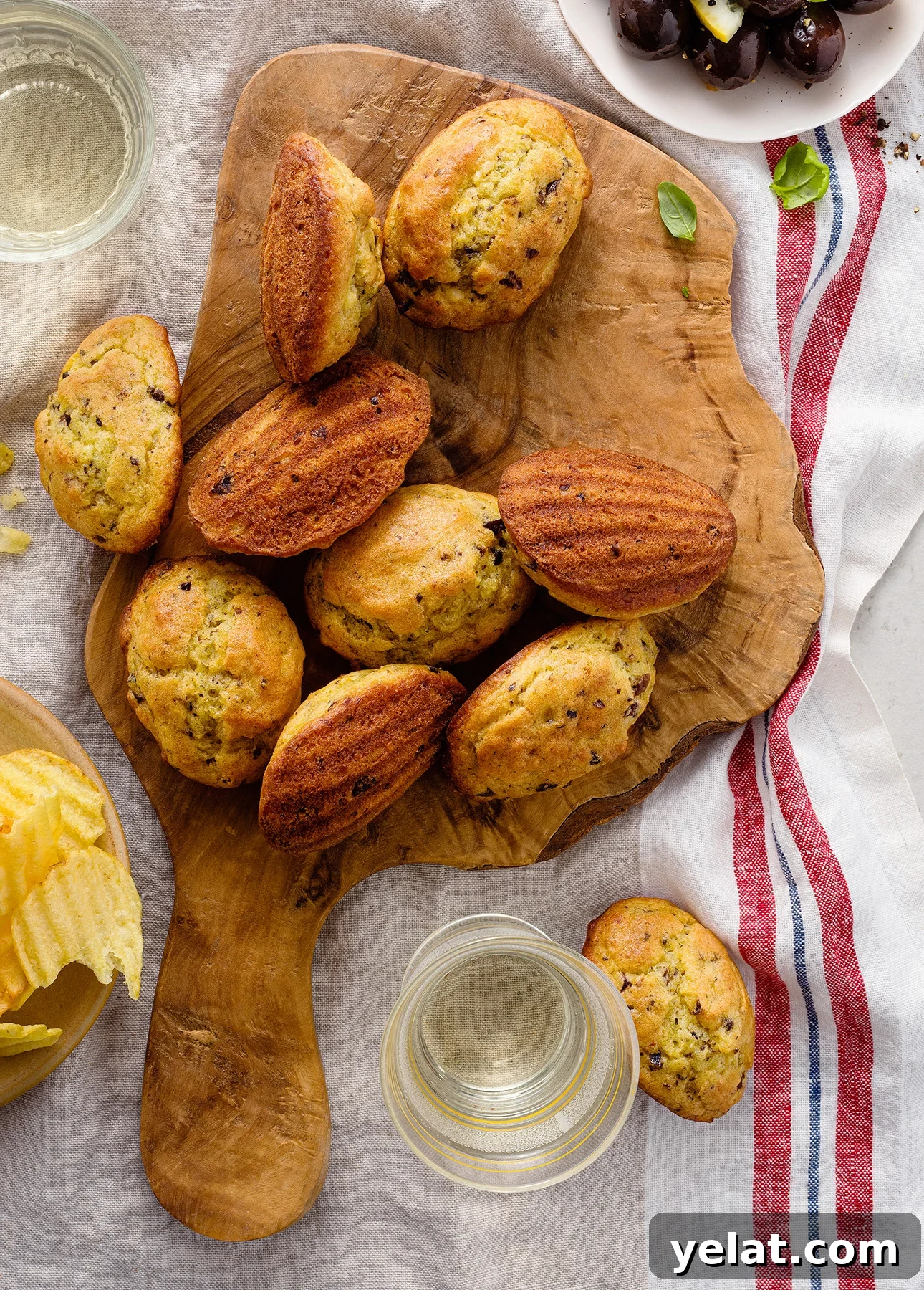
Can savory madeleines be frozen?
Absolutely. Bake and unmold the madeleines, cool them completely, then place in an airtight container and freeze for up to 1 month. Rewarm from frozen in a 300°F (150°C) oven for about 8 minutes to recover the freshly-baked texture.
What Can I Use Instead of Olives in Savory Madeleines?
There are plenty of flavorful alternatives you can incorporate, including:
- Prepared tapenade
- Pesto
- Finely chopped fresh herbs (basil, Italian parsley, oregano, thyme)
- Cooked pancetta or bacon, finely chopped
- Lemon zest
You can combine flavorings if you like. Whatever additions you choose, keep the total volume to 1/4 cup (60 ml) to avoid weighing down the batter and producing flatter madeleines.
Can I use other cheese varieties, too?
Yes. Parmigiano-Reggiano is a great choice because it’s flavorful and often finely powdered. You can substitute other strongly flavored hard cheeses such as Comté, Gruyère, or Emmental. Make sure the cheese is very finely grated and weigh it rather than measuring by volume to ensure the correct amount—too much or too-coarse cheese can flatten the madeleines.
Savory Madeleines
Ingredients
- 3/4 cup cake or pastry flour
- 1 tsp Herbes de Provence
- 1 tsp baking powder
- 1 tsp kosher salt (or fine sea salt)
- 1/4 tsp baking soda
- Freshly ground black pepper
- 3 eggs
- 1 tbsp granulated sugar
- 1/4 cup extra-virgin olive oil
- 1/2 cup very finely grated Parmigiano-Reggiano (about 1 oz) or another finely grated, strongly flavored cheese
- 1/4 cup very finely chopped pitted black olives (or green olives)
Instructions
- Whisk together the flour, baking powder, salt, baking soda, and a few grinds of black pepper; set aside.
- In a large bowl, beat the eggs and sugar for 3 minutes until pale and fluffy. Whisk in the olive oil. Fold the dry ingredients into the egg mixture in three additions until just combined. Fold in the grated cheese and chopped olives just until evenly distributed. Cover and refrigerate the batter for 30 minutes to 1 hour (or up to overnight).
- Preheat the oven to 400°F (200°C). Lightly grease a madeleine pan (or muffin pan) with soft butter or cooking spray, brush oil into every nook, then dust with flour and tap out the excess. Place the pan in the freezer for 10 minutes.
- Remove the pan from the freezer and take the batter from the fridge. Gently stir the batter to release any large bubbles. Fill each shell cavity about three-quarters full (roughly 1 heaping tablespoon per cavity). Return remaining batter to the fridge.
- Bake until puffed and golden, about 12 minutes. Immediately unmold by inverting the pan and tapping its side on a work surface; use a knife tip to coax any stubborn madeleines free. Cool on a wire rack.
- To bake remaining madeleines, rinse the mold under cold water, dry, lightly re-grease and flour, and return it to the freezer for 10 minutes before filling and baking again.
- Serving: Serve warm or at room temperature.
- Storage: Store baked madeleines in an airtight container. Refrigerate up to 3 days or freeze up to 1 month. Rewarm in a 300°F (150°C) oven for 5–8 minutes to refresh.
- Note: You may substitute the chopped olives with tapenade, pesto, finely chopped herbs, cooked pancetta or bacon, or lemon zest. Keep the total add-in amount to 1/4 cup (60 ml) so the batter remains light.
Did you make this?
Tell me how you liked it! Leave a comment or take a picture and tag it with @foodnouveau on Instagram.
Disclosure Notice: This site participates in the Amazon Associates Program and may earn fees from qualifying purchases made through affiliate links, at no extra cost to you.